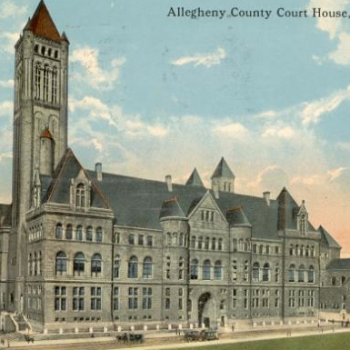
On November 23, 1793, James Honeyman, Benjamin Askins, Dennis Ferris, and a man named Ward, “men of low life” as they were later characterized in Honeyman’s clemency documents, gathered at Askins’ Second St., downtown, home to play music and drink.
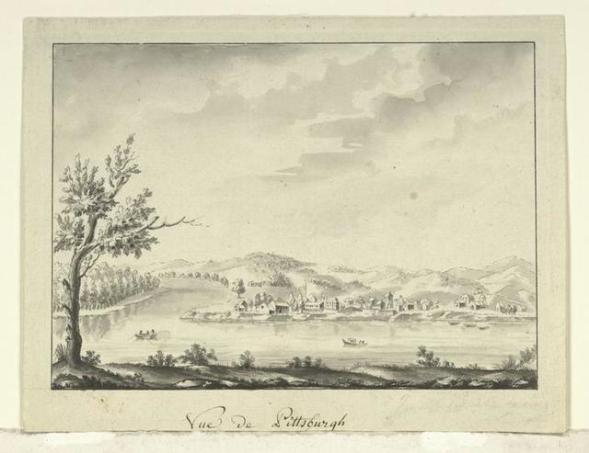
When Ferris and Ward began to fight, Askins intervened. Ward left, leading Honeyman to get upset with Askins. They fought, with Honeyman, “a stout young fellow,” hitting and kicking the “puny weak man” several times (Pennsylvania v. James Honeyman, Allegheny County Court, 1793). Askins died the next day.
At trial less than two weeks later, Honeyman, who was represented by Hugh Henry Brackenridge, Pittsburgh’s most notable citizen of the era, argued that a death that occurs after a fight among drunken acquaintances in the absence of intent to kill should be considered manslaughter. With testimony from Ferris and Askins’ wife, Margaret, the state prevailed in its argument that in acting with “riotous intemperance” and without defense or justification, Honeyman’s conduct met the legal definition of murder.
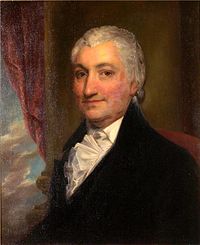
James Honeyman was convicted of murder on December 5, 1793, and sentenced to death. Eleven days had passed since Askins’ death.
In an era in which legal processes were still developing, Honeyman’s subsequent pardon request led Governor Mifflin to refer his case to Pennsylvania Attorney General Jared Ingersoll. Errors he identified in the case led the Pennsylvania Supreme Court to overturn Honeyman’s conviction on technical grounds related to the wording of the indictment (Respublica v. Honeyman 2 U.S. 228 [1795]).
More likely, the court overturned Honeyman’s murder conviction because in the time between his conviction and his appeal, Pennsylvania had, at Mifflin’s urging, enacted the new nation’s first statutory distinction between degrees of murder and limited the death penalty to first-degree murder (for the history of this statute, see here).
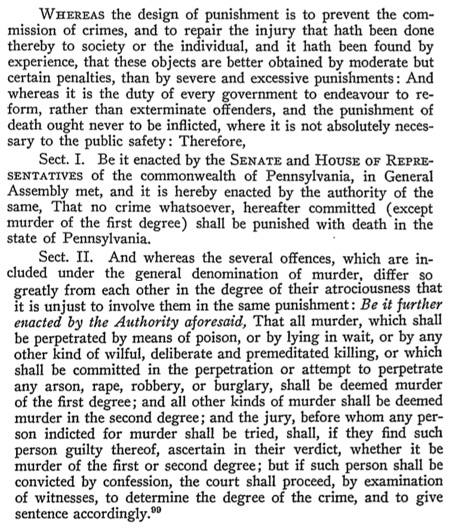
Honeyman’s conduct did not meet the state’s new, higher standard for first-degree murder. There is no record that he was retried.

 State Killings in the Steel City: The History of the Death Penalty in Pittsburgh