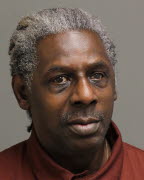
Christopher D. Caldwell

Christopher Caldwell and four others, Allen W. Williams, Eric D. Anderson, Alton L. Smith, and John Morris, killed Sarah and Boykin Gibson, an elderly couple, in their 7442 Monticello St., Homewood residence on January 15, 1985.

image001
7442 Monticello St., red brick home on left

The Gibsons, who had lived in their home for 53 years and had refused to move despite pleas from their children after multiple recent burglaries, were stabbed to death. The defendants, all of whom lived in the same neighborhood, knew the victims and targeted their coin collection.
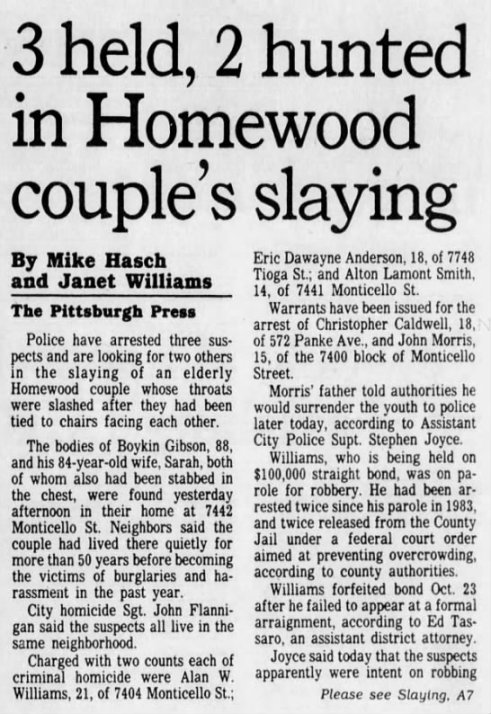
image001
Pittsburgh Press, January 16, 1985

Boykin Gibson, 88, had worked for four decades as a doorman at the renowned William Penn Hotel. Sarah Gibson, 84, had been a teacher.

image001
William Penn Hotel

Across their decades in Homewood, the neighborhood, which had been developed by the city’s aristocracy a century earlier, transformed from a vibrant and diverse middle class community into a poor, mostly Black, blighted area. White flight, redlining, and deeply flawed urban renewal plans drove the decline.

After turning himself in to police the next day, Caldwell, who was 18 at the time and out on bond after two burglary arrests in the previous two months, provided a lengthy taped confession implicating himself as the central figure in the crime and identifying his accomplices. They ranged in age from 14 to 21. Williams, the oldest of the group, had a lengthy record, was wanted for rape, and was on parole for robbery.

At trial, Caldwell pleaded guilty to all charges on January 11, 1986. The judge determined that the killings constituted first-degree murder. After a three-day penalty hearing, the jury sentenced Caldwell to death, plus 15 to 30 years on other charges on January 16. That sentence was formally imposed on March 31, 1986.

image001
Pittsburgh Press, January 16, 1986

On October 16, 1987, the Pennsylvania Supreme Court vacated Caldwell’s death sentence and imposed two life sentences on the grounds that the jury’s finding of aggravated circumstances was unwarranted (Commonwealth v. Caldwell, 516 Pa. 441). In a sharply divided opinion, the majority ruled there was inadequate evidence of torture, an aggravating factor used to justify a death sentence.

The other defendants were convicted of lesser degrees of murder.

Caldwell was a tenth grade dropout who later completed his GED. He remains in prison, where he has developed into a prolific jailhouse lawyer.

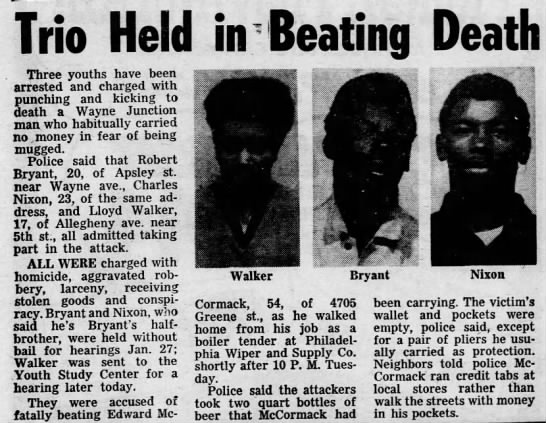
image001

Robert Purnell Bryant

On January 12, 1971, 20-year old Robert Bryant and two companions robbed and killed Edward McCormack on the street in Philadelphia. Bryant, who already had a felony record, was convicted of murder.
Philadelphia Daily News, January 14, 1971

With a de facto death penalty moratorium in place in anticipation of the United States Supreme Court’s landmark Furman v. Georgia decision, Bryant was sentenced to life imprisonment at SCI-Graterford on June 2, 1972.

Assaulting a prison psychologist in 1974 brought Bryant a second life sentence (Pittsburgh Press, April 17, 1986) and a transfer to SCI-Pittsburgh (formerly Western Penitentiary).

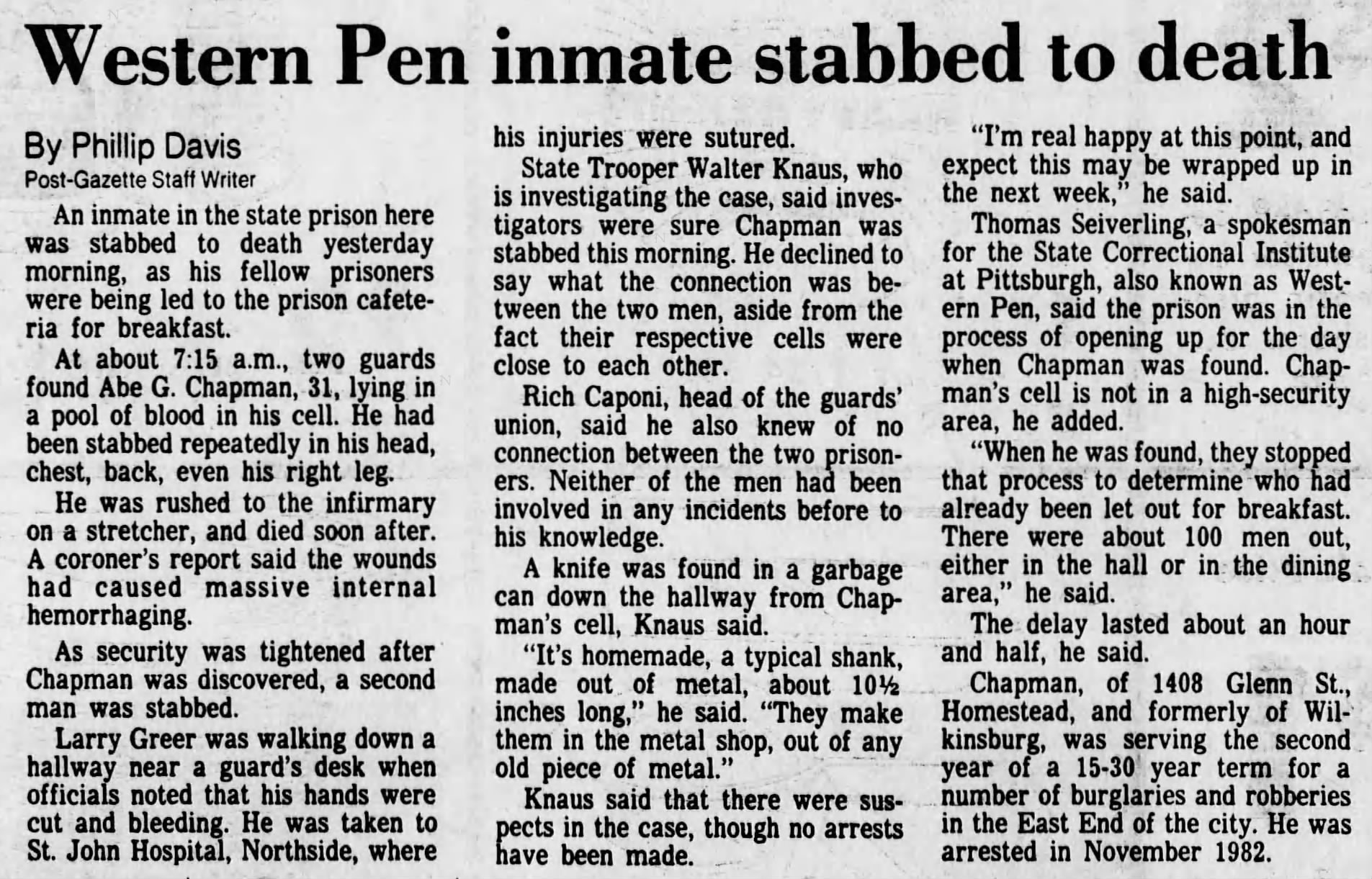
There, on May 15, 1984, Bryant and Larry Greer assaulted and killed fellow inmate Abraham (Abe) Glenn Chapman, Jr., for informing prison authorities that Bryant was in possession of marijuana. Chapman made that report in November 1983. Soon after serving 120 days in segregation for that offense, Bryant stabbed Chapman to death while Greer held him.

image001
Western Penitentiary

Chapman, who lived in Homestead, was serving the second year of a 15-30 year sentence for a series of burglaries and robberies across the eastern neighborhoods of Pittsburgh.

Pittsburgh Post-Gazette, May 16, 1984

Bryant was convicted of first-degree murder on April 16, 1986, and sentenced to death two days later. That conviction was quickly overturned by the trial court after it was determined the jury had mistakenly been given information it should not have seen. Bryant was retried, convicted, and sentenced to death again on March 31, 1987.
Larry Greer was acquitted at trial in Chapman’s killing.

After his conviction and sentence were affirmed on appeal in 1990 (Commonwealth v. Bryant, 524 Pa. 564), Bryant sought relief under the state’s Post Conviction Relief Act, enacted in the 1980s as an additional layer of protection against wrongful convictions. Though the Pennsylvania Supreme Court denied Bryant’s claim that his conviction was unwarranted, it did grant a new sentencing hearing (Commonwealth v. Bryant, 566 Pa. 307, 2001). That ruling was upheld on appeal (Commonwealth v. Bryant, 579 Pa. 119, 2004).

After a new sentencing hearing, Bryant was sentenced to life imprisonment on September 29, 2010, when the court determined that the factors mitigating a death sentence outweighed the aggravating factors. Under Pennsylvania law, such a finding precluded a new death sentence.

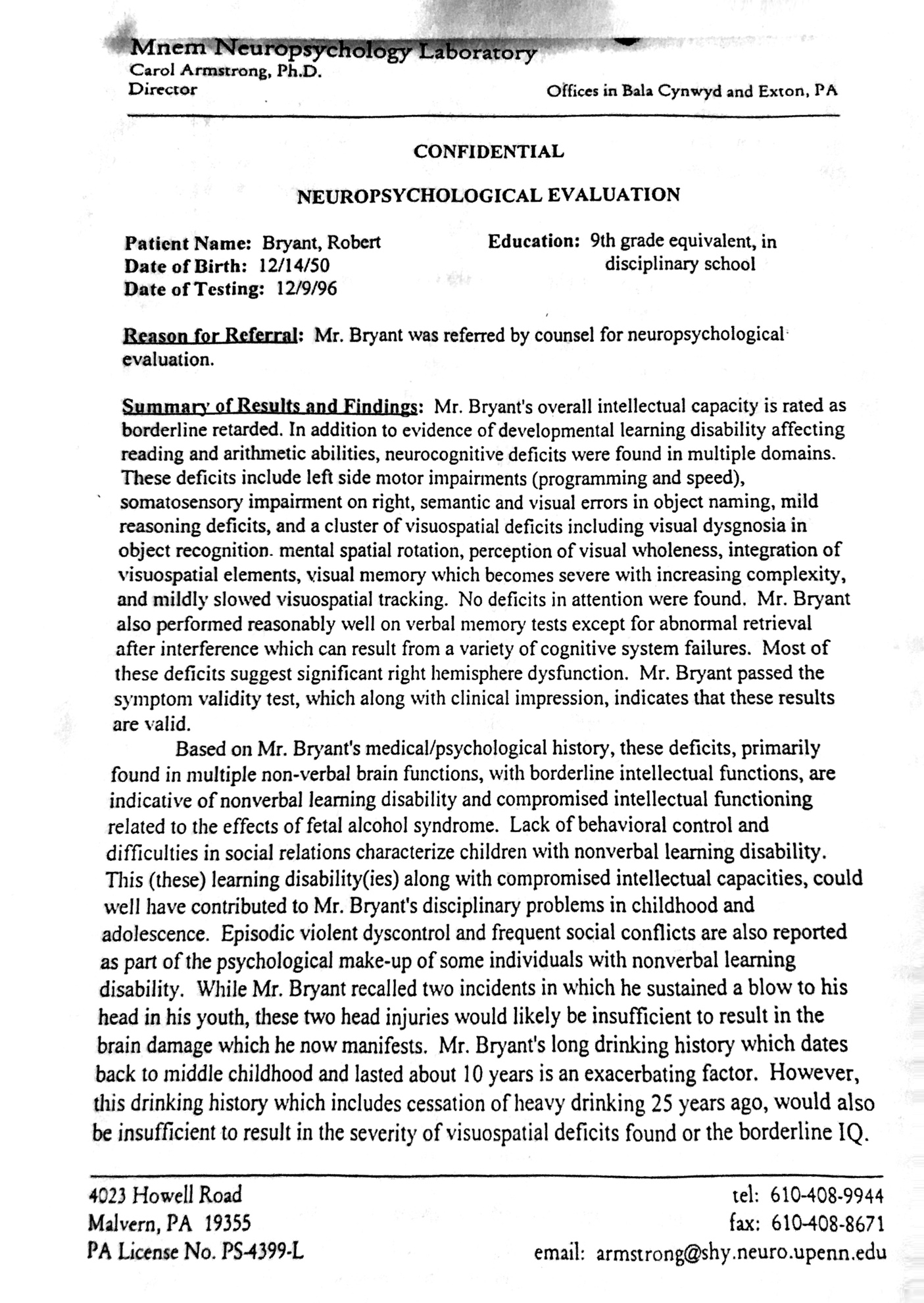
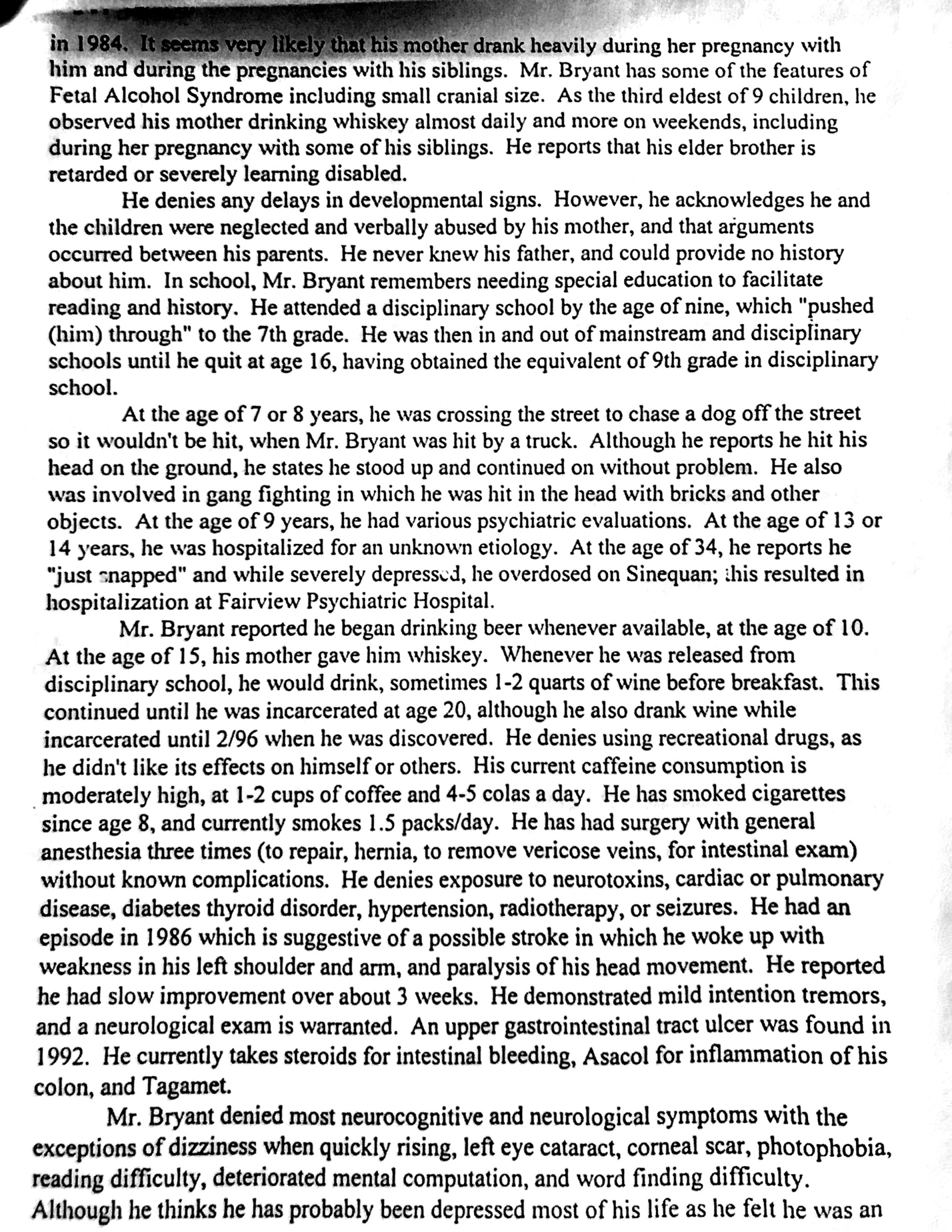
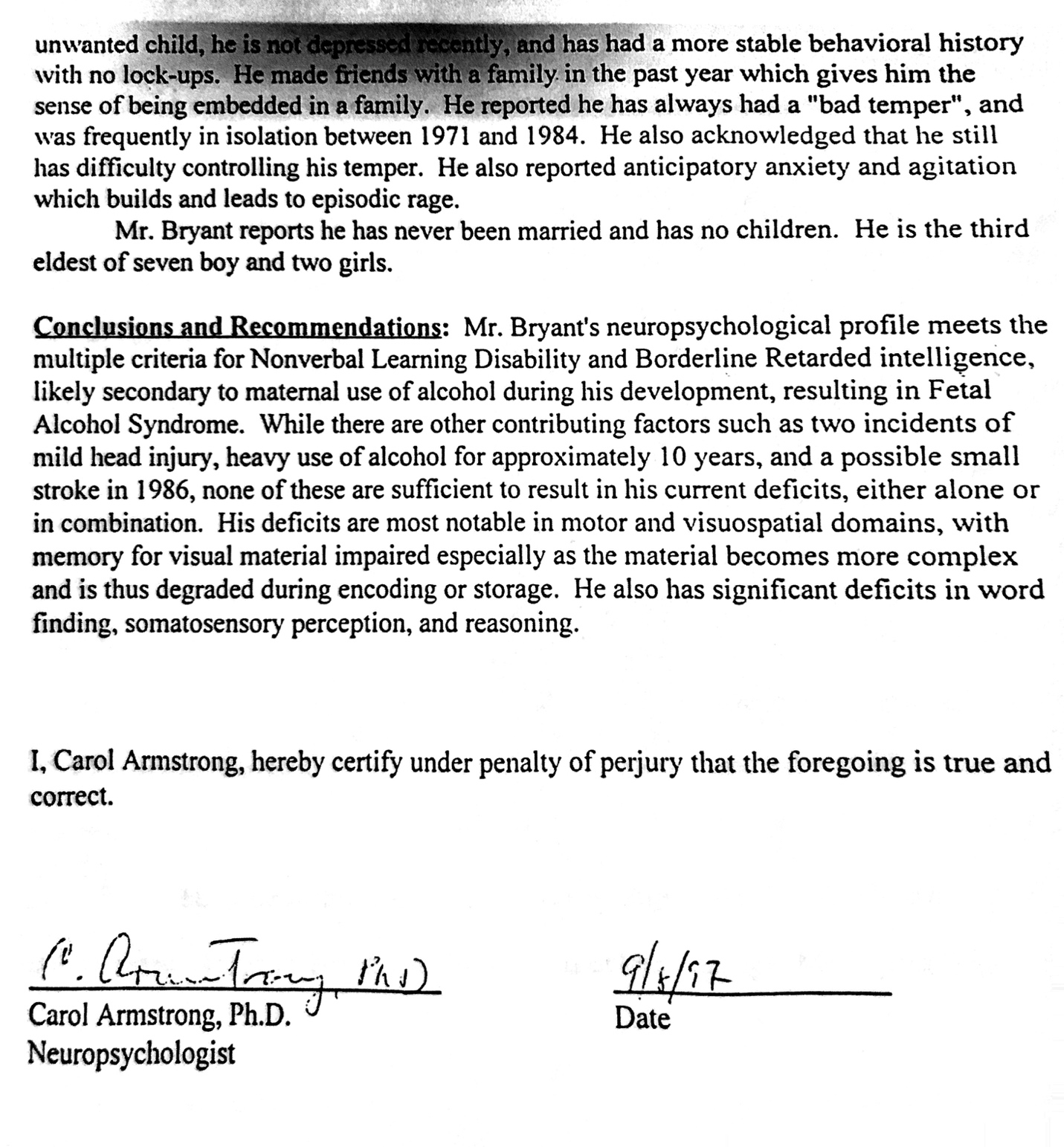
A neuropsychological evaluation of Bryant conducted in 1996 found that he was “borderline retarded,” had features of Fetal Alcohol Syndrome, a pre-confinement history of “heavy drinking,” and a childhood history of serious head injuries.

image001
image002
image003

Robert Bryant remains in prison serving a life sentence.

image001
Robert Bryant

Robert Bricker and Miles H. Gabler

Robert “The Codfish” Bricker, Thomas A. Sacco, and Charles “Monster” Kellington worked as part of a complex network of drug dealers active in Pittsburgh in the 1970s.

Concerned that Sacco had become a liability to the operation – he was in debt to William “Eggy” Prosdocimo, who occupied a higher position in the network, had been involved in a dispute with Prosdocimo regarding a bar fight with Pittsburgh Steelers star linebacker Jack Lambert, and was believed to be cooperating with police – plans were developed to kill him.

image001
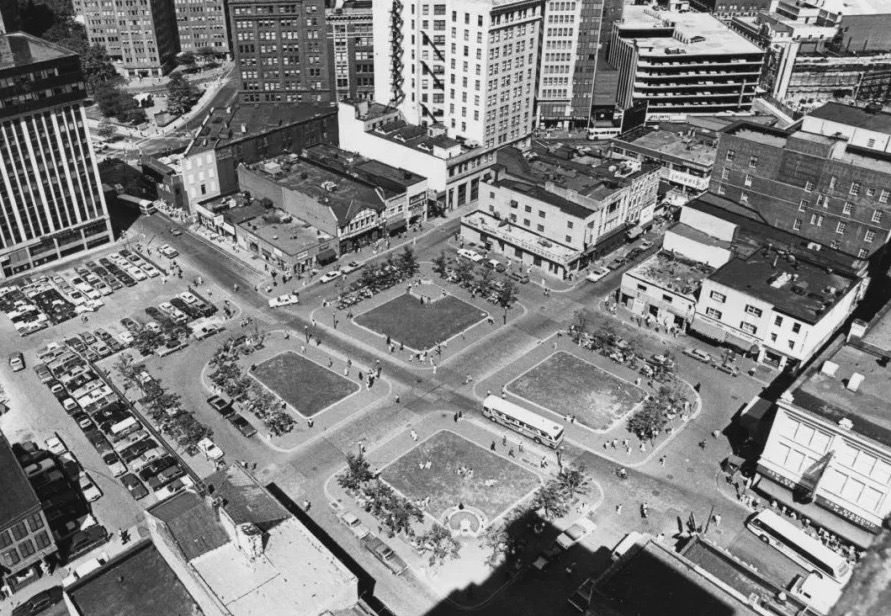
Market Square, 1980 (Pittsburgh Press)

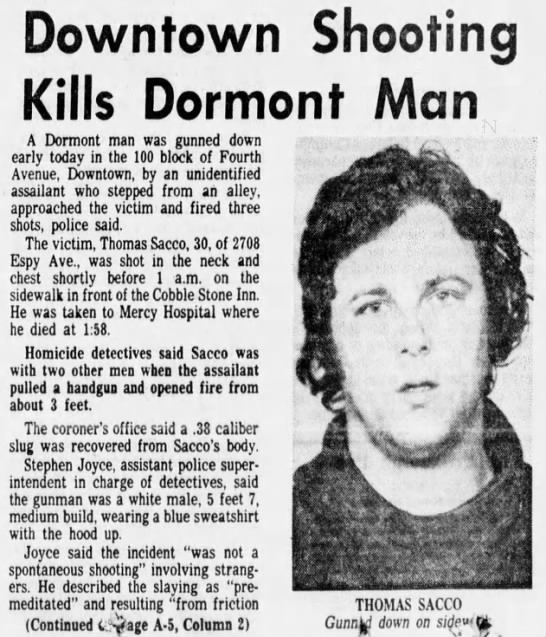
Miles Gabler, who had escaped from prison on September 18, 1979, was hired to kill Sacco. The plans came to fruition on the night of September 25, 1979, hours after the Pirates won en route to a World Series championship and two days after the Steelers ran their record to 4-0 en route to their fourth Super Bowl. Bricker lured Sacco out of Butchies bar, an after-hours club in Market Square, on to the street where Gabler shot and killed him.

image001
Pittsburgh Press, September 25, 1979

Police investigation led them to link the killing to Sacco’s drug dealing, though no arrests followed for more than a year. The case began to take shape when Kellington, who was arrested in 1980 and threatened with the death penalty for the Florida drug-killing of Phillip Hubbard, began to cooperate with police.

In an unrelated case, Gabler was arrested for the non-fatal shooting of Jeanette police officer William Drylie on March 19, 1980, after Drylie responded to a burglary in progress.

After a lengthy and complex investigation, nine men, including Gabler, who was already in prison, and Bricker, were arrested and charged on June 10, 1981, for the “racket slayings” of Sacco, Gary DeStefano, who was killed on June 14, 1979, and Melvin Pike, who was killed on April 19, 1978 (Pittsburgh Press, June 10, 1981).

image001
Pittsburgh Press, June 10, 1981

At trial, Kellington, who entered into the federal witness protection plan after his release from prison, testified against the defendants.

Bricker, who had a long criminal record, including a conviction for a 1964 robbery-murder committed on his wedding day to finance his honeymoon, was convicted on November 15, 1981. He was formally sentenced to death on February 8, 1983. He was acquitted of DeStefano’s murder in 1982 and convicted and sentenced to life imprisonment in 1983 for the murder of Norman McGregor.

Gabler confessed his role in Sacco’s murder, as well as the shooting of Officer Drylie, and some murders committed in West Virginia. After withdrawing his guilty plea, he was convicted at trial on September 25, 1984, and sentenced to death. His death sentence was reversed on December 24, 1988, due to improper jury instructions, and he was sentenced to life imprisonment.

Bricker’s death sentence was overturned on February 13, 1985, due to prosecutorial error and ineffective counsel (Commonwealth v. Bricker, 506 Pa. 571, 1985). Retried, he was again convicted on June 3, 1988, and sentenced to death the next day. That death sentence was reversed on September 21, 1990 (Commonwealth v. Bricker, 525 Pa. 362, 1990), after the Pennsylvania Supreme Court ruled serious errors had been made in the jury instructions.

On December 14, 1990, Allegheny County dropped charges against Bricker in the Sacco case. While serving a life sentence for the McGregor murder, Robert Bricker died of cancer on June 24, 2000.

Miles Gabler’s long criminal career began as a teenager. He was arrested for his role in a burglary and car theft ring in 1960, sentenced to prison, paroled, and returned to prison for a parole violation. Once released, he returned to prison in 1967 after an armed robbery. Paroled again, he was arrested for bank robbery in 1971 and returned to prison.  He was serving that sentence when he escaped and murdered Sacco.

Gabler died in prison on September 18, 2017. He was 76 years old.

William Prosdocimo was convicted of first-degree murder and sentenced to life in prison on November 7, 1983. Now 66 years old, he remains in prison.

Forty years after Sacco’s murder, William Rende, long associated with the Pittsburgh underworld and implicated in the death of Norman McGregor, was killed in Greenfield by Anthony W. Miller on December 28, 2019. Though appearing to be a robbery, the 90 year old Rende was said by police to be targeted by Miller.

Bennie Davis Graves

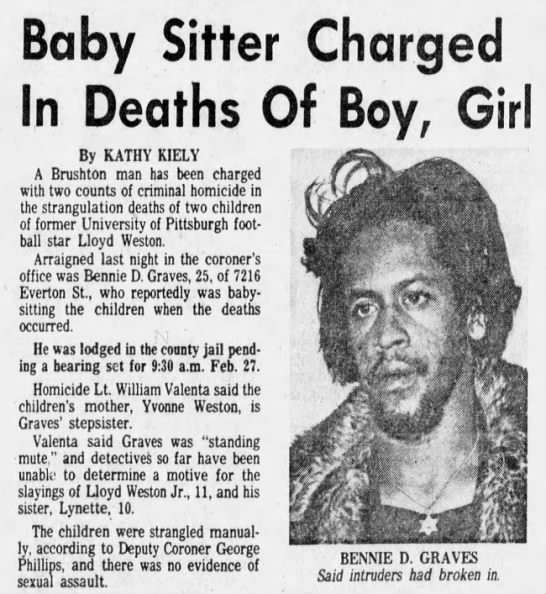
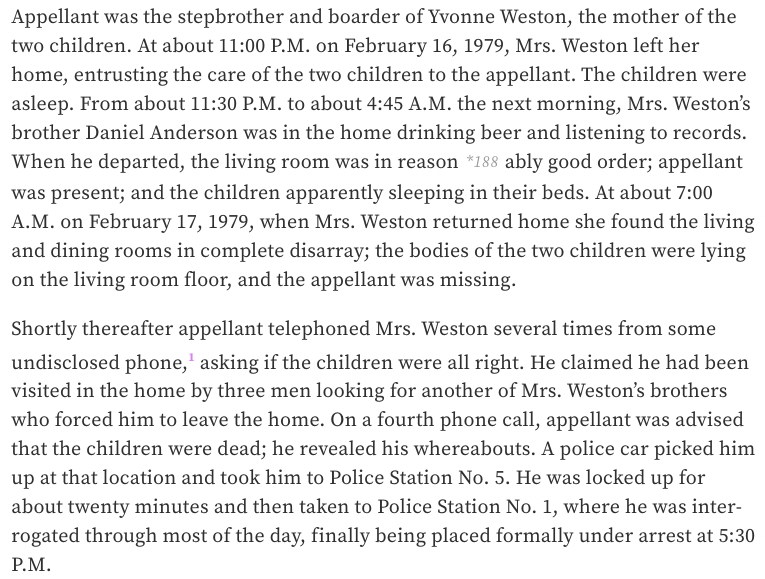
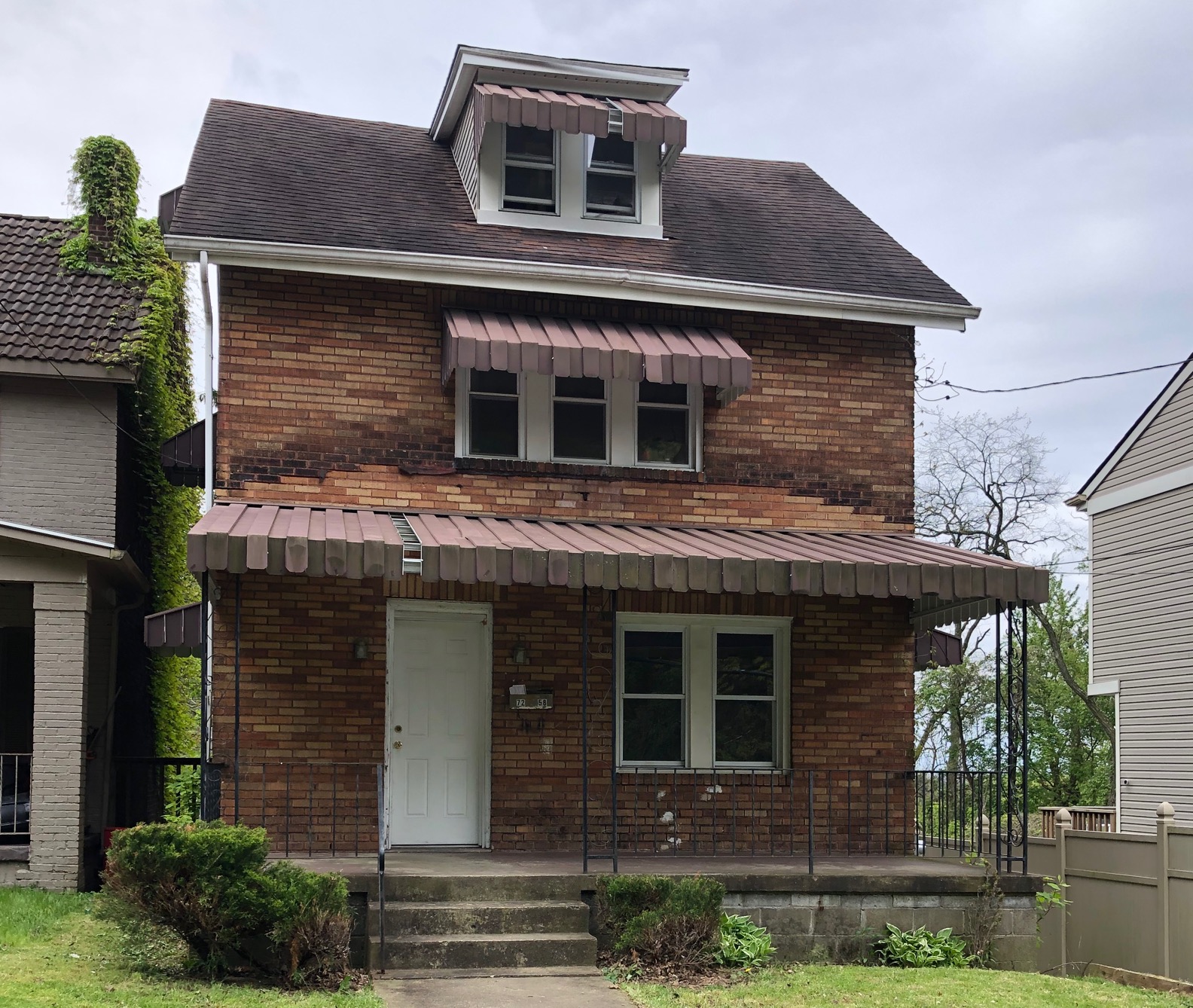
Bennie Graves was babysitting the two children of his step-sister, Yvonne Weston, in their 7258 Campania St., East Liberty home on February 17, 1979. During the evening, Graves sexually assaulted 10-year old Lynette Weston. When her 11-year old brother, Lloyd, Jr., came to her aid, Graves strangled him to death. He then killed Lynette.

image001
Pittsburgh Press, February 18, 1979

When Yvonne returned the next morning from working the night shift, she found the children dead. Graves called Yvonne later that morning to inquire about the children, claiming he had been forced from her home at gunpoint by three intruders early that morning.

image001
Commonwealth v. Graves, 310 PA. Super. 184, 1983

Graves was arrested later that day after lengthy questioning by police. Prior to his arrest, he agreed to give police hair, saliva, fingernail evidence, and to allow pictures to be taken of scratch marks on his back. Graves later claimed he was beaten by police.

image001
7258 Campania St.

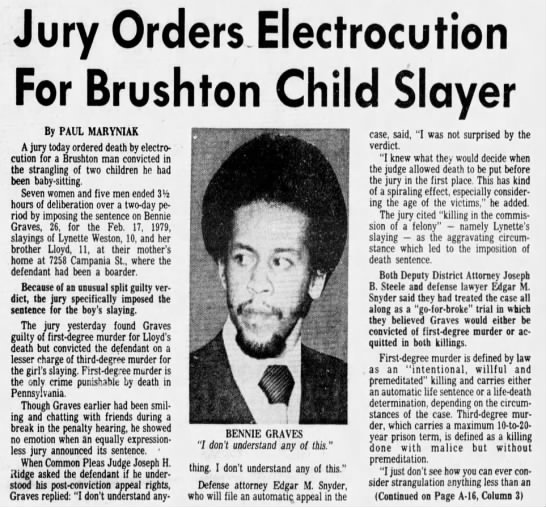
At trial, Graves was convicted of third-degree murder for killing Lynette, the jury’s theory being that the killing was incidental to the rape, and first-degree murder for killing Lloyd, Jr., the theory being his killing showed more premeditation. As there were no eyewitnesses, the case against Graves rested primarily on blood, hair, and other physical evidence collected at the crime scene.

With a new state death penalty statute in place (Act of September 131978, No. 141, § 1, 1978 Pa. Laws 756), the second such statute of the post-Furman era, enacted over Governor Shapp’s veto once again, the jury could consider the death penalty. The next day, February 1, 1980, Graves was sentenced to death.

image001
Pittsburgh Press, February 1, 1980

Graves’s death sentence was vacated and he was sentenced to life imprisonment on December 30, 1980, after Judge Joseph H. Ridge, who presided at Graves’s trial, ruled that the jury had erred in imposing a death sentence without clearly establishing that the murders occurred in the perpetration of another felony, a requirement under the state’s new death penalty statute.

After his release from death row, Graves continued to challenge his conviction. His claim that the physical evidence used to secure his conviction was obtained improperly was dismissed (Commonwealth v. Graves, 310 PA. Super. 184, 1983) when the court ruled he consented to providing the evidence and the evidence was gathered prior to and separate from his arrest. His challenge to the qualifications of the experts who testified for the state was likewise rejected.

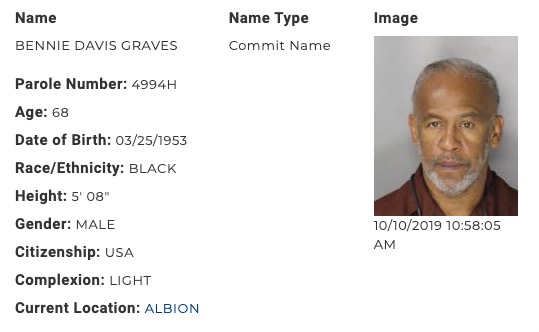
Bennie Graves, now 68 years old, remains in prison at State Correctional Institution-Albion.

image001

The father of the murdered children, Lloyd M. Weston, Sr., was a football star at Westinghouse High School and a defensive lineman at the University of Pittsburgh in the 1960s.

Clifford B. Futch

Clifford Futch was serving a life sentence in Western Penitentiary for the August 22, 1970, robbery murder of Milton R. Szczepanski, 56, a patron in Ralph Grossi’s Lounge on Penn Avenue in Lawrenceville, when he stabbed and killed fellow inmate, Charles C. Ganss, Jr., on February 26, 1975.

Pittsburgh Press, February 26, 1975

Ganss was serving a life sentence for the January 20, 1962, arson-robbery-murder of Pauline Ritter in Cabot, Butler County, committed with 19-year olds, Donald Montgomery and Morris Steinhiser. Ganss was only 17 at the time.

At trial for killing Ritter, Ganss was convicted of first-degree murder and sentenced to death. Montgomery was also convicted of first-degree murder and sentenced to life imprisonment. Steinhiser was convicted as an accessory and sentenced to 12 years confinement.

Granted a retrial on June 18, 1964, after the court found that a juror had prejudged the case, Ganss pleaded guilty and was sentenced to life imprisonment.

At trial for killing Ganss in July 1975, Futch argued he was in another area of the prison at the time of the killing. Several prison guards testified to having witnessed him stab Ganss. With Futch denying any involvement and the state’s case relying on guard eyewitnesses, no motive for the attack was ever established. Futch’s strong sense of racial mistreatment, growing Black militancy, and a Pittsburgh Courier report (September 11, 1976) point toward the possibility of  a racial motive.

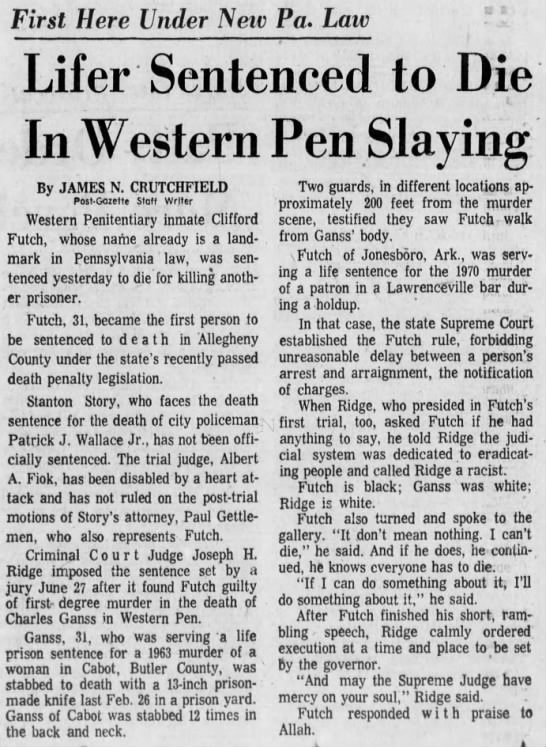
Futch, who had an extensive criminal record, was convicted of first-degree murder by an all-white jury on July 27, and sentenced to death on January 16, 1976. His was Allegheny County’s first death sentence imposed after the passage of the state’s new, post-Furman death penalty statute.

image001
Pittsburgh Post-Gazette, January 17, 1976

Futch’s original conviction was overturned on November 24, 1976, due to the court’s failure to allow race-related questions of prospective jurors during jury selection (Commonwealth v. Futch, 469 Pa. 422, 1976) and a retrial was ordered.

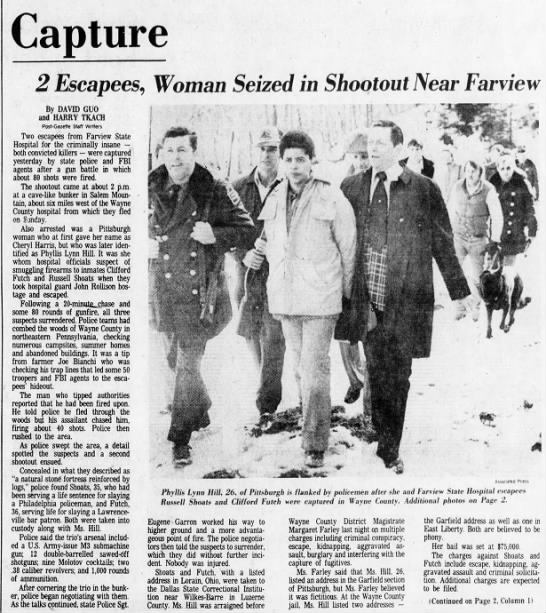
After being ruled incompetent to stand trial, Futch was sent to Farview State Hospital, embroiled in controversy related to the mistreatment of prisoners, for observation. While there, he and another inmate, Russell Shoatz (also Shoats), a Black Panther Party member and self-described political prisoner, used smuggled weapons to escape. They were apprehended two days later, March 4, 1980, after a shootout with police.

image001
Pittsburgh Post-Gazette, March 5, 1980

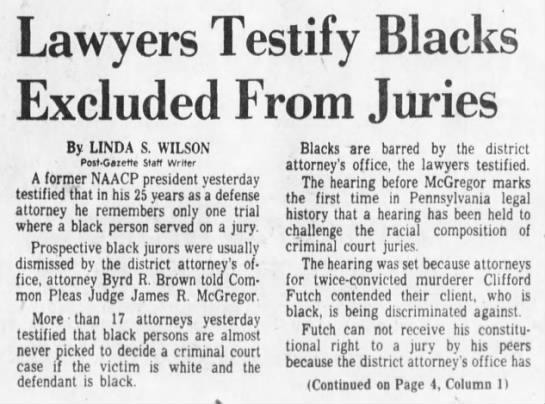
Once his retrial was allowed to proceed, Futch argued again that the jury selection process was racially tainted. The trial court agreed that he had made a prima facie case for that claim, which prevented the case from going to the jury. The state appealed and the Pennsylvania Supreme Court ruled that the evidence was insufficient to conclude that impermissible racial bias had occurred (Commonwealth v. Futch, 492 Pa. 359, 1981).

Retried again, Futch was acquitted of Ganss’s murder on October 10, 1981. Questions about racially-motivated mistreatment of Futch dogged efforts to convict him, as did the larger issue of “of a longstanding prosecution practice of systematically excluding blacks from juries” (“Lifer Acquitted in Prison Stab-Death, Pittsburgh Post-Gazette, October 12, 1981).

image001
Pittsburgh Post-Gazette, April 25, 1980

Futch’s legal saga continued with his April 1982 conviction and life sentence for his 1980 escape.

Now more than 70 years old, Futch remains in prison. Throughout his lengthy imprisonment, he has repeatedly challenged the conditions of his confinement, disrupted the order of prison, and decried the racism of the criminal justice system.

Futch had also appealed his conviction for murdering Szczepanski, alleging an impermissible delay between his arrest and his arraignment. Though the Pennsylvania Supreme Court rejected his claim (Commonwealth v. Futch, 447 Pa. 389, 1972), the case led the state to establish standards for such matters.

Terminally ill with cancer, Russell Shoatz was released from prison in October 2021 and died two months later.

Stanton Story

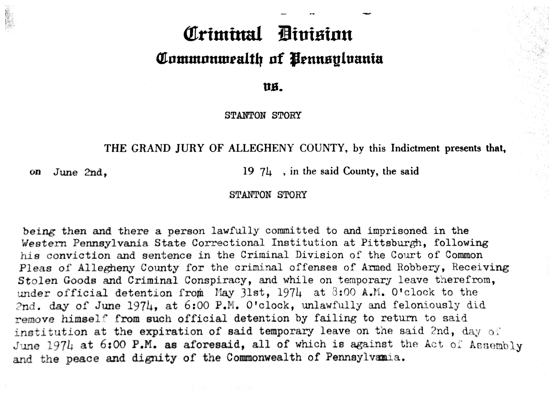
Already known to police as leader of a gang implicated in at least twenty-four armed robberies and a murder before his twentieth birthday, Stanton Story escaped from Western Penitentiary by failing to return from a temporary leave on June 2, 1974.

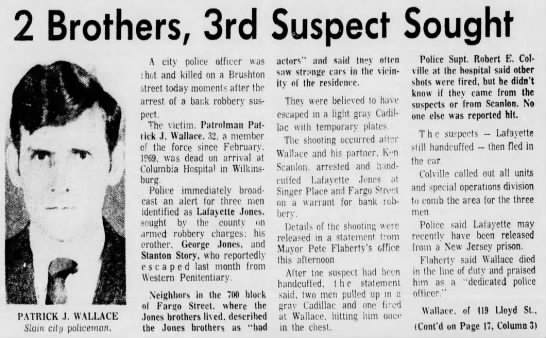
image002.pngA month later, on July 3, 1974, Pittsburgh Police Officer Patrick J. Wallace, Jr. and his partner, Kenneth Scanlon, pulled over Lafayette Jones, whom they recognized as a fugitive, in a remote area of Brushton.

image001
Intersection of Singer Place and Fargo Way, site of the shooting

The official account of what followed is that while Jones was being arrested, he broke free of the officers and fled toward a nearby car. Story was crouched behind that car. As Wallace pursued Jones, Story shot and killed him and fled.

image001

image001
Pittsburgh Press, July 3, 1974

An intensive manhunt followed, sparking complaints of police racism and brutality. Story was arrested on September 7, in East Liberty, after an armed standoff with police.

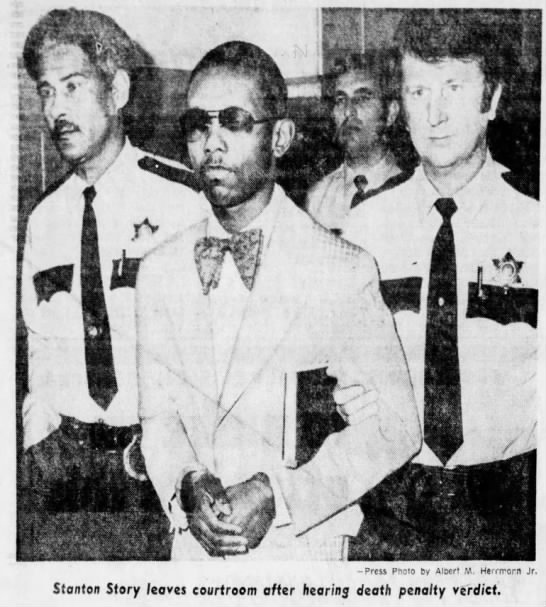
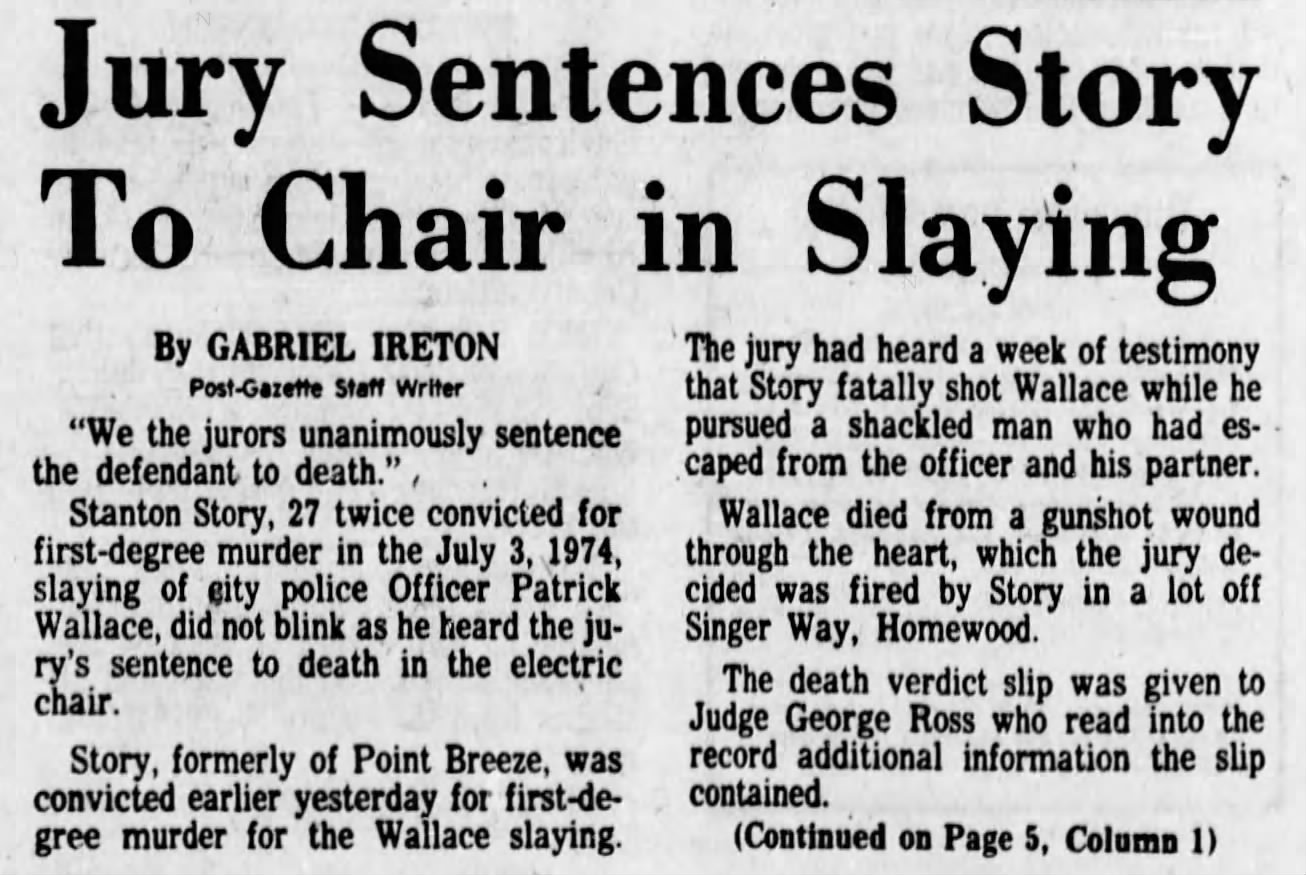
Story was convicted of first-degree murder on March 29, 1975, and sentenced to death the same day. That he was convicted by an all-white jury in a high profile killing of a white police officer in a case involving police brutality, and a series of procedural irregularities set the stage for a contentious post-conviction process.

image001
Pittsburgh Press, March 30, 1975

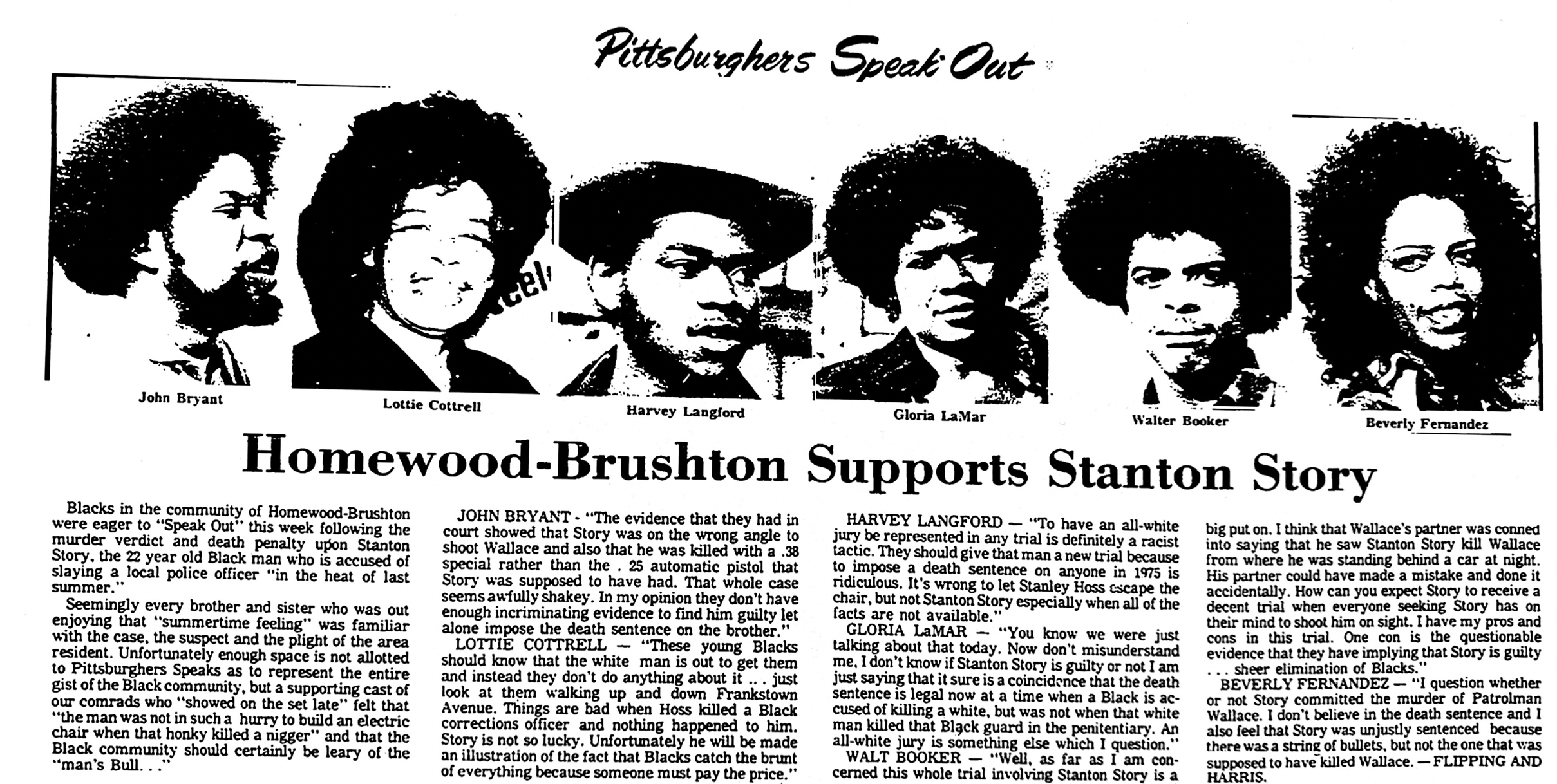
Heightened racial tensions in Pittsburgh and beyond and heightened legal and public attention to the death penalty lent additional valence to the case. Coverage of the case by the Pittsburgh Courier, with a sometimes more strident posture than its traditional Black bourgeoisie voice, countered the white establishment voices of the Press and Post-Gazette by highlighting voices that emphasized the racist character of the incident from police stop through death sentencing and that claimed Wallace was shot by his partner.

image001
Pittsburgh Courier, April 12, 1975

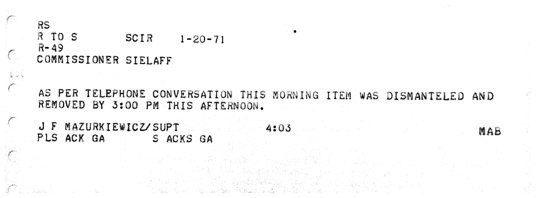
The prospect of Story’s execution was quite remote. Though Pennsylvania had enacted a new death penalty statute (P.L. 213, No. 46, May 26, 1974) over Governor Milton Shapp’s veto after its statute had been invalidated by the U.S. Supreme Court’s 1972 decision in Furman v. Georgia (as applied to Pennsylvania via Commonwealth v. Bradley, 295 A.2d 242, September 7, 1972), that statute was untested. What’s more, Shapp had declared that no one would be executed during his term and the state’s electric chair had been dismantled by order of Attorney General Fred Speaker.

image002

On appeal, Story argued that allowing Officer Wallace’s wife, Marilyn, to testify about their marriage and family and other testimony related to Wallace’s reputation was irrelevant and prejudicial. In a lengthy decision, the court agreed, and on January 26, 1978, ordered a new trial (Commonwealth v. Story, 383 A.2d 155).

image004
Pittsburgh Post-Gazette, October 27, 1979

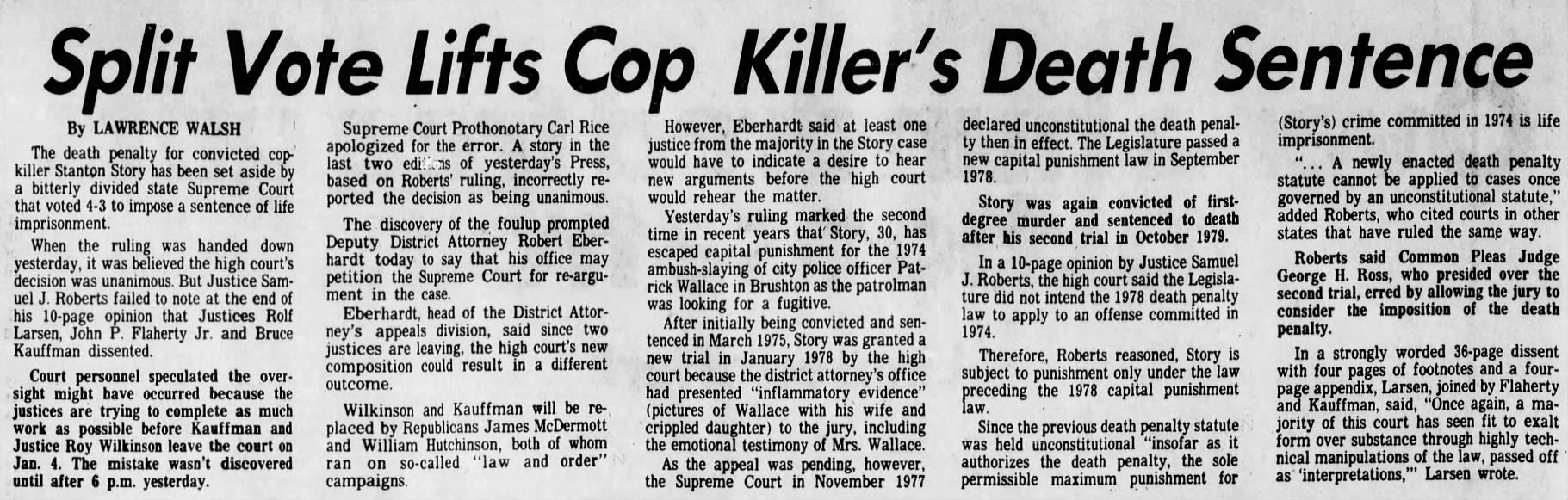
On retrial, Story was convicted on October 26, 1979 and sentenced to death the next day. On appeal, on December 28, 1981, the Pennsylvania Supreme Court upheld the conviction but reversed the death sentence and resentenced Story to life imprisonment (Commonwealth v. Story, 497 Pa. 273).

image003
Pittsburgh Press, December 29, 1981

The Court’s conclusion was based on a determination that the death penalty statute in place when Story committed his crime was subsequently found unconstitutional (by Commonwealth v. Moody, 382 A.2d 442, 1977) and that Story could not properly be sentenced to death under a statute not in place when he committed his crime.

image001

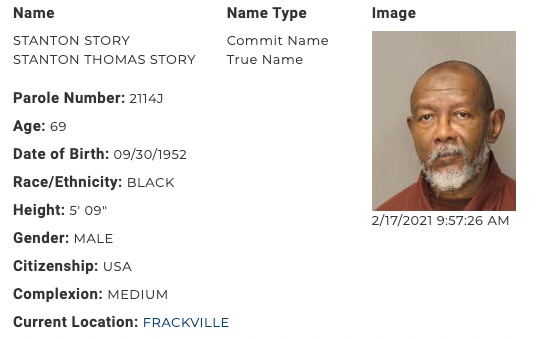
Terminally ill with cancer, Stanton Story was released from the State Correctional Institution-Frackville in April 2023. He died on June 9, 2023, at age 70.

Stanley Hoss

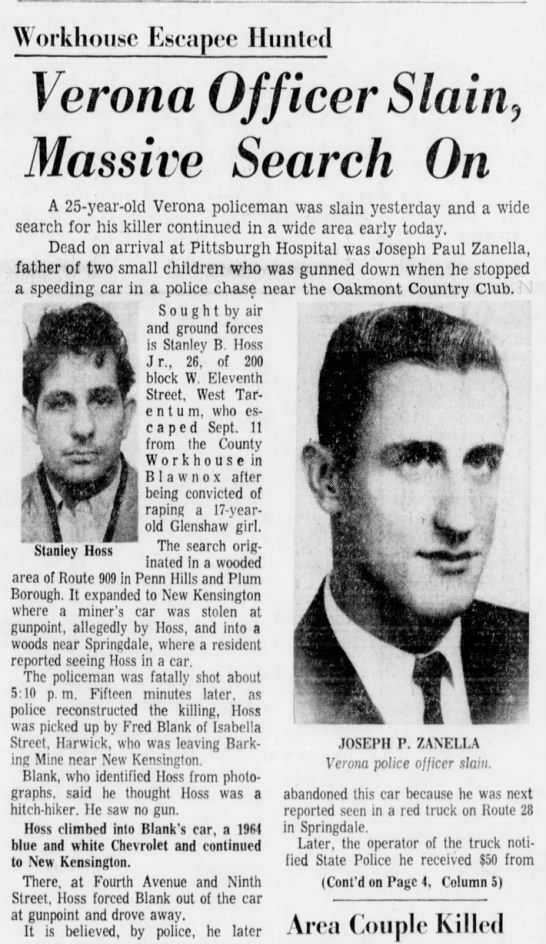
Stanley Hoss escaped from the Allegheny County Workhouse, where he was serving time for raping a 17-year old girl, on September 11, 1969. The incident led the county to close the workhouse, pronouncing it a security risk.

image001
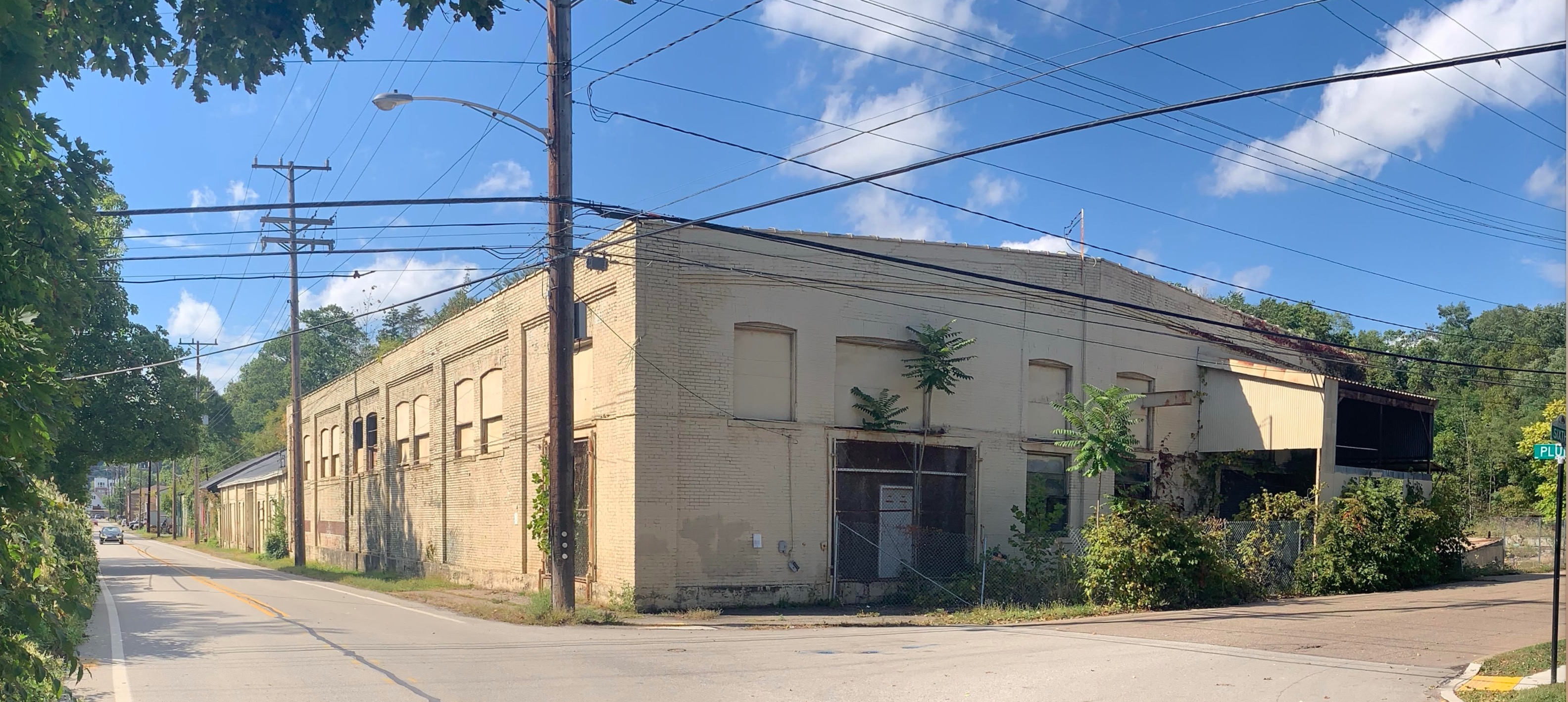
Plum St., site of Zanella’s murder

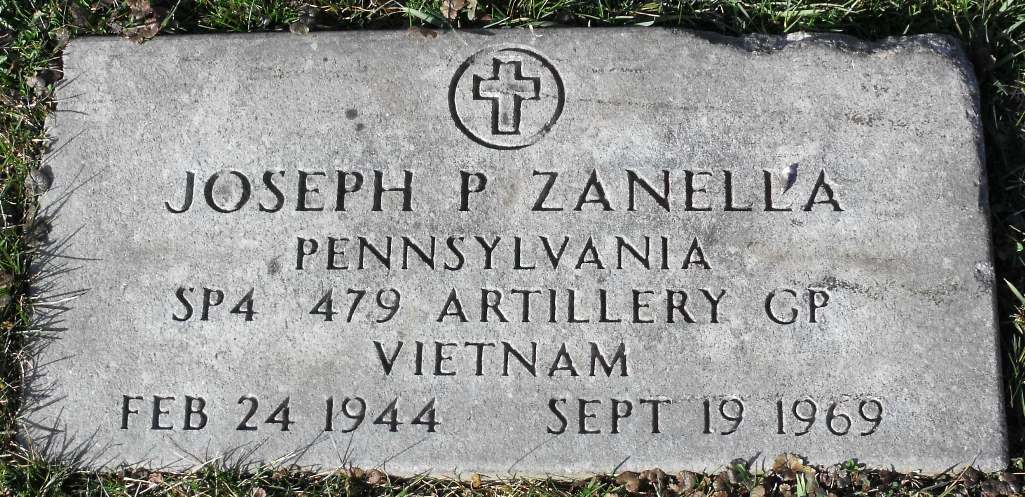
Hoss remained undetected for more than a week before being recognized by a man who knew of his escape and notified police. With police in pursuit, Hoss stole a car and fled. Recognizing the stolen car, Verona Police Officer Joseph Zanella pulled over Hoss near Oakmont Country Club on the afternoon of September 19, 1969. As he approached Hoss’s car, Zanella was shot twice and killed. Hoss fled again.

image001
Pittsburgh Post-Gazette, September 20, 1969

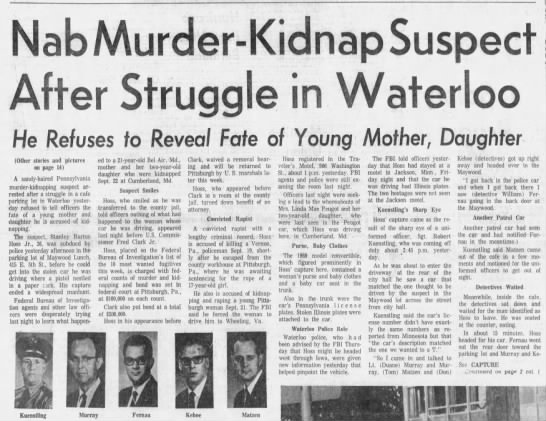
In Maryland, Hoss kidnapped and stole the car of 21-year old Linda Peugeot and her daughter, Lori Mae, both of whom he subsequently killed as he fled west. Pursued by a massive law enforcement manhunt, he was apprehended in Waterloo, Iowa on October 4, 1969, after police identified Peugeot’s car and cornered Hoss outside a restaurant.

image001

image001
The Courier (Waterloo, Iowa), October 5, 1969

Questioned by police, Hoss confessed to all three killings. He was returned to Pittsburgh and resentenced for his previous rape conviction.

At trial, Hoss was found guilty of Zanella’s murder on March 9, 1970, and sentenced to death. His was the last death sentenced imposed in Allegheny County prior to the U.S. Supreme Court’s Furman decision ruled that the death penalty was unconstitutional as administered.

image001

On appeal, on October 12, 1971, the Pennsylvania Supreme Court reversed his death sentence due to inappropriate use of his prior record when considering his penalty (Commonwealth v. Hoss, 445 Pa. 98). Hoss was resentenced to life imprisonment in Western Penitentiary.

The bodies of Linda and Lori Mae Peugeot were never found and Hoss was never prosecuted for their killings.

On December 10, 1973, Hoss and two other inmates killed Captain Walter Peterson, a Black prison guard. During the beating, the inmates shouted racial slurs at Peterson. With the death penalty having been ruled unconstitutional the prior year, the murder of a prison guard by a formerly death sentenced prisoner sparked protest and outrage among prison guards and death penalty proponents.

Hoss’s second-degree murder conviction six months later, on June 14, 1974, further angered those frustrated by what they perceived as the political and legal failures to punish violent criminals. His conviction and life sentence were affirmed on appeal (Commonwealth v. Hoss, 469 Pa. 195, 1976) after the court rejected Hoss’s claim that a change of venue should have been granted due to public hostility and prejudicial pretrial publicity he experienced.

Serving two life sentences, Hoss committed suicide in his cell at Graterford State Prison on December 6, 1978.

image001

Hoss’s life and crimes were chronicled by James G. Hollock in his 2011 book, Born to Lose.

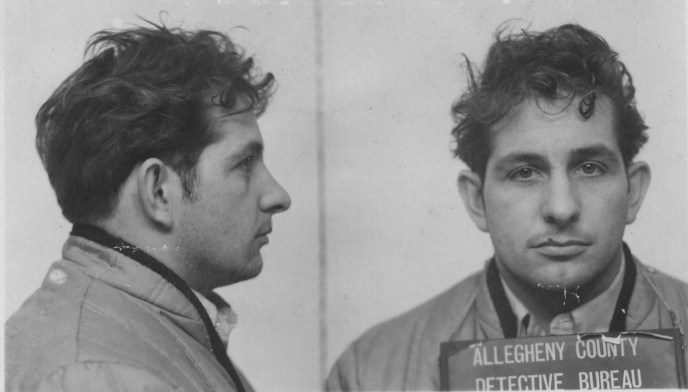
Stanley J. Howard

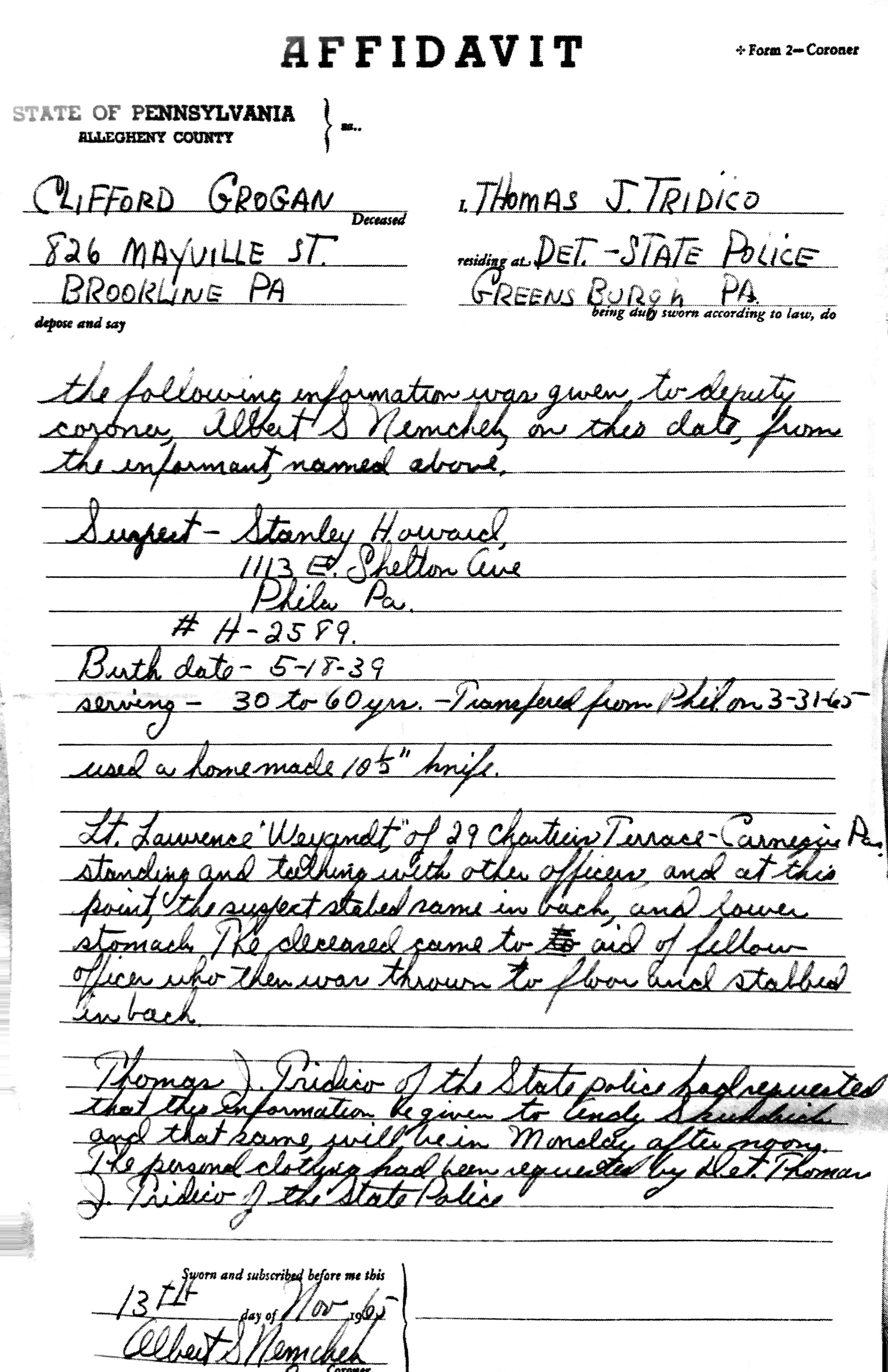
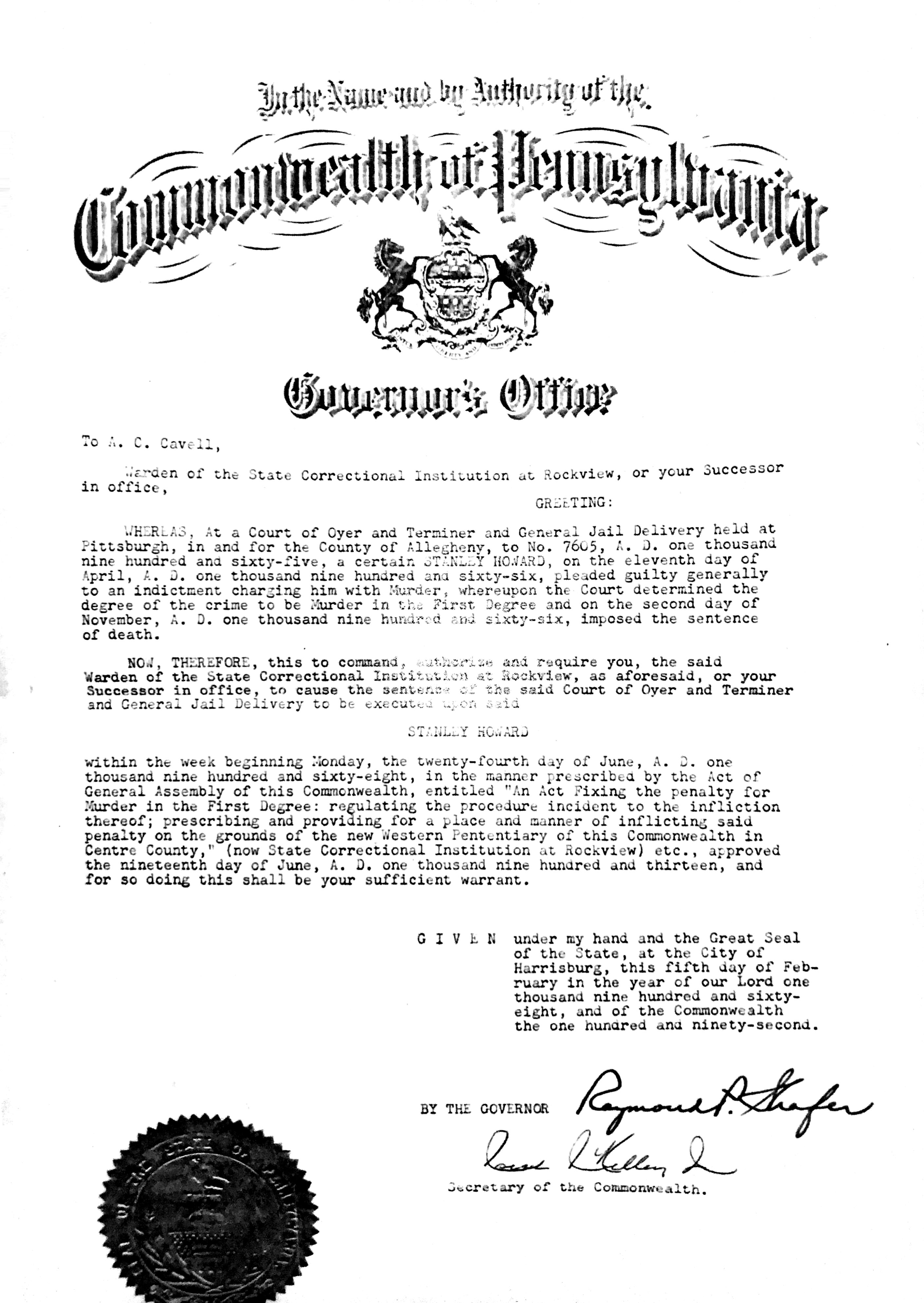
While serving a 30-to-60 year sentence at Western Penitentiary (SCI-Pittsburgh) for a Philadelphia robbery, 26-year old Stanley J. Howard stabbed and killed Corrections Officer Clifford J. Grogan after Grogan came to the aid of fellow guard Lawrence Weyandt during an altercation. The incident occurred on November 12, 1965.

Howard pleaded guilty to first-degree murder and was convicted on April 11, 1966. After a sentencing hearing that included testimony that would otherwise have been heard at trial, he was sentenced to death on November 2, 1966.

image001
Western Penitentiary

The motive for the attack is unclear, though Howard’s guilty plea, his refusal of the assistance of counsel, his history of suicide attempts, and his serious mental health problems suggest he may have sought the death penalty.

image001

Once sentenced to death, however, Howard aggressively challenged his conviction. In his initial appeal, he argued that his actions lacked the premeditation necessary for first-degree murder, that he lacked the mental capacity to form intent, and that imposition of his death sentence was an abuse of the court’s discretion. Though the court expressed concern about the lack of mental health treatment available to Howard, his arguments were rejected (Commonwealth v. Howard, 426 Pa. 305, 1967).

image001.jpg

Howard’s appeal to the United States Supreme Court was rejected without review.

However, with the use of the death penalty in Pennsylvania and the country as a whole grinding to a halt in the face of legal challenges, the execution of Howard’s death sentence and the death sentences of other inmates in the county, the state, and even the nation, awaited federal action to resolve the many questions surrounding the nation’s death penalty practices.

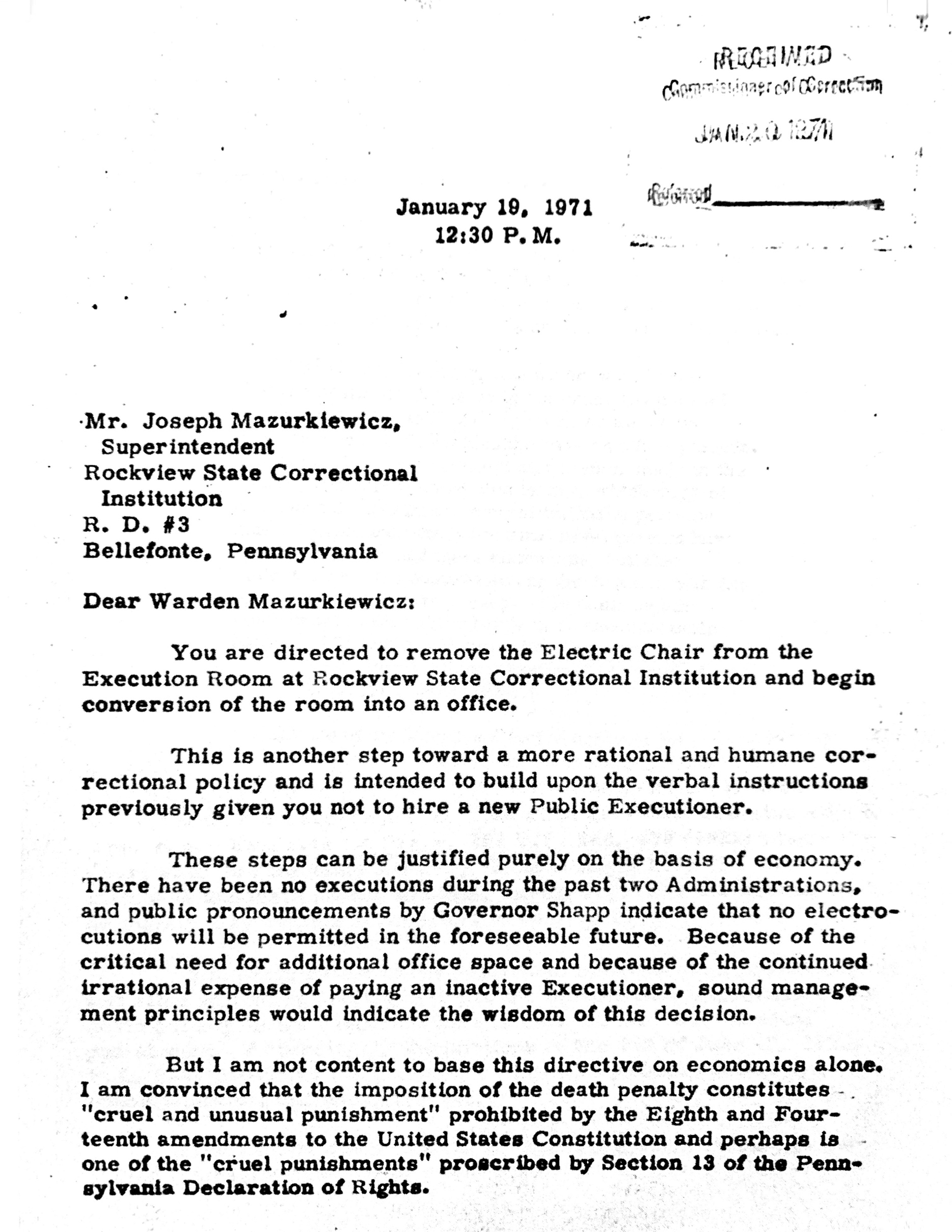
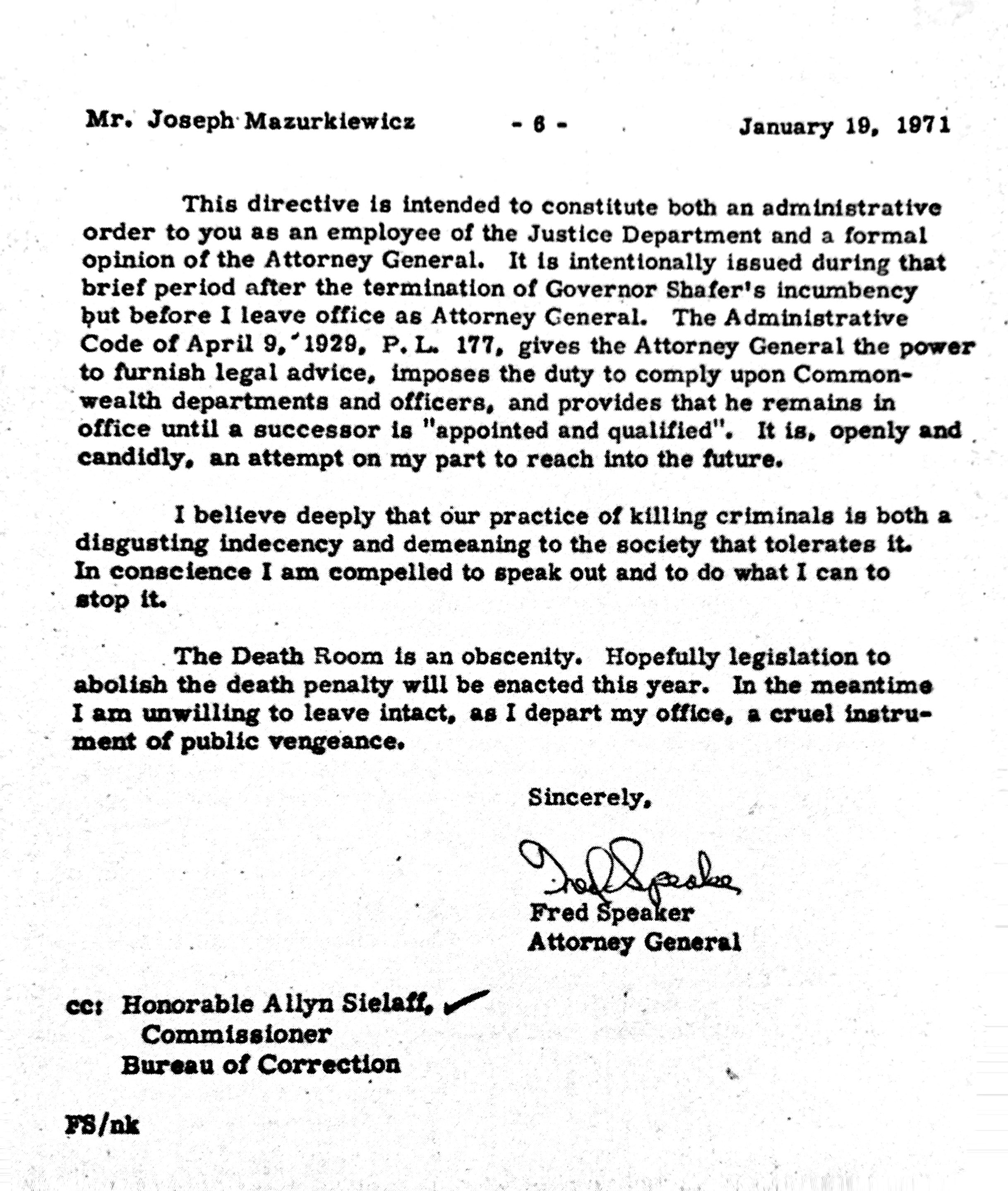
Pennsylvania’s dramatic response to this era of uncertainty was to dismantle its electric chair. In an extraordinary six-page letter that detailed the physical, legal, and moral horrors of executions, Attorney General Fred Speaker directed the superintendent of Rockview to eliminate the state’s capacity to execute prisoners.

image001

image001
The first and last pages of Speaker’s letter

This de facto death penalty moratorium came to an end with the U.S. Supreme Court’s decision in Furman v. Georgia (408 US 238, 1972), which ruled the death penalty unconstitutional.  When that decision was applied to Pennsylvania through the case of Commonwealth v. Ross (449 Pa. 103, 1972), Howard’s death sentence – and the death sentences of three other Allegheny County inmates and twenty-four Pennsylvania inmates – was formally invalidated and commuted to life imprisonment.

Stanley Howard died in prison on April 6, 1994.

As is frequently found among death sentenced-inmates, Howard had a very troubled and abusive childhood. His parents divorced when he was four and he was placed in a foster home. By the time he was five, he was disruptive at home and school. This led to more foster home placements.

By age 7, he was committing petty crimes. His delinquency escalated to serious property crime and then to violent crime, with resulting periods of confinement. After being in prison from 1954-1958, he entered the Army in 1960 and, after four courts-martial, was dishonorably discharged in 1961.

In 1962, he committed a series of robberies that led to his final period of confinement. In prison, he attempted suicide several times. He was also involved in numerous disciplinary actions and was transferred to multiple institutions due to conduct problems. While on trial for killing Grogan, he attacked his attorney.

Bernard Ross

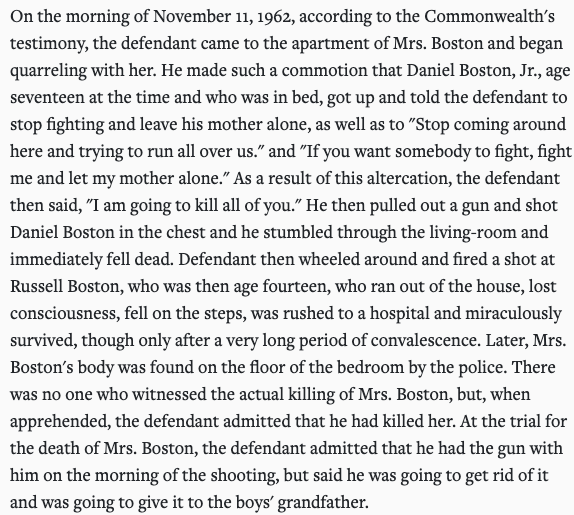
Bernard Ross and Eva Mae Boston quarreled frequently during their tumultuous eight-year relationship, both while they lived together and after having separated. Those quarrels often involved threats by Ross that he would kill Boston.

image001
Blair Heights, Clairton

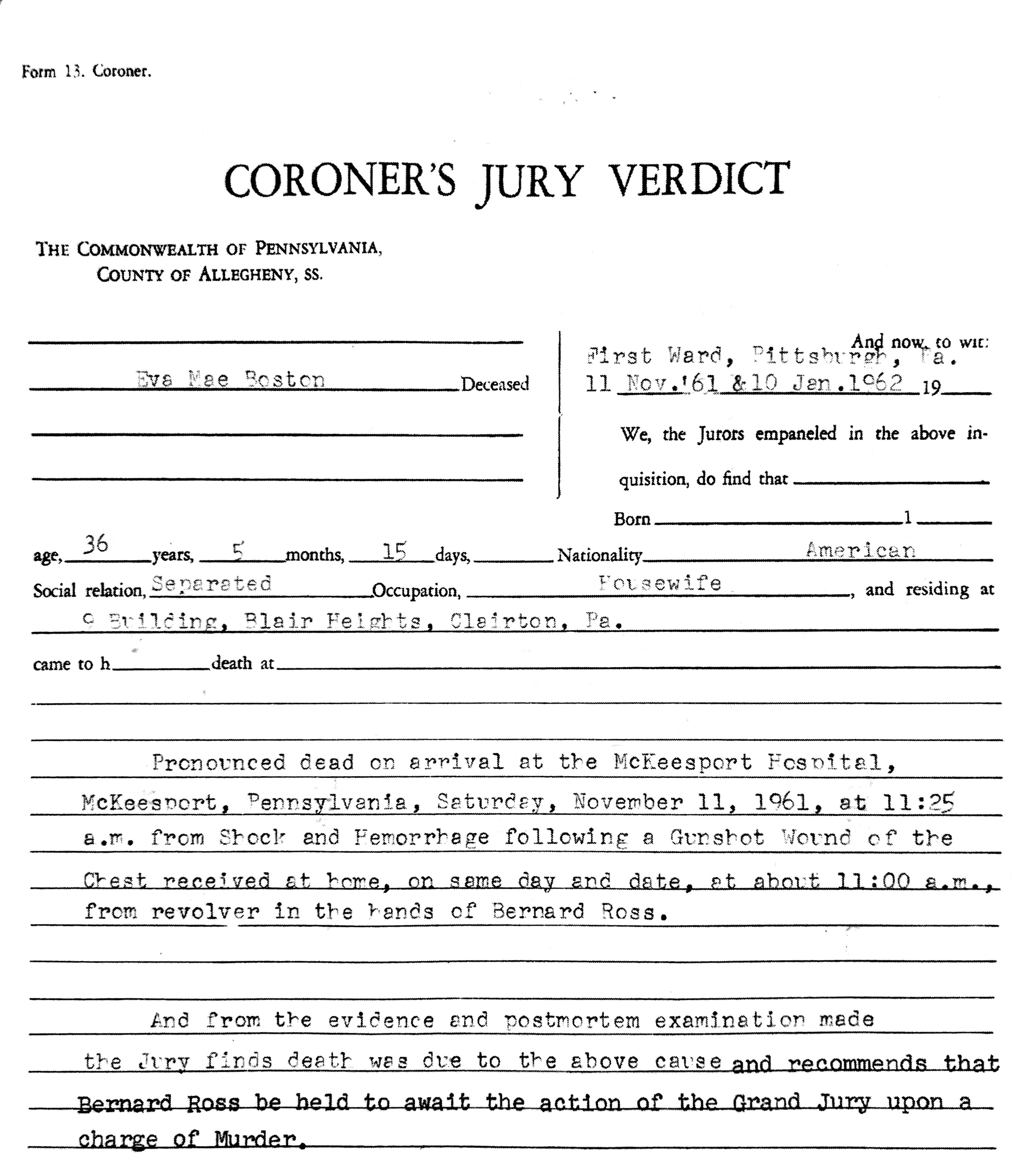
Angry that Boston was now living with another man, Ross, 33, carried out that threat on November 11, 1961, when he went to Boston’s Blair Heights, Clairton home, shot and killed her and her son, Daniel Boston, Jr., and shot and wounded her son, Russell Boston.

image001
Ross v. Maroney, 372 F.2d 53. 1967

Soon after fleeing the scene, Ross called the police to see whether the shootings had been fatal. Police misled Ross, telling him the victims were alive. Ross was arrested at McKeesport Hospital when he arrived to see the victims. The murder weapon was found in his car.

image001.jpg

Ross was tried only for the murder of Eva Mae Boston. Facing eyewitness testimony from Russell Boston and a friend of Russell’s, and his own incriminating statements, Ross was found guilty on April 27, 1962, and sentenced to death on May 6, 1963. He had a prior conviction for aggravated assault in North Carolina in 1951.

Ross’s state appeal, which raised a series of technical points, was rejected (Commonwealth v. Ross, 413 Pa. 35, 1963) after the court found that “the evidence to sustain the conviction and sentence is not only sufficient but is also exceptionally strong and convincing.”

His federal habeas appeal was likewise rejected (Ross v. Maroney, 372 F.2d 53. 1967) after the Third Circuit Court of Appeals sided with the state.

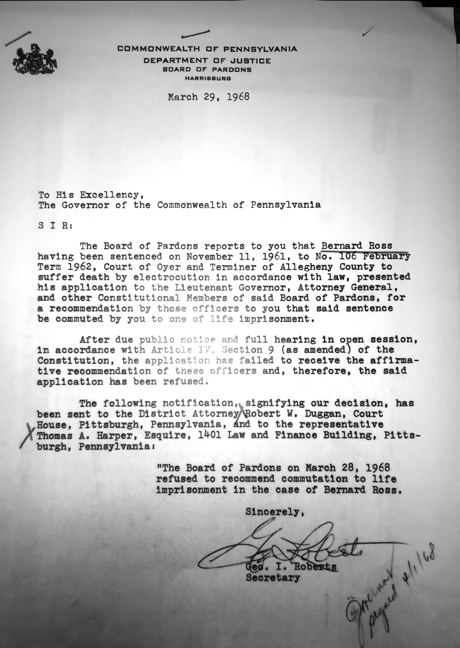
With the death penalty coming under increased legal scrutiny in the county, state, and nation, Ross’s execution was repeatedly postponed. Though his commutation request was rejected by the Board of Pardons on March 29, 1968, the prospects of his execution were ultimately overwhelmed by growing political and legal sentiment in opposition to the death penalty.

image002.png

The legal challenge to the death penalty peaked in 1972, when the United States Supreme Court’s Furman v. Georgia (408 US 238, 1972) decision invalidated all death sentences.

Another of Ross’s appeals under consideration at the time became the landmark case through which Furman was applied to Pennsylvania. In a brief decision (Commonwealth v. Ross 449 Pa. 103, 1972), the court ruled that by virtue of Furman, Ross’s death sentence and all of the other twenty-four death sentences in the state were invalid. With that decision on October 4, 1972, Ross was resentenced to life imprisonment.

Over the course of the 1970s, Ross moved between Western Penitentiary, other state prisons, and various state hospitals for the criminally insane. His requests for clemency were rejected.

Bernard Ross died in prison on March 21, 1983. He was 53 years old.

Ross, who was born in North Carolina, and Boston, who was born in Alabama, had lived together between 1954 and 1961, though each was married to someone else. They had two younger children together; the children involved in this incident were from a previous relationship.

Ross’s erratic and violent behavior may have been related to a serious head injury he suffered in a car crash in Clairton on September 4, 1957.

Allen Johnson

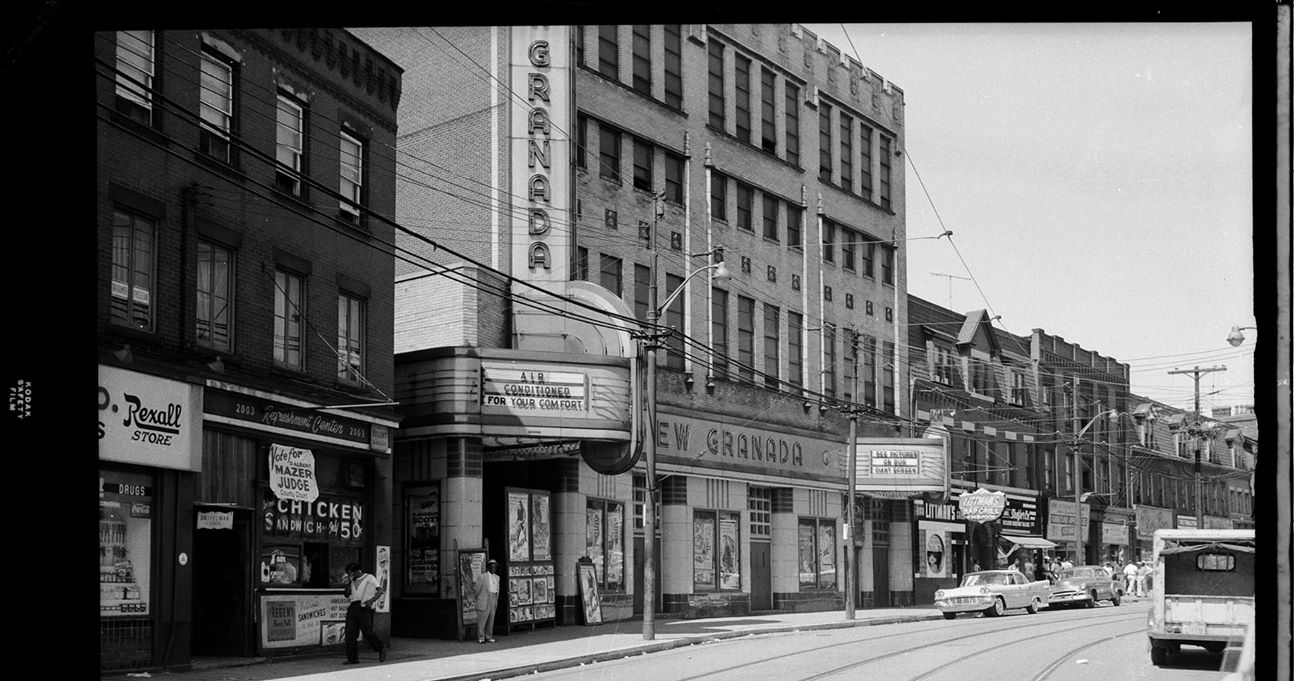
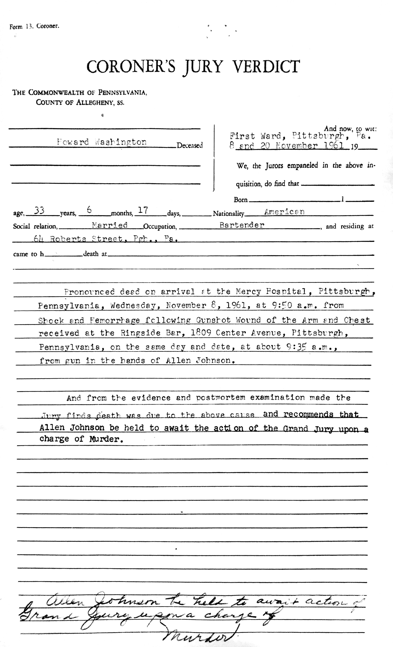
At approximately 4:40am on November 8, 1961, hours after Joseph Barr secured re-election as Pittsburgh’s mayor, Allen Johnson and Howard (Bubba) Washington got in a fight at the S&S Club in the Hill District. The police were called to the scene and Johnson was transported to the hospital for stitches to close a wound to his face.

image001
Centre Avenue circa 1960s

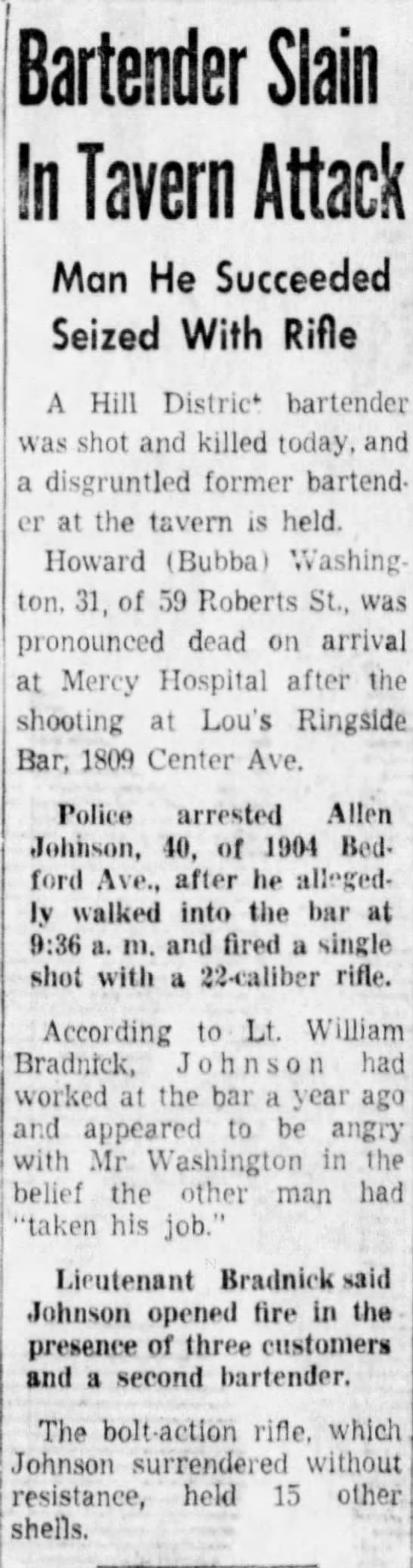
Later that morning, Johnson phoned Lou’s Ringside Bar on Center Avenue to say he was coming “to get” Washington, who worked there. Johnson then went to a pawn shop, bought a rifle and bullets, went to the bar, and shot Washington at close range.

image002

When police reported to the scene, Johnson turned himself in and confessed, saying “I shot him. I hope I killed him.”

image002.png

Johnson, a 40-year old World War II combat veteran who had just been released from the Allegheny County Workhouse, had previously worked at the Ringside Bar. After losing his job, he was replaced by Washington.

image001
Pittsburgh Press, November 8, 1961

Proceedings against Johnson moved quickly. After a short trial, during which Johnson’s defense countered his own confession and witness testimony arguing that Washington provoked the shooting, he was convicted of first-degree murder on February 7, 1962. The jury recommended a death sentence, which was formally imposed on August 11, 1962.

On appeal, the Pennsylvania Supreme Court rejected the arguments that Johnson acted under the influence of drugs that had been administered when he was at the hospital or that he was intoxicated (Commonwealth v. Johnson, 410 Pa. 605, 1963).

However, the court also endorsed the District Attorney’s view, expressed at the time of Johnson’s conviction, that the case would be appropriate for the Board of Pardon’s consideration.

image001.jpg

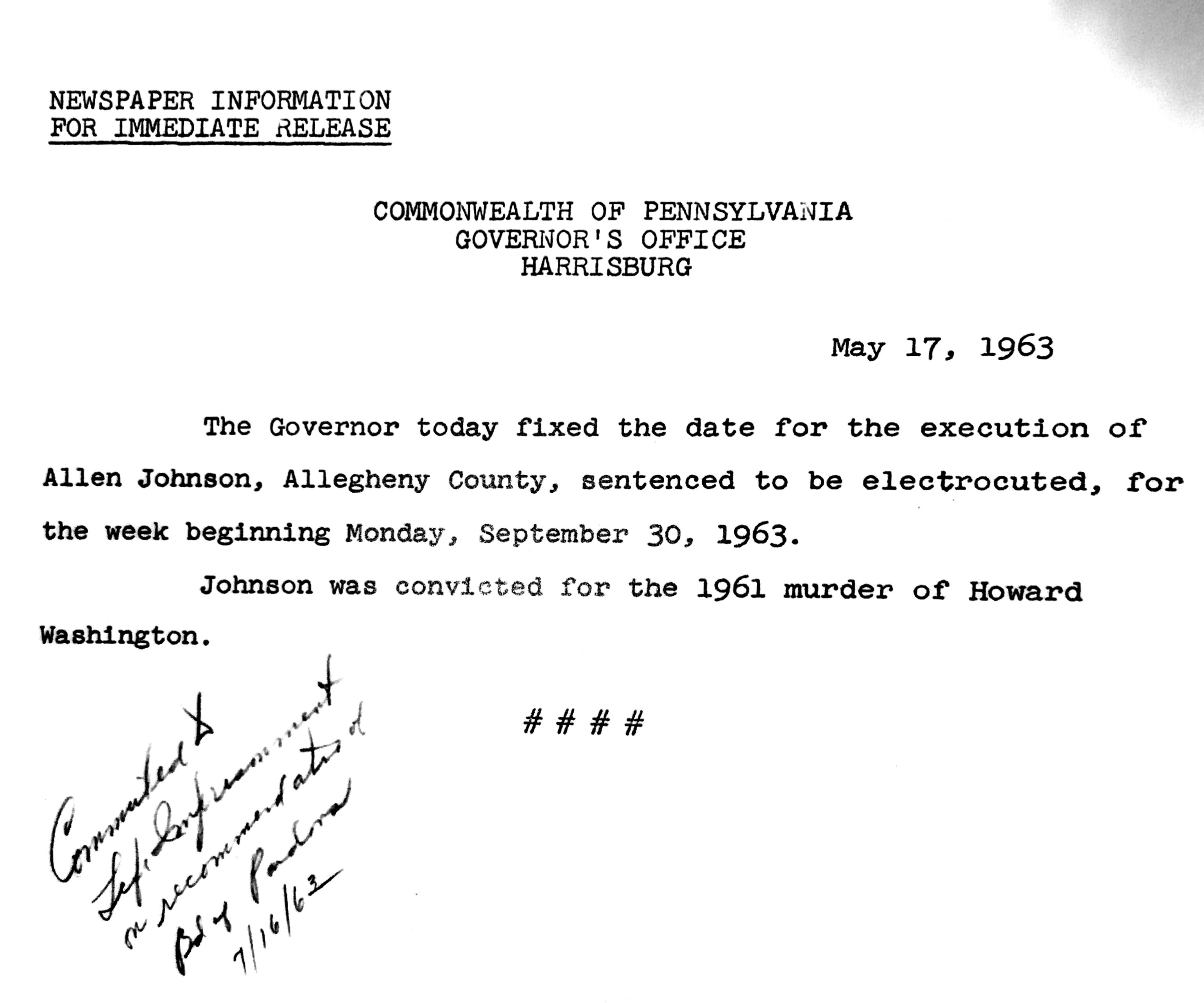
Facing an active execution warrant, Johnson’s death sentence was commuted to life imprisonment by Governor Scranton on July 16, 1963. Inadequate defense counsel at trial was cited as the reason for the commutation; his trial counsel had rejected an offer of a second-degree murder conviction in return for a guilty plea.

Though his multiple clemency requests were denied, Allen Johnson was paroled on November 9, 1976. He died in Pittsburgh on September 3, 1984.