Theodore Paller

Theodore Paller was part of a large group of Russian immigrants who encountered Alexander Ziatsov in a Chateau St., North Side candy store on April 13, 1919. Ziatsov, a recently discharged US Army combat veteran who had been wounded in battle in France, was in uniform.
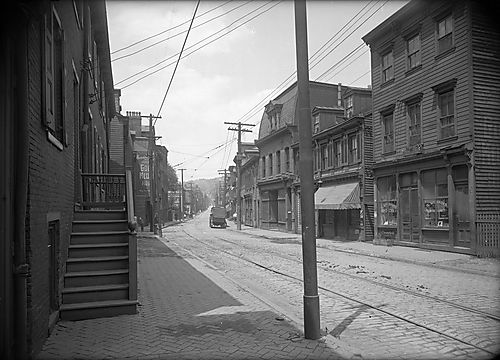
image001
North Side candy store, 1922

Paller, a self-described Bolshevik, and his companions insulted Ziatsov for his service to the United States. Moving to the street, the insults quickly escalated to a fight, which escalated to a shooting when Paller drew a gun. Ziatsov was shot three times, twice in the head. Paller was arrested while running from the scene. Eight others were arrested and held briefly.

image001
Pittsburgh Daily Post, April 15, 1919

At trial, Paller, a 38-year old steelworker, claimed he acted in self-defense after being attacked by a mob that included Ziatsov. The court permitted testimony from Zaitsov’s cousin, who stated that in his dying declaration, Zaitsov implicated Paller and claimed Paller said at the time “If the Germans didn’t kill you, I will.” He was convicted of first-degree murder on February 3, 1920.

Prior to the formal imposition of his death sentence, Paller filed a routine and rarely successful motion for a new trial, On October 1, 1920, that motion was granted on the strength of new evidence. No surviving record reports that evidence.

Tried again, Paller pleaded guilty and was sentenced to serve 17 to 20 years in Western Penitentiary for second-degree murder on November 16, 1920.

Theodore Paller died of kidney failure in Western Penitentiary on February 7, 1928. He was 47 years old.

image001

Theodore Paller

image001

Herbert Dewey Johnson

Dewey Johnson was part of a group of strong arm robbers who were active in the Hill District in the World War I era.

image001
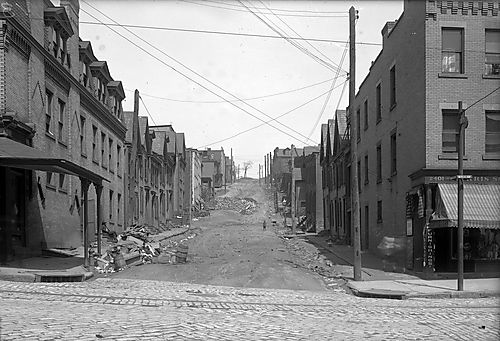
Hill District, 1916

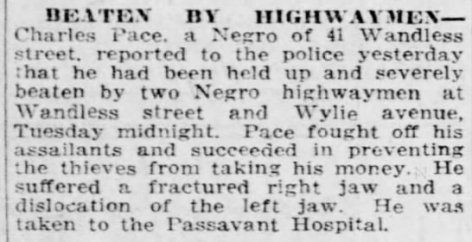
Charles Pace, a 31-year old recent migrant from Georgia, was a victim of one of those robberies on the night of July 2, 1918, during which he was beaten. Pace died three days later. His death certificate indicates his broken jaw resulted in shock and heart failure.

image001
Pittsburgh Daily Post, July 4, 1918

After the robbery, Johnson and an accomplice assaulted a police officer on Grant St. The accomplice, William Montgomery, was arrested and imprisoned for that assault.

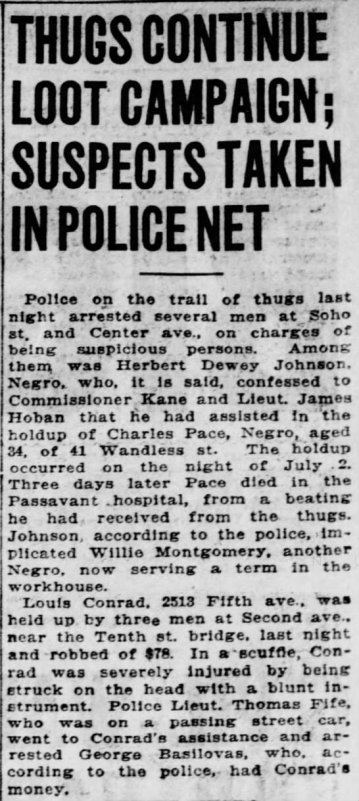
Johnson, 19, fled to Cleveland, where he married, before returning to Pittsburgh. He was arrested on February 21, 1919, more than seven months after Pace’s killing, as part of a group of men who had committed another similar robbery. Johnson is said to have confessed to police at arrest and to have implicated others.

image001
Pittsburgh Press, February 22, 1919

At trial, Johnson said his confession was coerced. He was convicted of first-degree murder on December 5, 1919, which attached a mandatory death sentence.

Prior to the formal imposition of that sentence, Johnson’s counsel filed the typical and rarely granted request for a new trial.

That request was granted on March 20, 1920, due to evidence that Pace’s death may have been the result of other causes. In addition to the heart issues identified in his autopsy, he is said to have suffered from Bright’s disease (kidney disease).

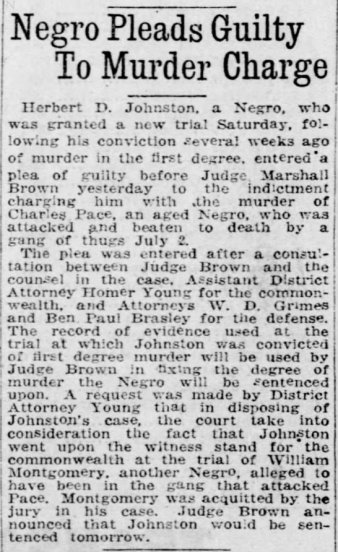
At retrial on March 22, Johnson pleaded guilty. Partly in consideration of the testimony Johnston had provided against Montgomery, Johnson was sentenced to serve 4-6 years in Western Penitentiary. Montgomery was acquitted at trial.

image001
Pittsburgh Daily Post, March 23, 1920

After his release, Johnson moved to Philadelphia. Dewey Johnson died on April 11, 1958.

David Adams

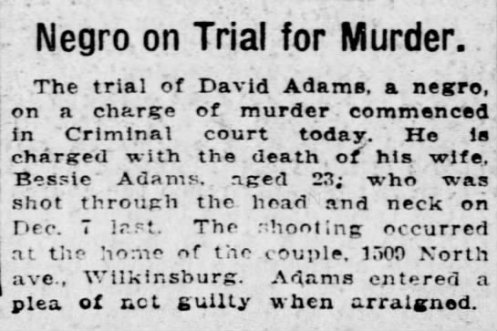
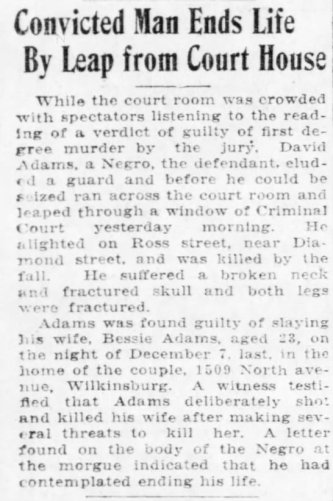
After a series of threats, David Adams shot and killed his wife, Bessie, in their 1509 North Avenue, Wilkinsburg home on the night of December 7, 1917. Several other women were in the home at the time of the killing.

image001

Adams was tried the following June. After a short trial, at which the Virginia-born Adams claimed the shooting was accidental, he was convicted of first-degree murder on the morning of June 12, 1918.

image001
Pittsburgh Press, June 10, 1918

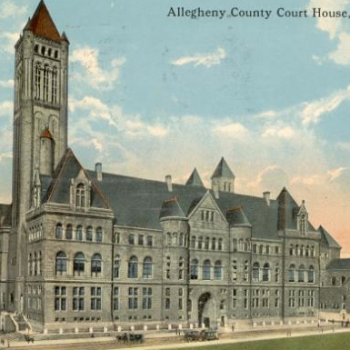
As he was being moved from the courthouse across the Bridge of Sighs to the jail that same day, David Adams committed suicide by leaping through a closed second-story window in the Allegheny County Courthouse.

image003
Suicide note, published in Pittsburgh Press, June 12, 1918

He left a suicide note in his pocket in which he said that his “nerve is weak,” that he did not want to suffer, and that he did not want his “body burned.” He also made arrangements for the care of his body.

image001
Pittsburgh Post-Gazette, June 13, 1918

The crime received almost no newspaper attention, with no serious consideration of motive or circumstances. The coverage of the trial was likewise perfunctory. No official accounts of the case survive.

John Leach

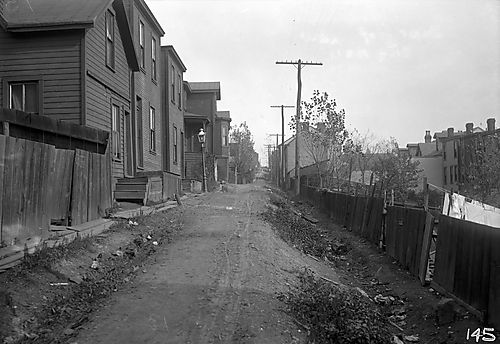
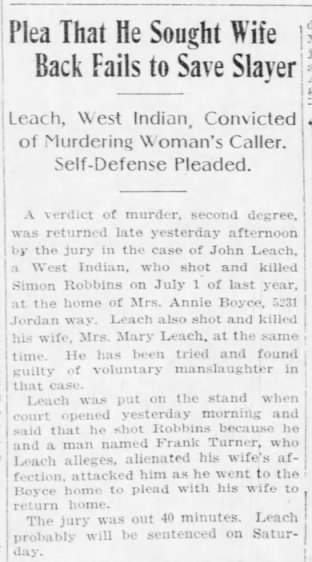
John Leach, who was Black and born in Haiti in 1866, shot and killed his British-born wife, Mary Ann, who was white, and Samuel Robbins, an Alabama-born Black laborer, in Garfield on July 1, 1915.

image001
Jordan Way, 1911

No official accounts of the case survive and newspaper accounts were limited, making it difficult to determine the precise circumstances of the killings. However, it appears as though Mary Ann Leach was involved in a relationship with Robbins or another man, Frank Turner. Leach went to the 5231 Jordan Way, Garfield boarding house where the men lived to plead with his wife to return home, at which time the shootings occurred.

image001
Pittsburgh Post-Gazette, July 4, 1915

At trial for killing Robbins, Leach withdrew the confession he provided to police at the time of arrest and claimed he acted in self-defense after being attacked by Robbins and Turner. He also claimed his wife was shot accidentally during the altercation.

Leach was convicted of first-degree murder on January 12, 1916. In a separate trial, he was convicted of voluntary manslaughter in his wife’s death. The disparate outcomes of the cases raise troubling questions about the perception of Mary Ann Leach as having contributed to her own killing.

image001
Pittsburgh Press, May 24, 1916

After a motion to the trial court, John Leach was granted a retrial and was convicted of second-degree murder on May 24, 1916, and sentenced to 18 to 20 years in Western Penitentiary.

image001
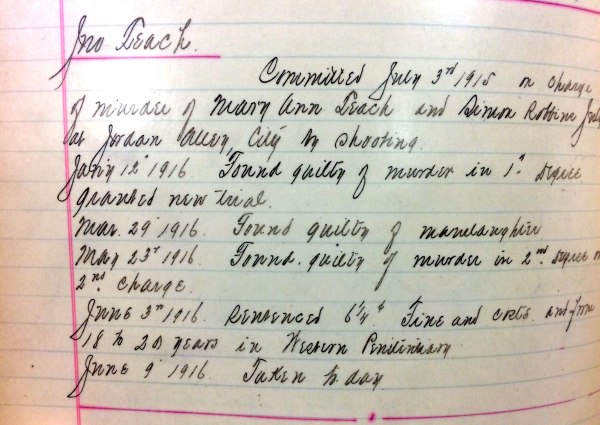
From the Allegheny County Jail’s Murder Book, courtesy of Edward Urban

John Leach died as a result of untreated syphilis in Western Penitentiary on March 18, 1923.

The Leachs had a daughter who died in infancy in December 1914.

Robert William Smith

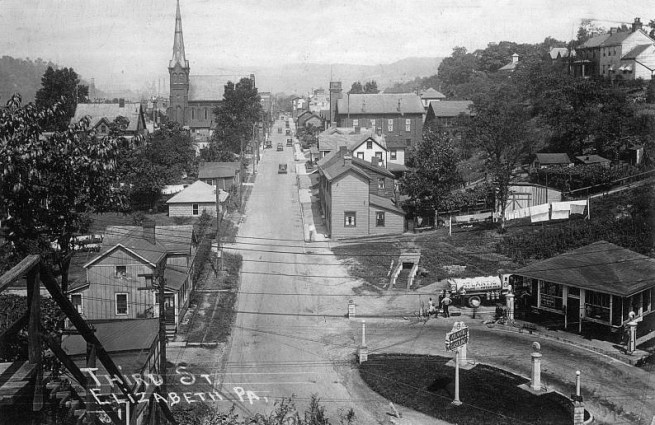
Robert Smith shot and killed his wife, Bessie Burgess Smith, as she and their five-year old son, Kenneth, were walking down the street on July 5, 1908. The killing occurred near their home in Elizabeth, along the Monongahela River in the southern reaches of Allegheny County. Smith had just been released from jail after serving four months for threatening to kill his wife.

image001

Immediately after the murder, Smith turned himself in to police.

At trial, witnesses claimed that Smith fired four shots at close range. Smith claimed that he acted in self-defense and that he was insane. He also claimed that his wife was unfaithful.

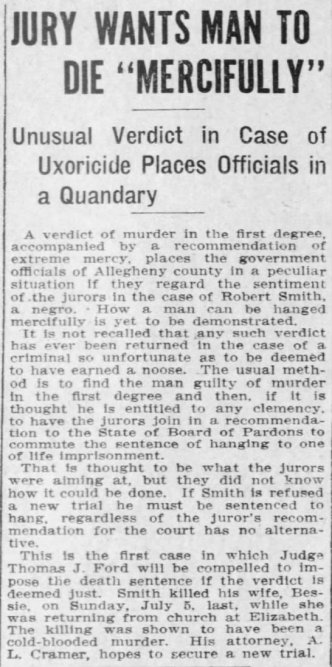
On September 25, 1908, Smith was found guilty of first-degree murder “but recommended to the extreme mercy of the court.” The verdict was said to have been unprecedented, leading one newspaper to ask how “a man can be hanged mercifully.” “It is not recalled that any such verdict has ever been returned in the case of a criminal so unfortunate as to be deemed to have earned a noose” (Pittsburgh Press, September 26, 1908).

image001
Pittsburgh Press, September 26, 1908

It is not clear why Smith was recommended to extreme mercy, though the social and legal disregard for the rights of poor Black women must be considered. The killing was premeditated (Smith had laid in wait) and without provocation and was the culmination of a history of abuse. Also, as a poor, Black, Oklahoma-born laborer, Smith lacked the status or the resources often associated with such favorable treatment, particularly in an era of such heightened racial animus.

The legal effect of the verdict was that if Smith’s request for a new trial was refused, he would be sentenced to death.

Smith was granted a new trial on January 30, 1909. Retried in March 1909, multiple witnesses testified to Smith’s history of threats against his wife and his possession of guns. Smith claimed he acted in self-defense. He was convicted of second-degree murder on March 25, 1909, and received the maximum sentence of twenty years in Western Penitentiary.

Robert Smith died of natural causes in Elizabeth, Pa., on February 5, 1959. He was 79 years old.

Clarence Edward Long

Sixteen-year old Clarence Long and an accomplice, George Hummel, also 16, attempted to rob William E. Mathias, a McKeesport poolhall owner, on December 22, 1907. When Mathias, who was carrying the day’s receipts from his Main St. business to his Pearl St. home, refused to hand over any money, Long shot him.

image001
Market St., McKeesport, 1900

Hummel, who was arrested soon after the shooting, confessed and implicated Long, who was arrested on December 26. Long also confessed.

At trial a few weeks later, Hummel testified against Long in return for immunity from prosecution. Long was convicted of first-degree murder on January 23, 1908.

image001
Pittsburgh Daily Post, January 23, 1908

His counsel immediately filed for a new trial. Their complaint emphasized Long’s youth and immaturity and the hardships experienced by Long’s family. That request was granted on May 4, 1908. Had he been sentenced to death, Long would have been the youngest capital defendant in Allegheny County history.

image001
Pittsburgh Press, September 18, 1908

At trial on September 18, 1908, Long pleaded guilty and was sentenced to ten years in Western Penitentiary by Judge Marshall Brown. He was out of prison by 1917, living in McKeesport, and working as a brakeman on the Baltimore & Ohio Railroad.

Clarence Long died of heart disease on October 24, 1959. He was 68, retired, and living in McKeesport at the time of his death.

Joseph Hess

Joseph Hess shot his wife, Agatha, five times in their Madison Avenue, Allegheny City home on the morning of April 7, 1882. Several of their five children witnessed the killing and provided information implicating their father. The Hess’s marriage had been troubled by Joseph’s jealousy and mental instability, and included a history of threatened violence.

image001
Pittsburgh Daily Post, April 8, 1882

By the time of his trial, Hess’s mental health was in sharp decline. Nonetheless, he was convicted of first-degree murder on September 8, 1882. His attorneys presented an application for a new trial on September 11, 1882, on the grounds of insanity.

Under the circumstances, the court appointed a master to determine how to proceed. On December 15, 1882, Hess was examined by a doctor who pronounced him of unsound mind. Five weeks later, on January 23, 1883, he was moved from the Allegheny County Jail to Dixmont State Hospital.

On February 23, 1883, Hess was granted a new trial. In lieu of trial, the District Attorney offered a deal of second-degree murder in return for a guilty plea. That offer was rejected and Hess was scheduled for trial in April 1884.

image001
Pittsburgh Daily Post, April 10, 1884

It does not appear as though that trial ever occurred. Joseph Hess died at Dixmont on July 13, 1884.

Located in a neighborhood that has been all but erased by highways, Madison Avenue is home to an iconic mural of famed Puerto Rican and Pittsburgh Pirates baseball star Roberto Clemente.

image001
Photo by Jared Wickerham

Joseph Zimmerlee

Joseph Zimmerlee, a newly-arrived 55-year old German immigrant, his wife, Anna Marie, and their two adult children lived on Fifth St. (now Avenue), downtown.

image001
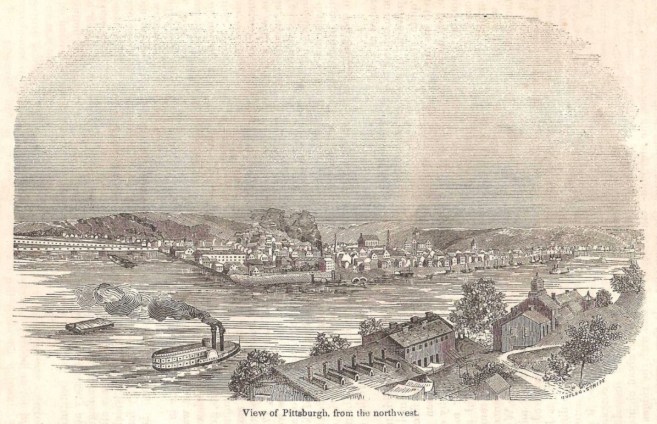
Pittsburgh, 1848

There, on September 11, 1848, Zimmerlee stabbed and beat his wife during a drunken argument over money. She died of multiple stab wounds on September 16, after being able to report to police that her husband had stabbed her.

image001
Pittsburgh Daily Post, September 13, 1848

Evidence indicates that Zimmerlee was an advanced alcoholic, with signs of alcohol-induced insanity. The narrative that emerged was that Zimmerlee was a sober and well-liked man in Germany, but turned to alcohol after his daughter was sexually abused by his wife’s brother. From there, his life eroded. His family was poor; he worked only infrequently as a shoemaker.

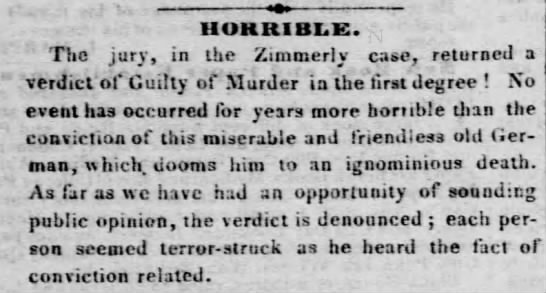
At trial, Zimmerlee pleaded not guilty and claimed he acted in self-defense against an abusive wife. No evidence of prior abuse by Zimmerlee against his wife was presented. He was convicted of first-degree murder on December 2, 1848.

Public reaction against the verdict was strong – the Pittsburgh Daily Post declared “no event has occurred for years more horrible than th[is] conviction” (December 4, 1848) – due to Zimmerlee’s alcoholism and the broad public endorsement of patriarchal violence.

image001

A motion for a new trial was quickly filed and was granted on January 15, 1849. At retrial in April 1849, Zimmerlee was convicted of second-degree murder and sentenced to twelve years in prison. He remained in Western Penitentiary at least through 1860.

Capital Convictions Without a Death Sentence

Name of                                          Date of                                            Date of                                    Defendant                                       Crime             Disposition         Disposition

  1. Zimmerlee, Joseph                          09/11/1848         Reversed            01/15/1849
  2. Hess, Joseph                                     04/07/1882         Reversed            02/23/1883
  3. Long, Clarence                                 12/22/1907         Reversed            05/04/1908
  4. Smith, Robert                                   07/05/1908         Reversed            01/30/1909
  5. Leach, John                                       07/01/1915         Reversed            05/24/1916
  6. Adams, David                                   12/07/1917           Suicide              06/12/1918
  7. Johnston, Herbert Dewey              07/02/1918         Reversed            03/20/1920
  8. Paller, Theodore                              04/13/1919         Reversed            10/01/1920
  9. Rastelli, Daniel                                 12/23/1922         Reversed            12/08/1924
  10. Ciccia, Vincenzo                               08/26/1927         Reversed            12/30/1927
  11. Delforte, Oreste                                08/26/1927         Reversed            12/30/1927
  12. Smith, Robert                                   10/04/1930         Died in Jail         03/14/1931


William Durant Cole

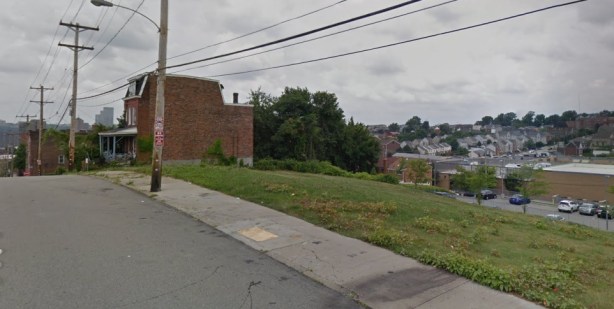
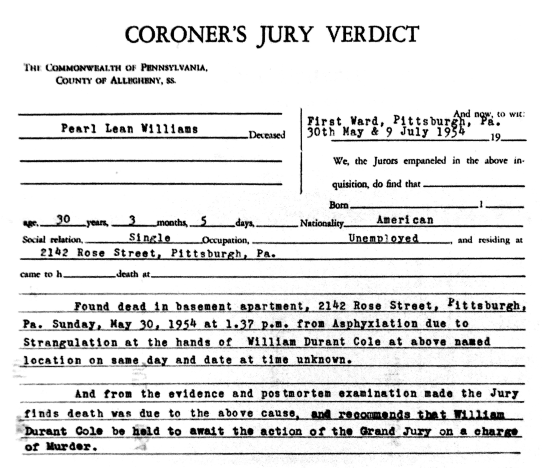
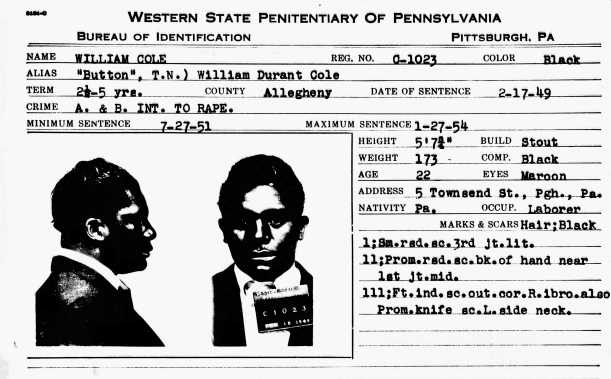
William Durant (Buttons) Cole, a 28-year old former boxer with a lengthy record of sex offenses and a prior confession to a murder in Akron, Ohio, raped and killed his landlady, Pearl Lean Williams, in her Rose St., Hill District home on May 30, 1954. Williams, 30, had been strangled.

image001
2142 Rose Street, now vacant

Cole, who had been released from prison on another rape conviction five months earlier, turned himself in to police and confessed on the same day as the murder.

image001.png

At trial that December, Cole pleaded guilty, anticipating such a plea would result in a life sentence. He was instead sentenced to death by a three-judge panel on February 14, 1955.

image003
Pittsburgh Post-Gazette, March 22, 1955

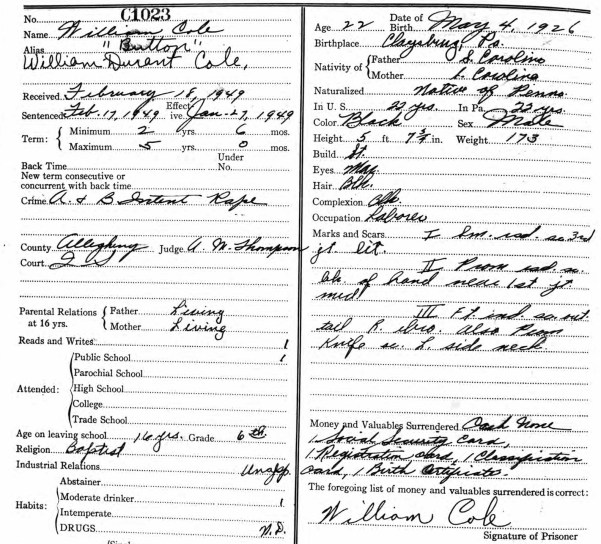
As part of his earlier conviction, for sexual assault of a 12-year old girl, Cole had been diagnosed as homicidal, perhaps indicative of boxing-related brain damage. The resulting report, which was read at Cole’s sentencing, concluded “there is no penance possible for persons of this kind. No hospital or prison can rehabilitate or make socially acceptable a human type like William Cole.” While in prison, Cole was involved in multiple violent incidents.

image001
Western Penitentiary Admission Record, 1949

Cole aggressively pursued appeals and was aggressively rejected (Commonwealth v. Cole, 384 Pa. 40, 1955). In its opinion, the Pennsylvania Supreme Court wrote “The details of the murder to which the defendant in this case pleaded guilty are so revolting that no purpose can be served in sullying the printed pages of the State Report with a narration of the loathsome particulars. It is enough to say that a reading of the record establishes beyond the light’s shadow of even a mist of uncertainty that the facts spell first degree murder under the Criminal Code and all the decisions of this Court on the subject.”

William Durant Cole was executed on May 14, 1956. He was buried in the prison cemetery in Bellefonte, Centre County.

image003
Pittsburgh Press, May 14, 1956

Though Cleveland Thompson was executed three years later, Cole’s death sentence had been imposed later, making his the last Allegheny County death sentence to result in an execution.

image001