
In perhaps the most egregious of the many domestic homicides to result in a capital conviction in Allegheny County history, Daniel Werling killed his wife, Barbara, on Saturday, April 7, 1894, shooting her while she worked at the Diamond Market (the present location of Market Square). Werling had just been released from prison for a prior assault on his wife.

The day he was released, Werling pawned his watch and bought a gun, intent on carrying out his threat to kill his wife. He did so brazenly, approaching her in full view of patrons and peddlers, and shooting her multiple times.
When Werling was apprehended by patrons, he is reported to have said “I had a right to do this. I have cause to do this.” He also said he wanted to kill the market superintendent. Once in custody, he confessed to police.
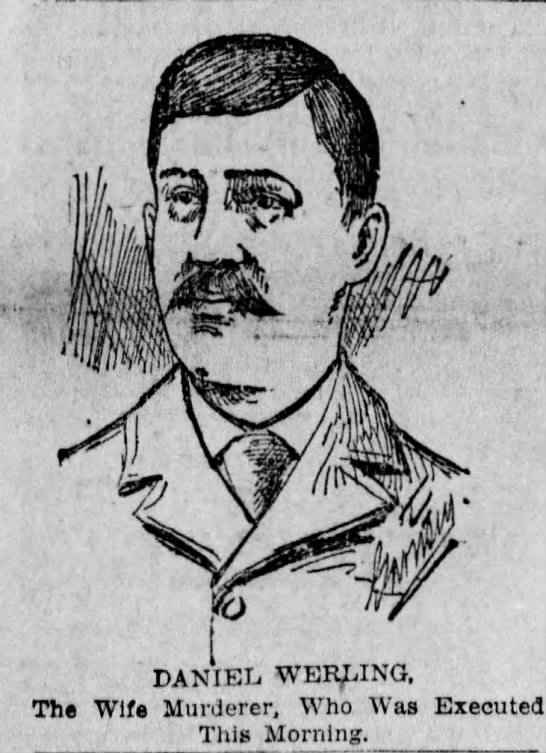
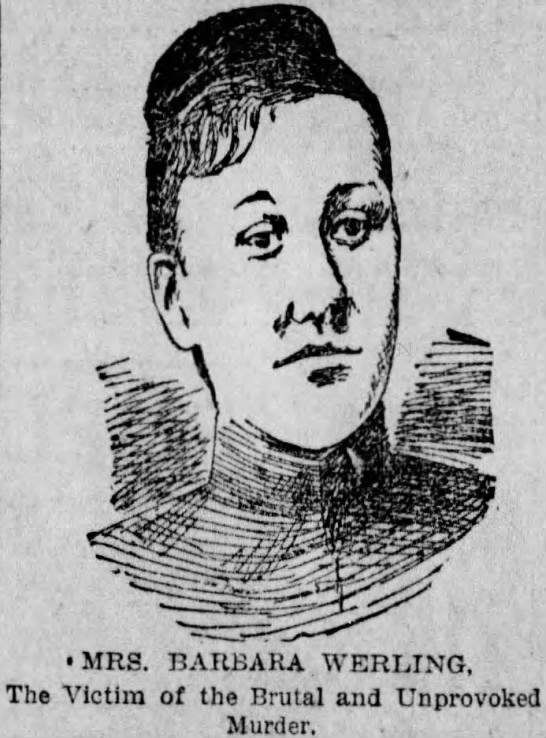
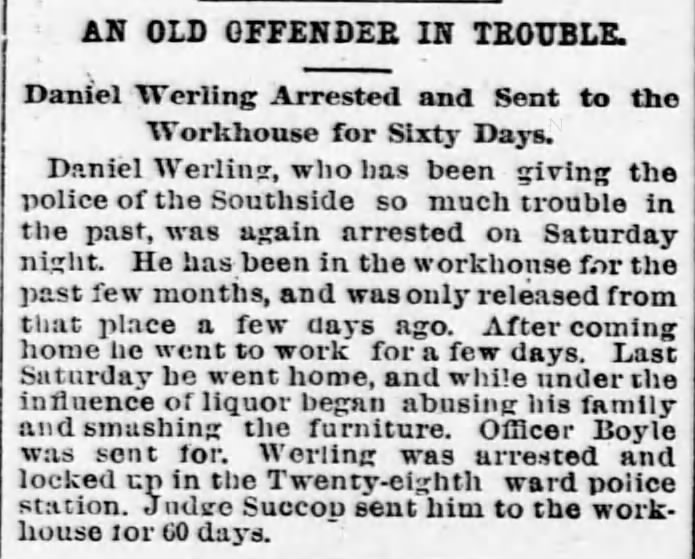
Records indicate Werling had been imprisoned at least eight times over the previous eight years, always for domestic violence and always for a few months at the Allegheny County Workhouse. The tone of the newspaper coverage indicates his crimes were not taken very seriously.


Barbara (Bock) Werling maintained a stand at the market as a means to support her family during her husband’s frequent periods of incarceration and drunkenness.
At trial, Werling claimed he was insane due to excessive alcohol consumption. After brief jury deliberations, he was convicted of first-degree murder on June 19, 1894, and sentenced to death on June 30.

At the time of his conviction, the Post-Gazette wryly noted: “Evidently the jury in the Werling case reasoned that if a particular type of insanity would lead a man to deliberately plan and execute the murder of his wife; declare he was glad of it repeatedly and wish he had been able to kill another person, the proper treatment for that kind of insanity would be twisted hemp. The community generally will approve the remedy.”
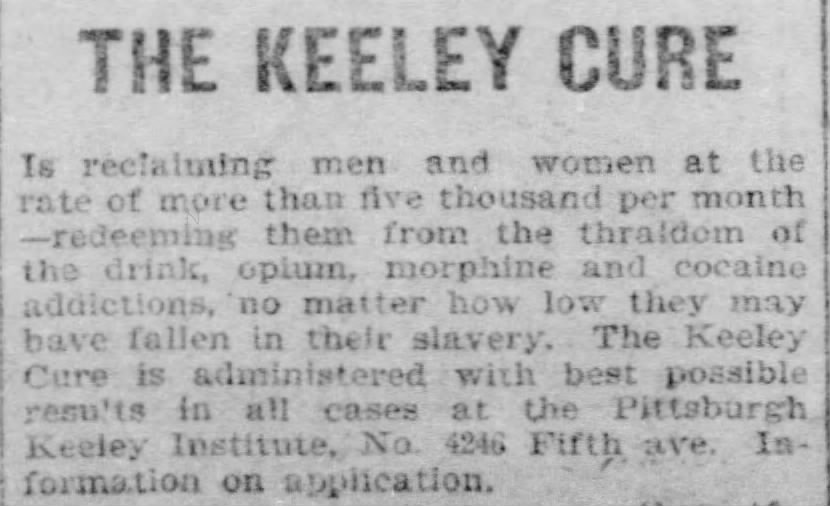
Werling’s execution, originally scheduled for May 7, 1895, was respited while his clemency request, which centered on the claim that the much-advertised (and subsequently discredited) Keeley Cure for alcoholism had rendered Werling insane, was considered. His long history of abuse and the associated evidence of deliberation in that abuse ultimately doomed that argument.
His appeal and pardon request rejected, Daniel Werling was hanged on July 9, 1895. A state that could not be aroused to protect the life of Barbara Werling had acted decisively to kill her killer.


Actually, the plea was that he was insane not due to excessive alcohol consumption, but because of the cure for alcoholism delivered at the workhouse, known as the Keeley cure or the “Gold Cure,” and was known to contain strychnine and reported to cause dementia. From the Pittsburgh Press: “His counsel, Charles A. O’Brien, Esq., then began a fight for Werling’s life, which made the case one of national importance. He made the novel claim that Werling was rendered Insane by the Keeley bichloride of gold cure for drunkenness.” https://en.wikipedia.org/wiki/Keeley_Institute
LikeLike
Thank you for the comment and information. I will investigate this further.
I apologize for the delay in responding; I have been traveling.
LikeLike