Samuel Barcons and Nicholas Kemanos

In probably the most sensational bank robbery in Pittsburgh’s history, five Russian immigrants robbed the First National Bank in Castle Shannon on May 14, 1917.*

The five men were Samuel Barcons (listed on his death certificate as Sam Barcons Betz), Nick Kemanos (listed on his death certificate as Nick Krivoworzy), Haraska Garason, John Fedotoff (identified on his death certificate as Supposed John Oyech; also identified as Ohetch, Tusch, and Tush), and Mishka Titoff.

Though the timing and circumstances of the crime bear some resemblance to organized crime, there is no evidence this group was anything other than a one-time collection of acquaintances trying – and mostly failing – to pull off a daring robbery. Though the robbery occurred in the midst of the Russian Revolution, neither is their evidence of political motivation on the part of the robbers.

Titoff, a McKeesport millworker who lived with Fedotoff, was the ringleader. Barcons and Garason lived together in the Hill District. Kemanos, who lived in Universal and was not close with the others, was recruited into the plot for his car.

image001

image001
Pittsburgh Press, May 14, 1917

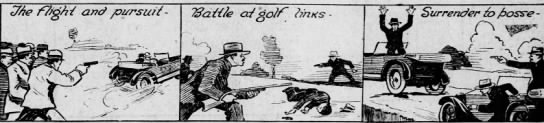
In a scene right out of the movies – the Great Castle Shannon Bank Robbery – in the middle of the day of Monday, May 14, 1917, the five men, their inhibitions dulled by alcohol, drove a late model touring car from Pittsburgh to Castle Shannon.

After parking a half mile away and leaving Kemanos behind the wheel, the other four men entered the bank and began firing. Two bank tellers, Daniel H.A. McLean and Frank W. Erbe, were killed when they returned fire. The robbers fled with $17,000.

image001.jpg

Hearing the gunshots, nearby residents armed themselves. As the robbers fled, armed citizens chased them with guns blazing in a remarkable vigilante episode. Under fire, Fedotoff, overweight and unable to stay ahead of his pursuers, committed suicide. Barcons, who had fled with Fedotoff, was cornered in the woods, at which point he attempted suicide by shooting himself in the head, but survived. Town residents beat and threatened to lynch him. Police had yet to arrive.

image003
Pittsburgh Post-Gazette, May 18, 1997

Titoff and Garason , who had run toward the car, fled with Kemanos. Outside of Castle Shannon, the two men got out of the car, fled on foot, and were never apprehended (without any reliable idea of their names, it is difficult to trace them).

Kemanos was captured by police on Greentree Road.

image001

image003
Pittsburgh Press, May 15, 1917

Proceeding to trial, Barcons and Kemanos asked to be tried separately. After his trial had begun in December 1917, Barcons decided to plead guilty. His plea was accepted and his crime was fixed as first-degree murder on December 12. He was sentenced to death on February 1, 1918.

image001

Kemanos, who claimed with some evidence that he was an unwitting and unarmed accomplice, was tried separately for each of the two murders. On December 16, 1917, he was acquitted of McLean’s murder after the jury refused to find him guilty of first-degree murder, its only available charge.

On February 7, 1918, after seven days of jury deliberations, during which the judge refused to accept an initial jury verdict of guilty with a recommendation for mercy, a clearly reluctant jury convicted him of first-degree murder for killing Erbe. He was sentenced to death on May 30, 1918.
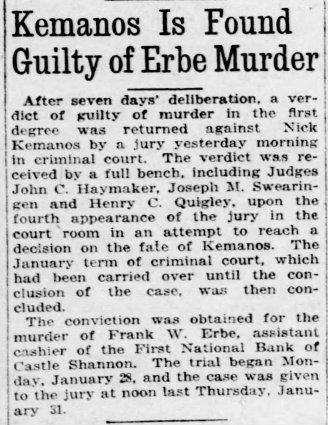
image003
Pittsburgh Post, February 8, 1918

Desperate to avoid execution, Kemanos offered himself to military service in the Great War. He also appealed his conviction, arguing his consecutive murder trials constituted double jeopardy.
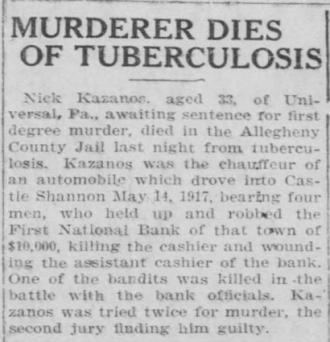
image002
Pittsburgh Post-Gazette, November 30, 1918

Before the issue could be litigated, Kemanos, like Samuel Byrd and Jack Thompson soon after, died of tuberculosis in the Allegheny County Jail on November 29, 1918, during the global influenza pandemic that followed World War I. Michael Roma, who had been sentenced to death in 1912 and found insane and sent to Mayview State Hospital in 1913, died there of influenza one day before Kemanos.

image001
Pittsburgh Daily Post, November 12, 1918

His clemency request rejected, Samuel Barcons was electrocuted at Rockview on January 13, 1919.

* The definitive account of this case is provided by Roger Stuart and Edward Hale’s “The Great Castle Shannon Bank Robbery,” Pittsburgh Post-Gazette, May 18, 1997.

Samuel Byrd

image001
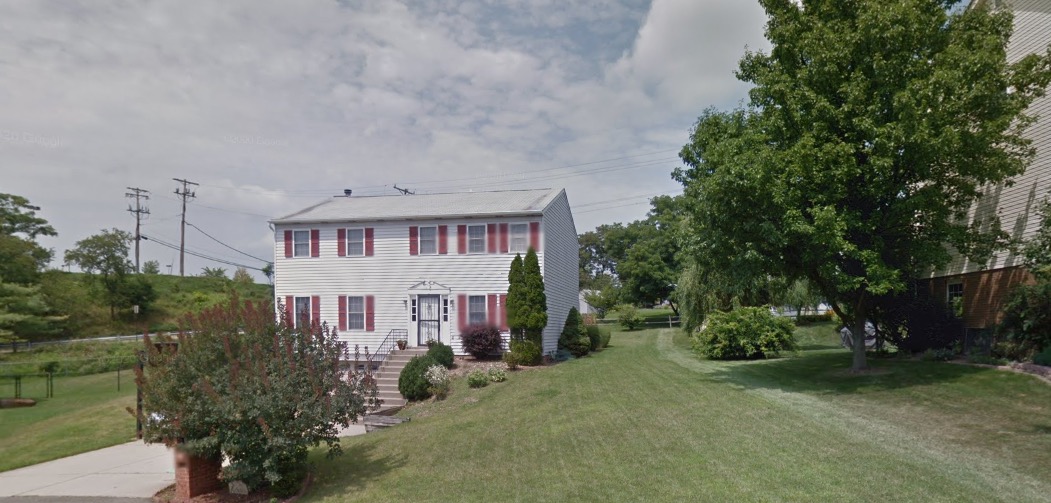
Arthur St.

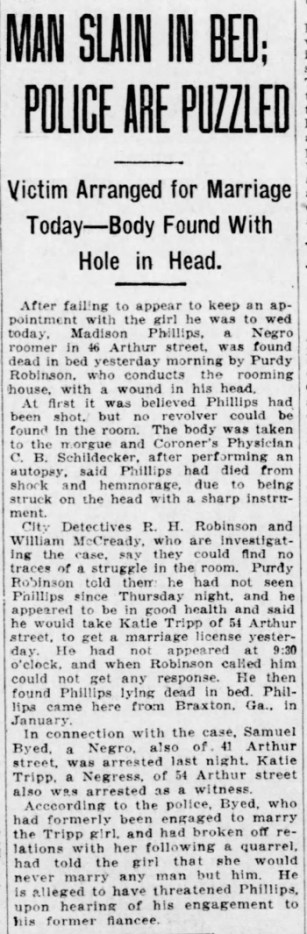
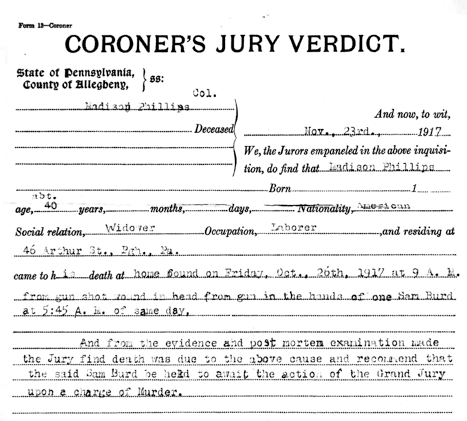
Madison Phillips was found dead in his 46 Arthur St., Hill District home early on the morning of October 26, 1917.
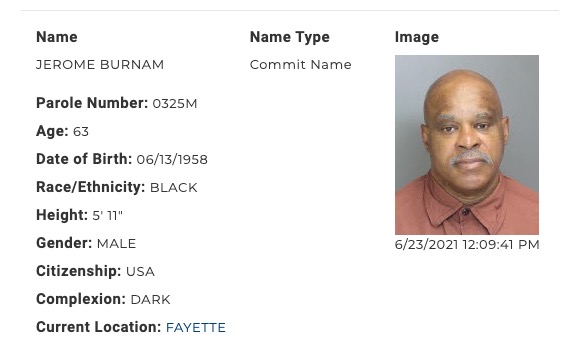
image003
Pittsburgh Post, October 27, 1917

He had been killed in bed earlier that morning by a single gunshot wound to the head. The killing occurred two days before Phillips was to be married to Katie Tripp.
image002

Samuel Byrd was arrested that night after police learned that Byrd and Tripp had previously been engaged and that Byrd had threatened Phillips after telling Tripp that she would marry no one other than him. Byrd confessed to police.

image002
Pittsburgh Daily Post, October 30, 1917

At trial, Byrd claimed self-defense. He was convicted on March 28, 1918, and sentenced to death on May 18, 1918.

On appeal, Byrd’s claim that an error in jury instructions related to his self-defense claim invalidated his conviction was dismissed (Commonwealth v. Burd, 263 Pa. 143, 1919).

image001
Allegheny County Courthouse and Jail

Byrd and Phillips, both recent arrivals from Georgia, were among the big wave of Black migrants into steel mills burgeoning by the demands of World War I and depleted of Eastern European laborers for the same reason. Often recruited by labor agents who traveled into the south, these black men faced barriers to entry and integration far greater than their European counterparts who were able to become fully white and thus “genuine Americans” within a generation.

image001
a “Genuine American,” from the Pittsburgh Survey’s landmark 1911 study of the steel industry; a work which made no reference to Black laborers

Byrd died of tuberculosis in the Allegheny County Jail on January 9, 1919. Like Kemanos before him and Thompson after him, though the cause of each death was listed as tuberculosis, the cluster of jail deaths was almost certainly related to the influenza pandemic that hit Pittsburgh particularly hard at the end of World War I and swept the globe into 1920.

Connie J. Williams

On August 12, 1999, Frances Williams disappeared from her home at 101 Clearview Avenue, Crafton Heights. She and her husband, Connie, had been fighting at the time.

image001
101 Clearview Avenue

Frances’s sister, Janice Smith, filed a missing persons report on August 20. Questioned by police, Connie Williams said his wife, whom he had married in 1995, had left him due to marital problems. An investigation into Frances’s whereabouts began, and continued without urgency for several months.

After interviewing Connie Williams again on January 5, 2000, the investigation took on more urgency. Their suspicions of foul play raised by their questioning, police sought and gained permission to search Williams’ residence. Multiple searches followed. When the presence of blood was detected in Williams’ home on January 14, 2000, he was arrested.

image001.jpg

Under questioning by police, Williams confessed. He said that the killing occurred on August 18, 1999, when he and his wife argued over his infidelity, the presence of his children in their home, and her drug use. When she insulted him, he stabbed her with a steak knife. Realizing she was dead, he dismembered her in the basement. Part of her body was disposed of in a ravine on the North Side. Other body parts were found in a salvage yard in McKees Rocks.

image001
Pittsburgh Post-Gazette, January 15, 2000

First-degree murder charges were filed and a decision was made to pursue the death penalty. Though it could not have been known at the time, this case would be the last in Allegheny County in which the death penalty functioned in an “ordinary” sense, as a viable sentencing alternative for typical domestic and felony murders and murderers.

In Allegheny County, certainly, and in Pennsylvania and beyond to a lesser extent, the death penalty was exhausted. No Allegheny County defendant had been executed in forty years. Most who had been sentenced to death found their death sentences later reversed. The legal standards were changing, as were the prosecutorial, budgetary, and political calculuses; the death penalty no longer returned on the investment.

From this point forward, as it turned out, the death penalty would be reserved for multiple or mass murderers, such as Richard Baumhammers, Gerald Hairston, Ronald Taylor, and Richard Poplawski, or for those, like Patrick Stollar, who bumbled into a death sentence.

image001
Pittsburgh Post-Gazette, February 1, 2000

At trial, Williams’ defense admitted he killed his wife, but said he did so in a fit of passion. Williams was found guilty of first-degree murder on January 23, 2002, and sentenced to death. His conviction and death sentence affirmed on initial appeal in 2004 (Commonwealth v. Williams, 578 Pa. 504), Williams sought reconsideration under the Post-Conviction Relief Act. His death sentence was overturned and he was ordered released from death row on April 15, 2010, after a legal determination that he was developmentally disabled. His IQ was tested in the low 50s to low 80s.

image001

The Pennsylvania Supreme Court upheld that order on February 20, 2013 (Commonwealth v. Williams, 619 Pa. 219). Now 70 years old, Connie Williams is serving a life sentence at SCI-Greene.

image001

Williams has an extensive criminal record. Most notably, he served seven years in prison for the April 1974 stabbing murder of his landlord, C.W. Hopkins. Hopkins’ decomposed body was found under Williams’ bed three to four weeks after the murder. Williams was convicted of second-degree murder in that case, sentenced to 7 to 20 years in prison, and paroled in 1981.

image004
Pittsburgh Press, November 22, 1974

He also has a 1969 conviction for auto theft, a 1971 drug conviction, a 1971 burglary conviction for which he received a 1 to 2 year sentence, and a 1973 attempted burglary conviction.

Timothy Boczkowski

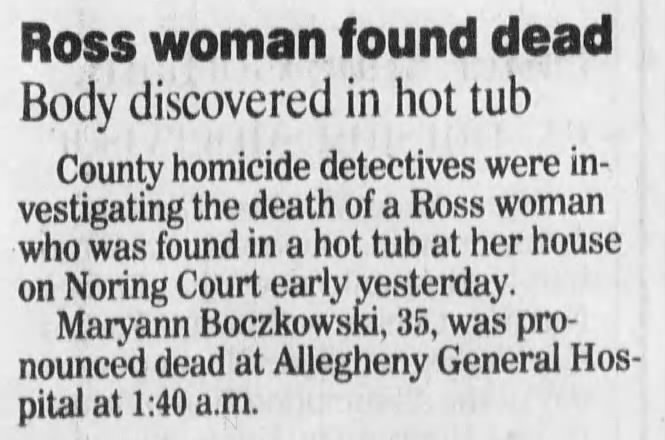
Just after midnight on November 8, 1994, Timothy Boczkowski beat and strangled his wife, Maryann, in the hot tub in their 306 Noring Court, Ross Township home.

image001

He then summoned paramedics, claiming she was intoxicated and drowned accidentally while he was elsewhere in the home. She was pronounced dead at 1:40am.

image003
Pittsburgh Post-Gazette, November 8, 1994

Questioned by police, Boczkowski denied any involvement in Maryann’s death. However, he made a series of suspicious statements to police and paramedics, explaining that the scratches on his face and hands were from a massage his wife had given him and requesting that his wife be transported to a more distant hospital than they had planned. He also agreed to take a polygraph test, which he failed.

Police suspicions surrounding the circumstances of Maryann’s death were further heightened when they learned that Boczkowski’s first wife, Mary Elaine Boczkowski, died in the hot tub of their Greensboro, North Carolina, home on November 4, 1990. She was also intoxicated. The couple had married and lived in Pittsburgh before moving to North Carolina.

image001
Pittsburgh Post-Gazette, November 9, 1994

Though the circumstances and manner of Mary Elaine’s death had been considered suspicious – an autopsy had revealed bruises and no water was found in her lungs, indicating she had not drowned – Greensboro police did not pursue a case against Boczkowski.

On November 15, 1994, Ross Township police arrested Boczkowski after an autopsy revealed that Maryann died due to blunt force trauma and asphyxiation. Her blood alcohol content was .22.

Their investigation revealed that in each case, Boczkowski had a large life insurance policy on his wife. In each case, he also took premeditated steps to create the appearance that his wife was an alcoholic so as to establish the deaths as accidental drownings.

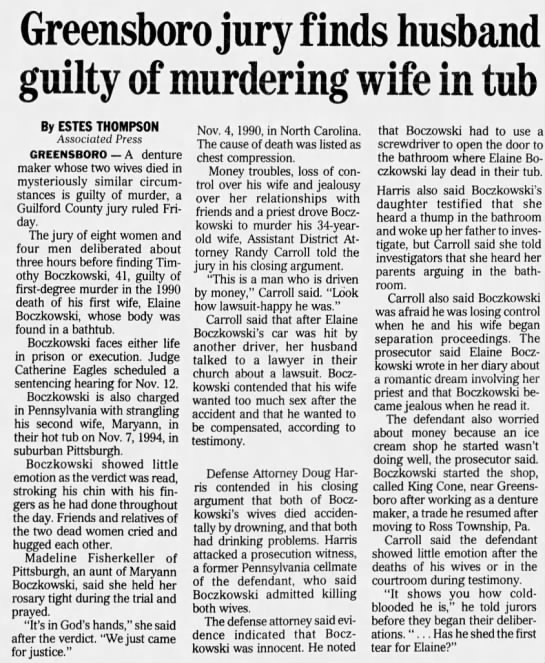
Prompted to reopen the investigation into the death of Mary Elaine Boczkowski, on November 29, 1994, North Carolina authorities determined that Mary Elaine Boczkowski had been strangled to death and filed charges against Boczkowski.

While awaiting judicial proceedings in Pittsburgh, Boczkowski was extradited to North Carolina despite a judge’s order to hold him for trial in Allegheny County. On November 1, 1996, a Guilford County, North Carolina jury convicted him of killing his first wife and sentenced him to life imprisonment.

image001
Charlotte Observer, November 2, 1996

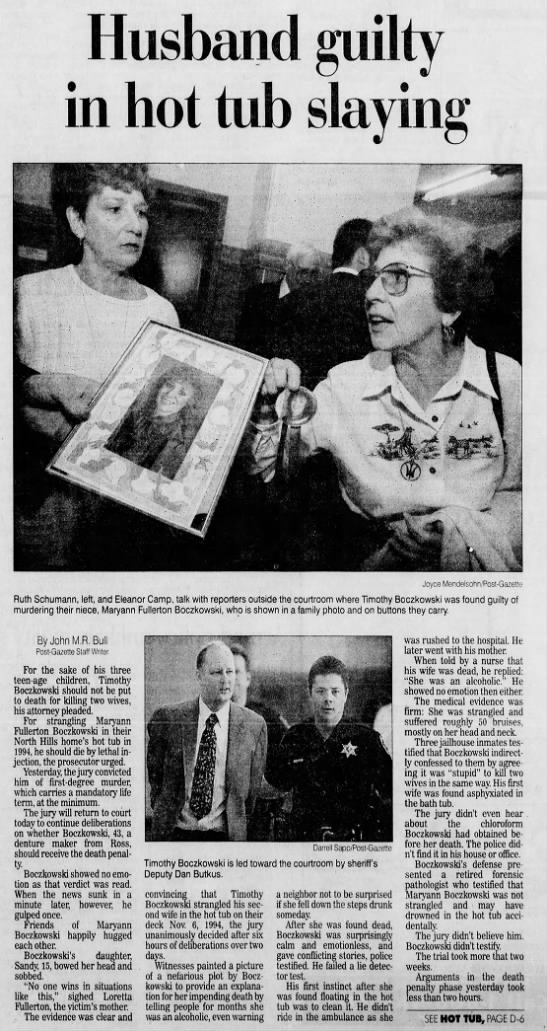
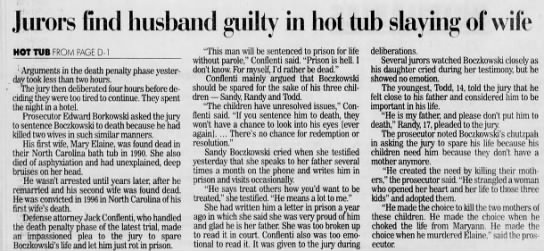
Returned to Pittsburgh to face trial, Boczkowski was convicted on May 5, 1999, and sentenced to death on May 6, 1999. The evidence of Boczkowski’s guilt was overwhelming.

image001

image001
Pittsburgh Post-Gazette, May 6, 1999

On appeal, on March 23, 2004, the Pennsylvania Supreme Court overturned Boczkowski’s death sentence on the grounds that the court erred in allowing him to be tried first in North Carolina (Commonwealth v. Boczkowski, 577 Pa. 421, 2004). Because that first conviction  provided the sole legal basis for imposing a death sentence rather than a life sentence, Pennsylvania should not have permitted Boczkowski’s extradition. He was resentenced to life imprisonment.

Afterwards, Timothy Boczkowski’s custody was transferred back to North Carolina, where he is presently serving a life sentence.

The sensational story of the Boczkowski murders has been told in the true crime book, Please Don’t Kill Mommy and in an episode of the true crime television program, Forensic Files. Much more information about this case is also available at Bonnie’s Blog of Crime.

Ralph Bolden

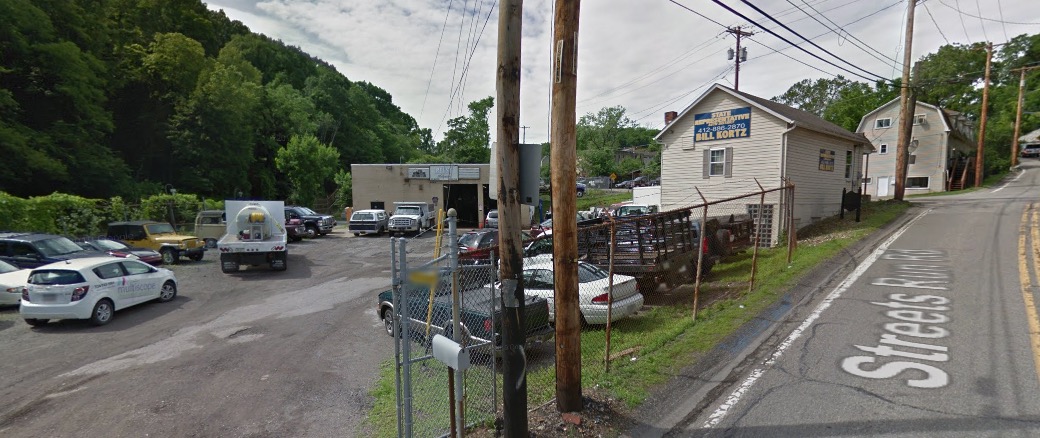
On June 29, 1994, Ralph Bolden went to Valor Sports Shop on Streets Run Rd. in Baldwin to buy a gun. Lacking identification and enough money to complete the purchase, he returned just after the store opened the next morning.

image001
800 Streets Run Rd.

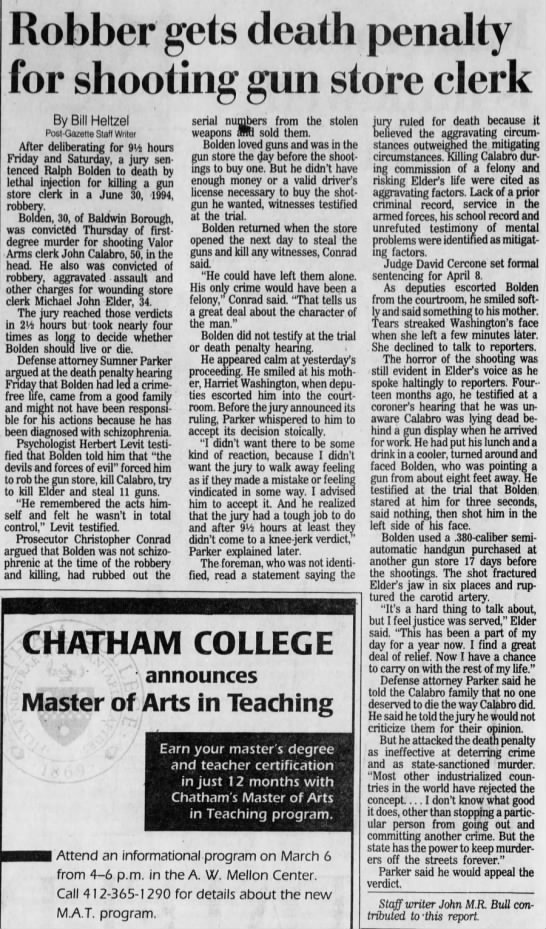
Armed, he stole eleven guns and shot two store clerks, both of whom were also armed. John K. Calabro, 50, was killed; Michael John Elder, 34, survived.

image001
Pittsburgh Post-Gazette, July 1, 1994

The initial police investigation produced no leads in the case. However, the stolen guns were traceable. It was only a matter of time before one was used in a crime or sold in a manner that could lead police to the killer.

Bolden, who was unemployed and living with his mother at the time of the killing, was arrested nearly five months later, on November 23, 1994, when guns that he was selling were traced to the store.

At trial, Bolden’s attorney argued that he was mentally ill and incapable of forming intent. Bolden was convicted of first-degree murder on February 29, 1996, and, after lengthy jury deliberations, sentenced to death on March 2, 1996. The jury determined that his mental illness, veteran status, and lack of a prior record were outweighed by the deliberation evident in the crime.

image001
Pittsburgh Post-Gazette, March 3, 1996

After his conviction, it was determined that Bolden had fabricated his mental illness and had fooled or asked witnesses to testify to that illness.

Bolden’s death sentence was reversed on appeal on June 20, 2000, due to court and defense counsel errors during the penalty phase of the trial (Commonwealth v. Bolden, 562 Pa. 94). A new sentencing hearing was ordered, and Bolden was sentenced to life in prison without parole on March 9, 2001.

Now 52 years old, Ralph Bolden remains in prison at SCI-Albion.

image001
Ralph Bolden, 2018

Jake Tyrone Wesley

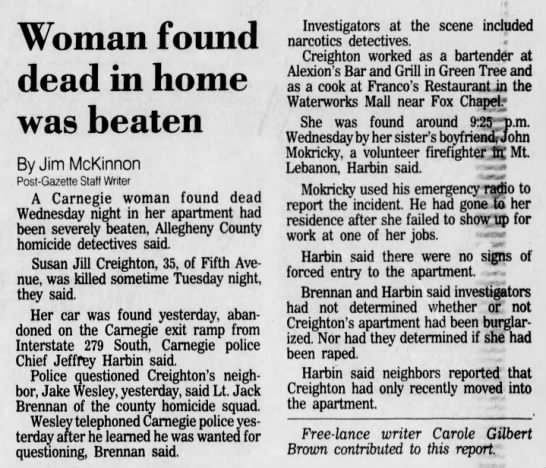
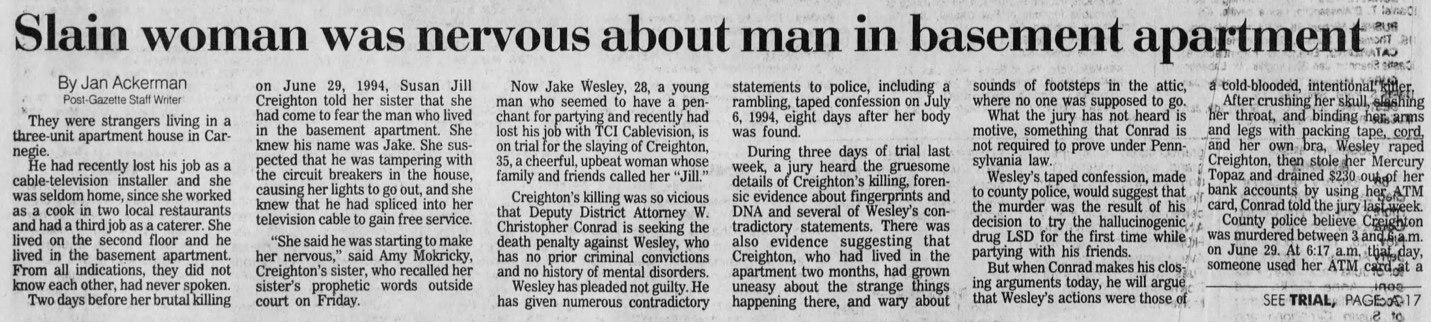
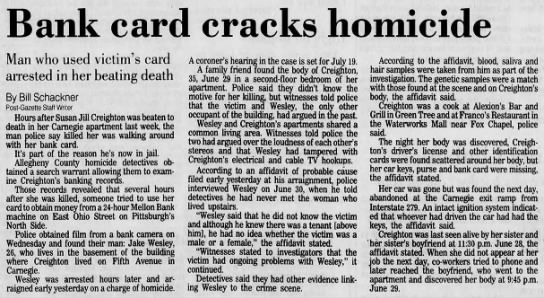
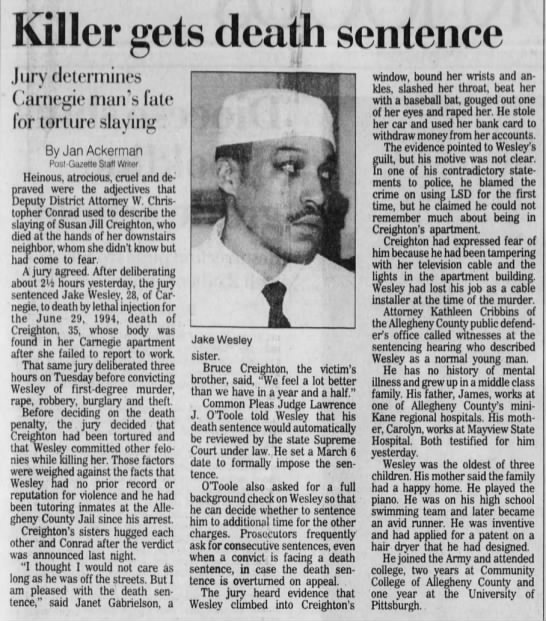
Jake Wesley and Susan Jill Creighton lived in the same Fifth Avenue apartment complex in Carnegie. In the spring and early summer of 1994, Creighton, 35, who lived alone, had told friends and family that Wesley, whom she did not know, made her uncomfortable and had been tampering with her lights and cable television connection.

image001
Pittsburgh Post-Gazette, July 1, 1994

On June 29, 1994, Wesley entered Creighton’s apartment through a bedroom window, bound and raped her, stabbed her, and beat her with a baseball bat. The killing was particularly brutal. Co-workers alerted police when Creighton did not report to work the next day.

image003
Pittsburgh Post-Gazette, January 22, 1996

After the killing, Wesley stole Creighton’s car and drove around Pittsburgh trying to withdraw cash from banks using her ATM card. He was only able to withdraw $230.00. His image was captured by a security camera.

On July 1, Wesley contacted police to offer assistance in the case. Police interviewed him about the crime but did not arrest him. He called the police a second time that same day, offering additional information about the case. He was interviewed a second time. He contacted police a third time the next day, and was interviewed again.

Wesley was arrested on July 6, 1994 after police obtained evidence linking him to Creighton’s bank account. Once in custody, he provided a taped confession that attributed the killing to his LSD use. DNA found at the scene matched Wesley, an unemployed cable installer with no prior criminal record, no evidence of family turmoil, and no history of mental illness.

image001
Pittsburgh Post-Gazette, July 8, 1994

Presented with Wesley’s confession, fingerprints, DNA evidence, and ATM photographs, a jury convicted Wesley of first-degree murder on January 23, 1996. Based on evidence of torture and the commission of multiple felonies related to her murder, he was sentenced to death plus 30 to 60 years in prison the next day.

image001
Pittsburgh Post-Gazette, January 25, 1996

The Pennsylvania Supreme Court vacated Wesley’s death sentence on June 19, 2000, citing prosecutorial errors during the penalty phase (Commonwealth v. Wesley, 562 Pa. 7). Specifically, the state failed  to provide notice to the defense of its intent to prove Creighton had been tortured; an element of the murder that made Wesley eligible for the death penalty.

Jake Wesley was resentenced to life in prison without parole on March 27, 2001. He died in prison on August 17, 2019.

The experiences of Creighton’s family in dealing with her murder, as told by her sister, Amy Mokricky, are movingly chronicled in Howard Zehr’s book, Transcending: Reflections of Crime Victims.

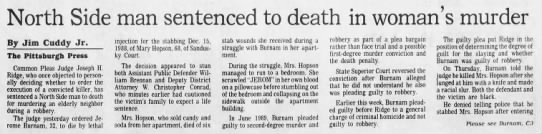
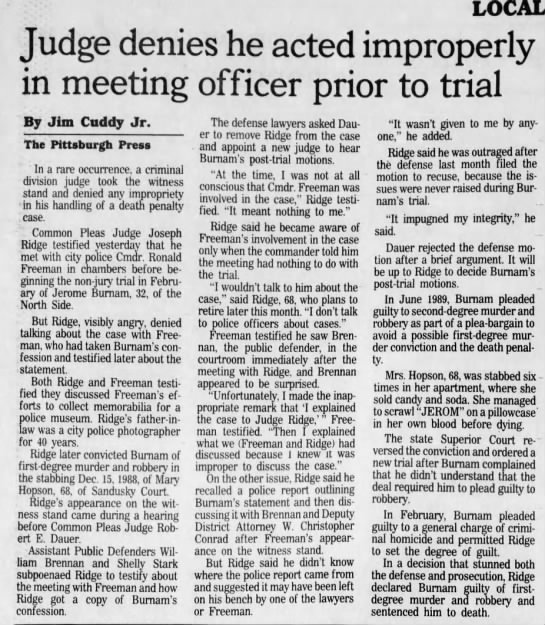
Jerome Burnam

Mary Lee Hopson made ends meet by running a small convenience store from her first-floor apartment in Fineview, selling cookies and candy to neighborhood kids and newspapers to their parents.

image001
Pittsburgh Post-Gazette, December 16, 1988

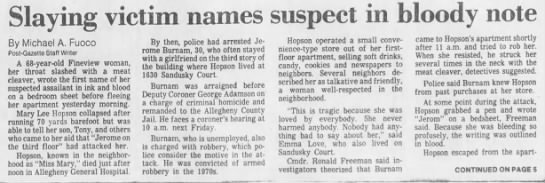
Jerome Burnam knew Miss Mary. His girlfriend lived on the third floor of the same building on Pittsburgh’s Northside.

image001

On December 15, 1988, the unemployed Burnam, looking for money for Christmas gifts, robbed and repeatedly stabbed Hopson. Before she died, Hopson, a 68-year old grandmother, was able to tell her son who had victimized her and to write his name in blood on a bedroom sheet.

image001
Pittsburgh Post-Gazette, December 16, 1988

The murder weapon was left in Hopson’s apartment, as were bloody footprints. Burnam was arrested the same day as he attempted to flee. Questioned by police, he confessed. The case against Burnam was incontrovertible.

As the jury was being selected for his trial on June 29, 1989, Burnam pleaded guilty to second-degree murder and was sentenced to life imprisonment. Subsequently allowed to withdraw his plea, Burnam faced a bench trial before Judge Joseph Ridge in February 1991. Burnam’s legal gambit failed when, on February 15, 1991, he was found guilty of first-degree murder and sentenced to death.

Burnam’s death sentence was quite unexpected. Ridge was famously reluctant to impose such sentences. Both the Assistant Public Defender and the Deputy District Attorney were described as “stunned.”

image001
Pittsburgh Press, February 16, 1991

Burnam aggressively pursued available appeals, an effort aided by evidence that Judge Ridge had met privately with the officer who had taken Burnam’s confession.

image001
Pittsburgh Press, December 12, 1991

Burnam’s death sentence was vacated by the Pennsylvania Supreme Court and he was resentenced to life imprisonment on December 7, 1998.

Jerome Burnam remains in prison at SCI-Fayette.

image001

Burnam had a prior juvenile and young adult criminal record, including a conviction for a 1976 robbery of a North Side cigar store.

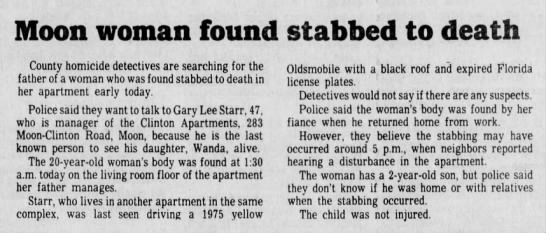
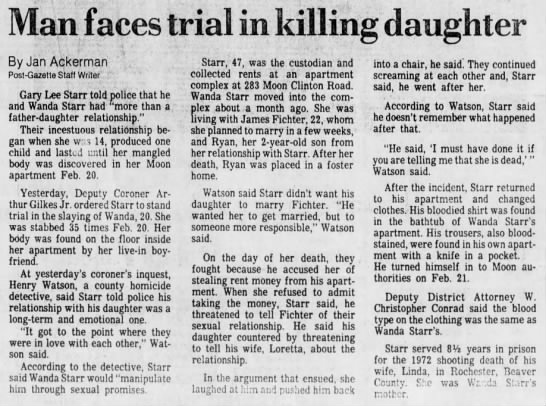
Gary Lee Starr

On February 21, 1988, Gary Lee Starr was arrested in the stabbing death of his 20-year old daughter, Wanda Lynn Starr. She had been killed the previous day. Wanda Starr’s body was discovered by her boyfriend, James Fichter, in the apartment they shared at the Clinton Apartments, 283 Moon Clinton Rd., Moon Township, which Gary Lee Starr also lived in and managed.

image001
283 Moon Clinton Rd.

Police investigation revealed that Starr and his daughter had been involved in an incestuous relationship since she was 14. That relationship had produced a two-year old son.

image001
Pittsburgh Press, February 20, 1988

The incident culminating in Wanda’s murder began when Starr accused Wanda of stealing rent from the apartment business. She responded by threatening to tell his wife, Loretta Starr, of their relationship. Starr responded that he would tell her boyfriend. She then started to seduce him. Enraged at her efforts to manipulate him, which had become a more common occurrence, he stabbed her 35 times.

image001
Pittsburgh Post Gazette, March 4, 1988

At trial, Starr claimed that he “blacked out” just before the killing. After a two-day trial, he was convicted of first-degree murder on August 22, 1988, and sentenced to death on September 27.

On appeal, on August 29, 1995, the Pennsylvania State Supreme Court reversed Starr’s conviction and ordered a new trial due to the trial court’s wrongful refusal to allow Starr to act as his own counsel (Commonwealth v. Starr, 541 Pa. 564). That right must be granted, the court ruled, when the defendant is competent to assert it, independent of the court’s assessment of the defendant’s technical ability and best interests.

On January 12, 1996, Starr was resentenced to life imprisonment after he agreed to plead guilty to first-degree murder.

This was a familiar dynamic for Starr.

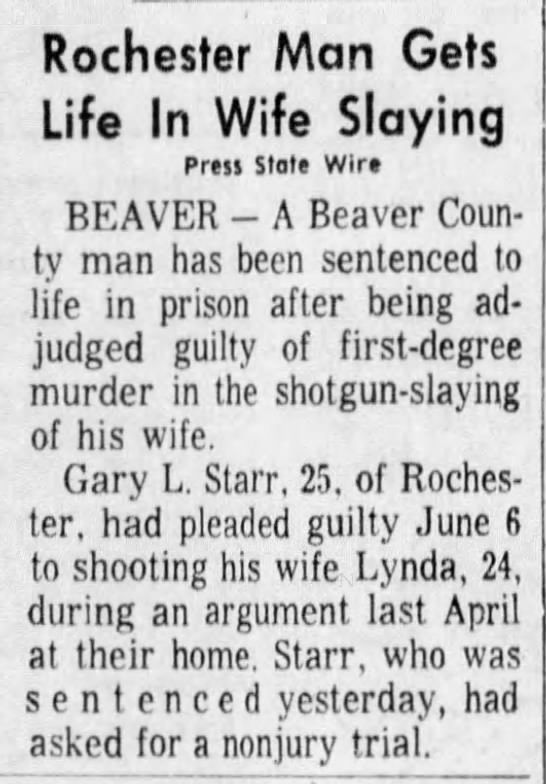
On June 16, 1972, he was convicted in the April 7, 1972, shotgun death of his first wife and Wanda’s mother, Lynda Mary Burgess Starr, in Rochester, Beaver County, and sentenced to life in prison. Starr claimed that his wife had cheated on him.

image001
Pittsburgh Press, June 17, 1972

On appeal, the Pennsylvania Supreme Court ruled that the trial court erred in not permitting Starr to withdraw his guilty plea (Commonwealth v. Starr, 450 Pa. 485, 1973). On retrial, he was convicted of involuntary manslaughter and served 8 1/2 years in prison before being paroled.

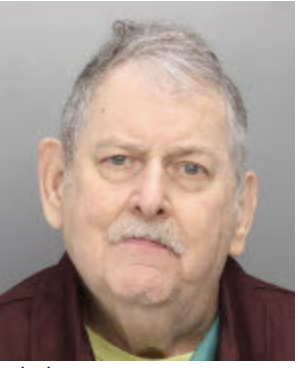
Now 67 years old, Gary Lee Starr remains in prison.

image001
Gary Lee Starr

Frederick Mayhue

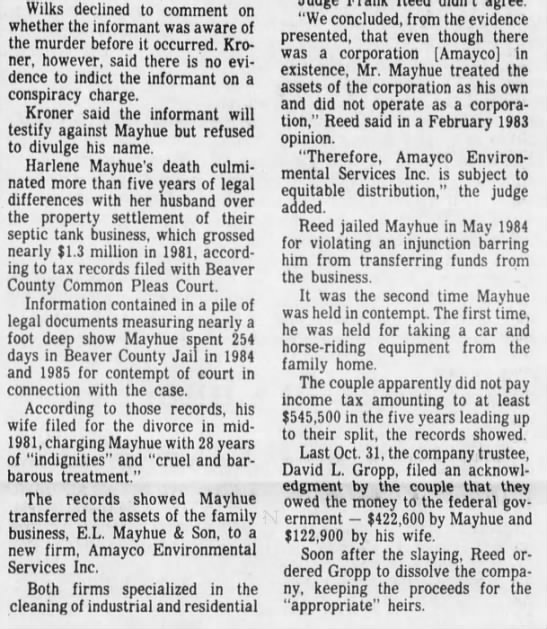
Harlene Grimes Mayhue filed for divorce from her husband, Frederick, on August 5, 1981. So contentious was the divorce – over matters financial and personal – that it was not yet finalized more than five years later when Mrs. Mayhue was murdered.

In the interim unfolded one of the more complicated and poorly concealed conspiracies to commit murder on record.

At the time of the divorce filing, the Mayhues, who lived in Rochester (Beaver County), Pennsylvania, and had been married for more than thirty years, were joint owners of a residential sewer cleaning business, E.L. Mayhue & Son. Well off and anticipating a bitter divorce, Fred had been diverting money from the business into an account he established in the name of a shell business, Amayco Environmental Services, in an effort to shield money from the divorce proceedings.

Unwilling to reach a financial settlement with his wife and bitter that his scheme to defraud had been revealed (Mayhue v. Mayhue, 336 Pa. Superior Ct. 188, 1984), Fred Mayhue began to plan her murder.

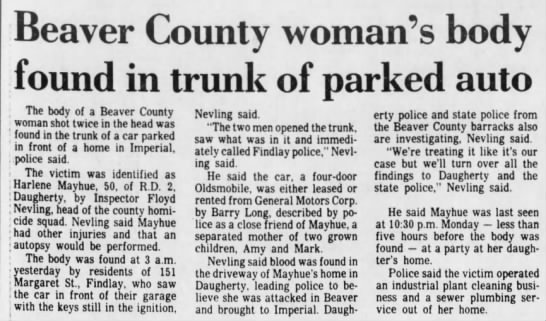
Harlene Mayhue was last seen leaving a birthday party for her daughter, Debbie Meyer, at Meyer’s New Galilee home at 10:45pm on December 15, 1986. Her body was found in the trunk of the car she had been driving at 3:00am the next day at the Findlay Township, Allegheny County, home of David Kisow.

image001
Pittsburgh Post-Gazette, December 17, 1986

Kisow and his friend, Donald Meerdo, found the car in Kisow’s driveway when they returned from a bar. When they opened the trunk, they found Mrs. Mayhue. She had been beaten, strangled, and shot in the head. Meerdo called the police against Kisow’s wishes.

Initially denying any knowledge of what happened, Kisow began to cooperate with police after receiving a threatening phone call from Mayhue. Included was information that Mayhue had repeatedly mentioned to Kisow, a construction worker, that he would like for him to chop a car that contained a dead body.

The investigation also found blood at Mrs. Mayhue’s Daugherty Township home, leading police to believe initially that the murder occurred in Beaver County. When they found shell casings matching the murder weapon at Kisow’s residence, they concluded instead that Mrs. Mayhue had been beaten at home before being moved into Allegheny County where she was shot and killed.

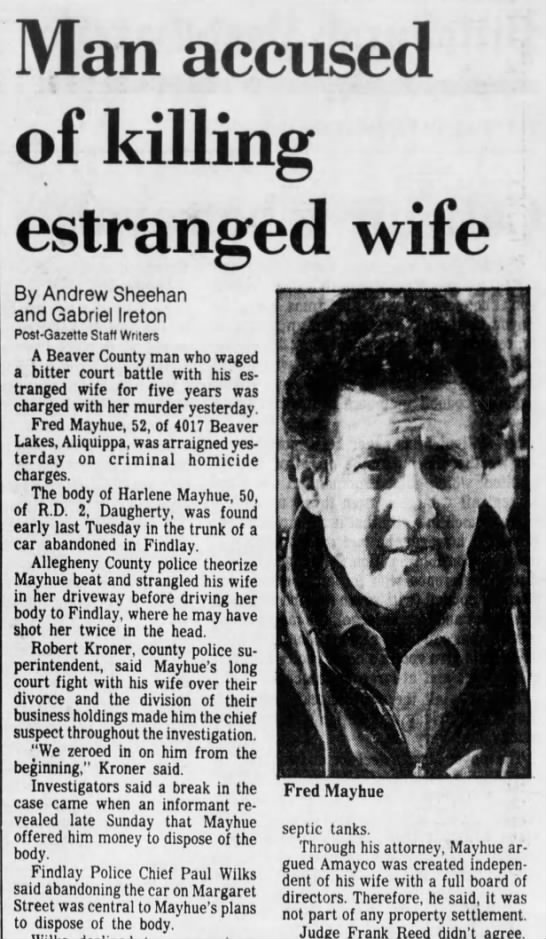
Despite his elaborate efforts to use friends to construct an alibi, Mayhue was arrested on December 22, 1986, due to inconsistencies in stories told by him and his friends.

image001

image001
Pittsburgh Post-Gazette, December 23, 1986

James Hardin, a Rochester Township commissioner and former police officer, Gerald McCarthy, and Edward Lau were also arrested for their involvement in various roles in plots to kill Mrs. Mayhue.

Once in jail, Mayhue solicited fellow inmates to kill witnesses against him.

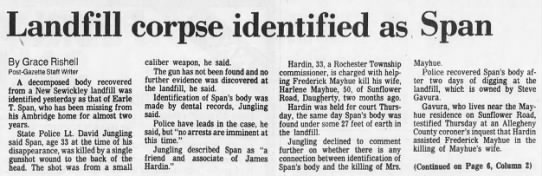
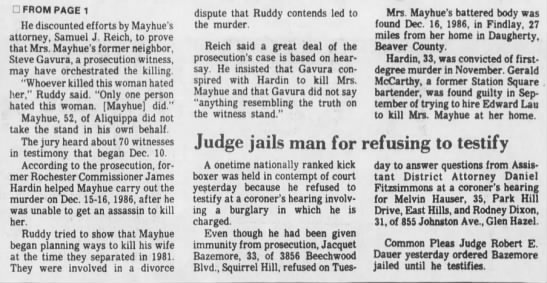
In February 1987, Steve Gavura, a landscaper and excavator who owned a large lot next door to Harlene Mayhue, told police that Fred Mayhue and McCarthy had approached him on April 5, 1985, about burying a body on his property. Earl Span, investigators learned, had been paid by Mayhue to kill his wife, failed to do so, and was killed as a result. His body was recovered from Gavura’s property on February 12, 1987.

image001
Pittsburgh Post-Gazette, February 14, 1987

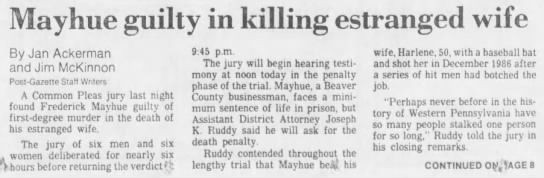
At trial, the evidence revealed a premeditated, sprawling, and messy effort to kill Harlene Mayhue. Lau, who was granted immunity, testified against Mayhue, as did Gavura, Wayne Shackleford, and several other men who were privy to Mayhue’s various schemes. As the Assistant District Attorney said during the trial, “Perhaps never before in the history of Western Pennsylvania have so many people stalked one person for so long.”

Mayhue was convicted of first-degree murder on January 6, 1988, after a four week trial. He was sentenced to death two days later. Hardin, Mayhue’s principal accomplice, was convicted of murder and sentenced to life imprisonment. McCarthy was convicted of criminal solicitation and sentenced to five to ten years in prison.

image001

image001
Pittsburgh Post-Gazette, January 7, 1988

On appeal, on March 18, 1994, the Pennsylvania Supreme Court vacated Mayhue’s death sentence and sentenced him to life imprisonment (Commonwealth v. Mayhue, 536 Pa. 271). The reversal was based on the absence of aggravating factors warranting a death sentence. The court ruled that because the contract to kill Mrs. Mayhue was never carried out, that contract could not be used as an aggravator, leaving the case without the circumstances to justify a death sentence under Pennsylvania law.

Mayhue died in prison on October 3, 2013. He was 79 years old.

Salvador Carlos Santiago

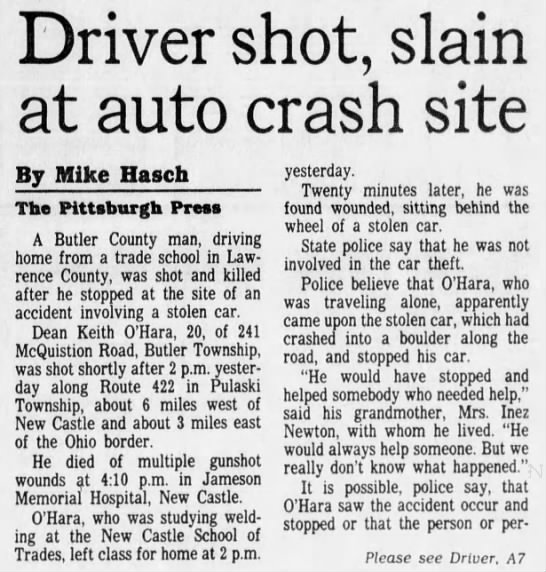
On January 15, 1985, a month after being released from prison for armed robbery, Salvador Santiago murdered 20-year old Dean K. O’Hara in New Castle (Lawrence County), Pennsylvania, after O’Hara stopped to help him with his disabled car.

image001
Pittsburgh Press, January 16, 1985

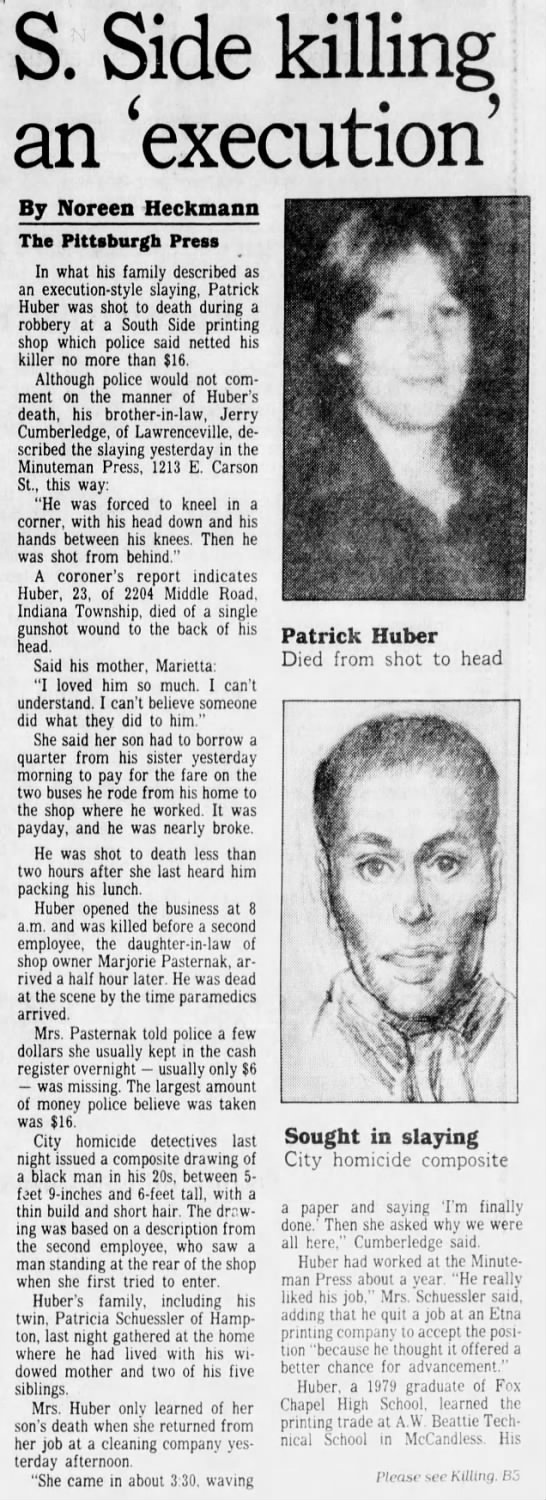
Santiago, 22, then stole O’Hara’s car and fled. Two days later, he robbed the Minuteman Press shop on East Carson St. on Pittsburgh’s South Side and shot to death store clerk Patrick Huber.

image001
Pittsburgh Press, January 18, 1985

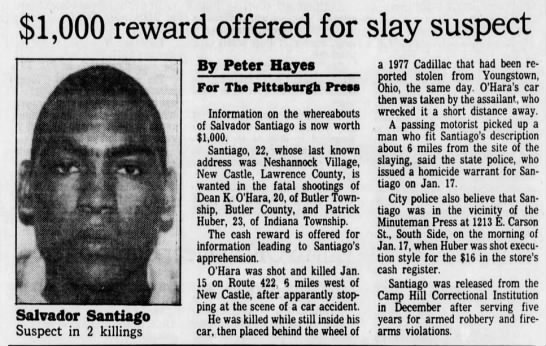
Based on information provided by witnesses, on January 17, state police issued a warrant for Santiago’s arrest for killing O’Hara. Approximately three weeks later, based on descriptions matching witness reports from New Castle, Santiago was connected to Huber’s killing and the search intensified.

image001
Pittsburgh Press, March 2, 1985

He was arrested by FBI agents in Washington D.C. on April 4, 1985, for unlawful flight to avoid prosecution for O’Hara’s killing. Once questioned by Pittsburgh Police, Santiago confessed to killing Huber. He told police voices he heard directed him to perform the killings.

At the time of his arrest, Santiago, who already had a lengthy criminal record, was also wanted in connection with the non-fatal shooting of a bus station clerk during a robbery in Sharon, Pennsylvania, in early January 1985.

Soon after his arrest, his girlfriend, Marilyn Denise Giles, whom he had met in Washington, D.C. in February 1985, told police of the multiple murders Santiago had confessed to her.

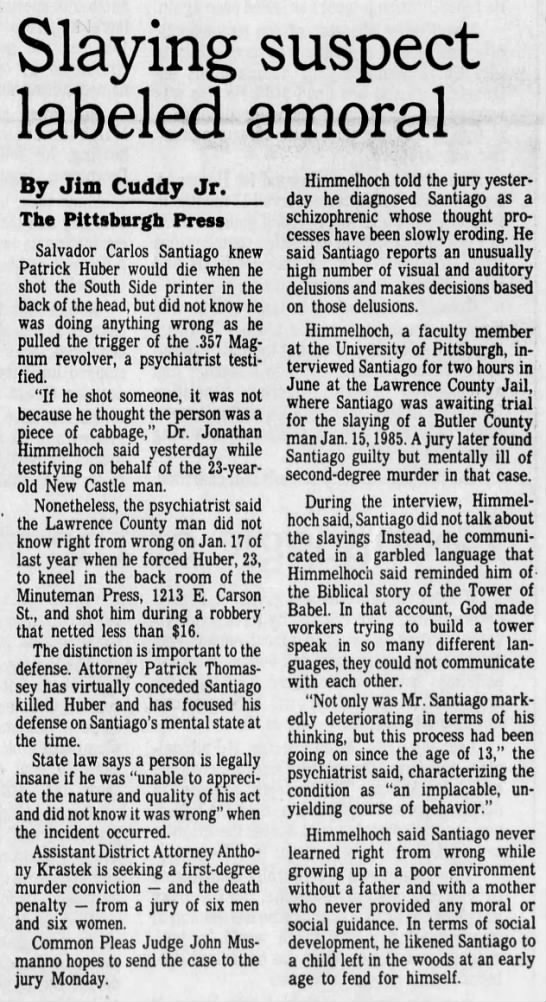
At trial in Lawrence County, Santiago was found guilty of second-degree murder but mentally ill in the O’Hara case and sentenced to life imprisonment.

Despite that and his earlier diagnosis as “a seriously disturbed paranoid schizophrenic,” Santiago’s mental health defense failed and he was convicted of first-degree murder on April 26, 1986, in the Huber case. The jury favored the prosecution’s argument that “a conscience never formed” in Santiago.

image001
Pittsburgh Press, April 25, 1986

After brief deliberations following the penalty phase of Santiago’s trial, he was sentenced to death on April 28. The jury again rejected the defense claim that Santiago’s guilt was diminished by mental illness.

While Santiago’s life sentence was upheld on appeal (Commonwealth v. Santiago, 376 Pa. Super. 54, 1988), his first-degree murder conviction and death sentence were reversed (Commonwealth v. Santiago, 528 Pa. 516, 1991) after the Pennsylvania Supreme Court found that he had been questioned without the benefit of counsel when he spoke with Pittsburgh police soon after his arrest. A new trial was ordered.

Retried, he was convicted of first-degree murder on September 9, 1992, and sentenced to death a second time. That conviction was sustained on appeal by the Pennsylvania Supreme Court (Commonwealth v. Santiago, 541 Pa. 188, 1995).

After twenty-three years of appeals that reached all the way to the U.S. Supreme Court and multiple stays of his execution, Santiago’s death sentence was vacated by the state supreme court and he was resentenced to life imprisonment on August 25, 2009. The decision was based on a finding of ineffective counsel in his second death penalty conviction. That conclusion was reached as part an agreement with his counsel that Santiago would cease all further appeals.

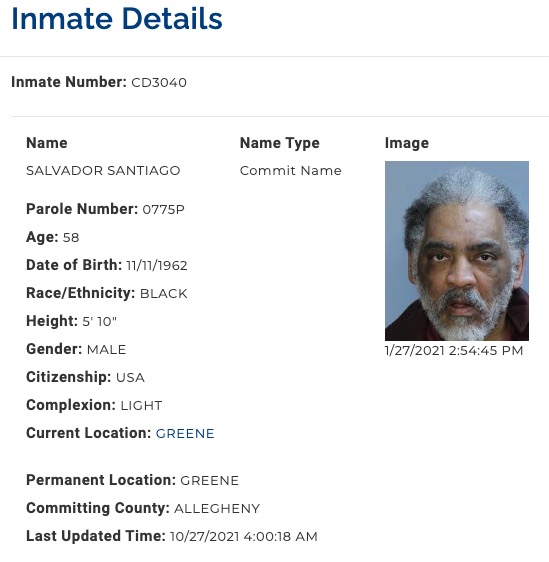
Salvador Santiago is serving a life sentence in SCI-Greene.

image001