Walter Charles Troy

Walter Troy lived in a two-room house on Rowley St. in the Hill District with his wife, Marie W. (Ronezka), their four children, and his mother, Emma Condon.

image001
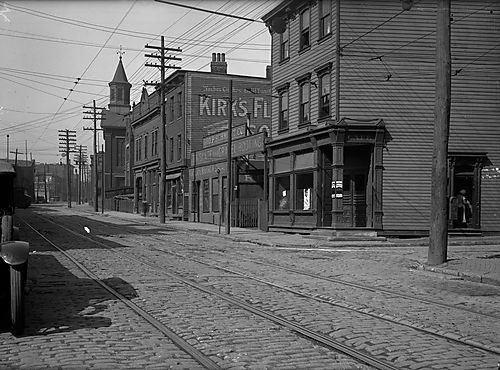
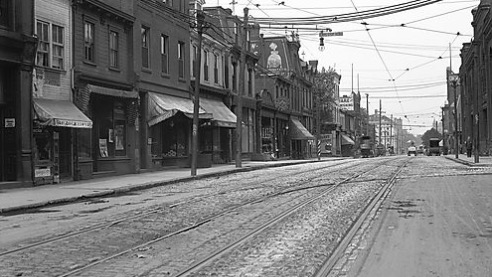
Hill District, 1921

On January 17, 1921, not long after losing his job as a Pennsylvania Railroad police officer, Troy came home drunk, quarreled with his pregnant wife, and shot her.
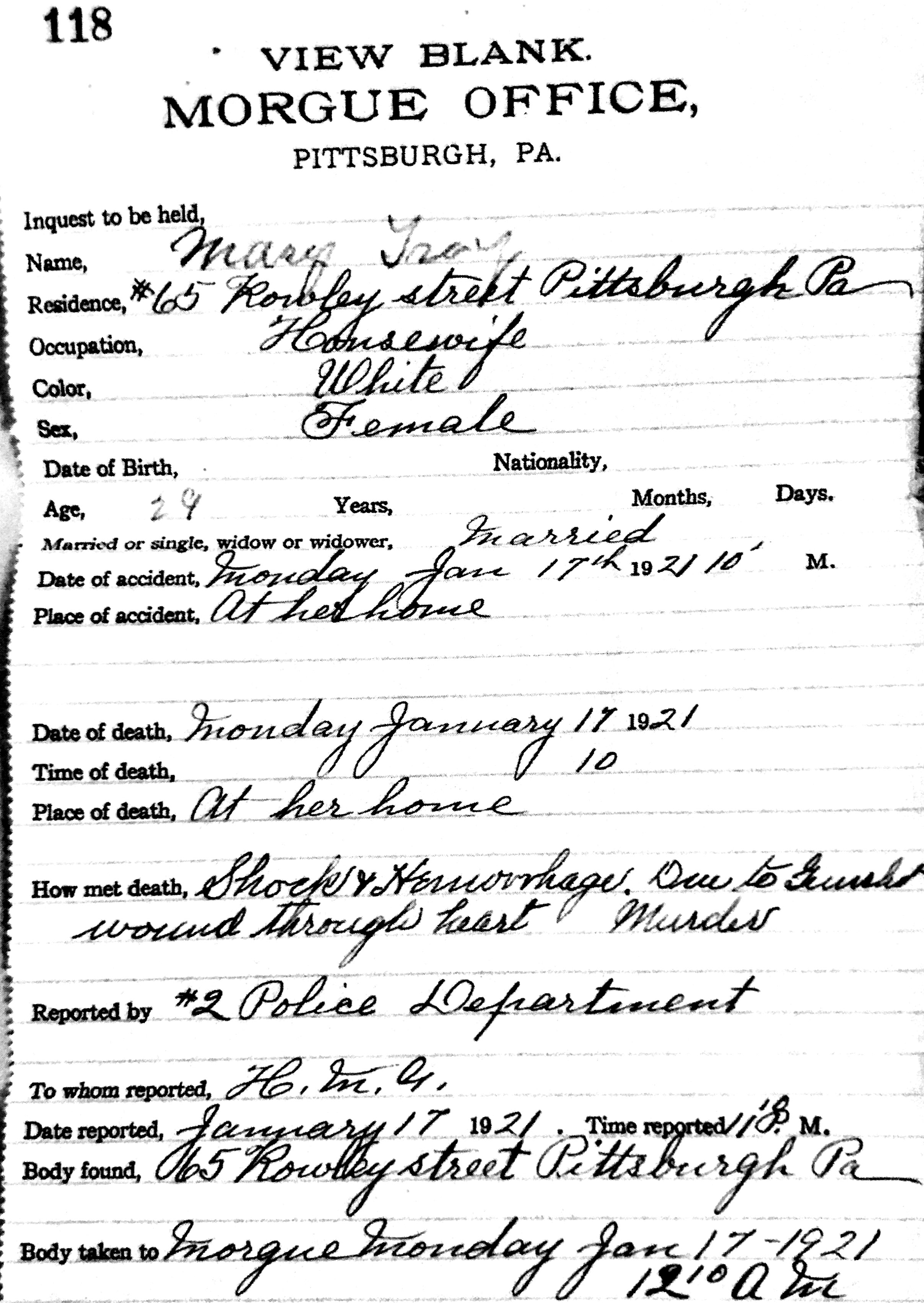
image001

Amidst the shooting, Condon fled to the Webster Avenue home of her daughter and son-in law, Mary and Edward Zahn. Troy and his oldest son, Albert, soon followed. There Troy washed off evidence of the crime and developed a plan to blame nine-year old Albert for the shooting, apparently threatening him to tell police he accidentally shot his mother.

image002

Responding to the shots, police went to the Troy home, found the Zahns there investigating the scene, and soon arrested Troy. Albert Troy initially told police that he had accidentally shot his mother. Under questioning, he changed his story and implicated his father.

Earlier that day, Troy had spoken with his mother to make sure his wife had made payments on their life insurance policies.
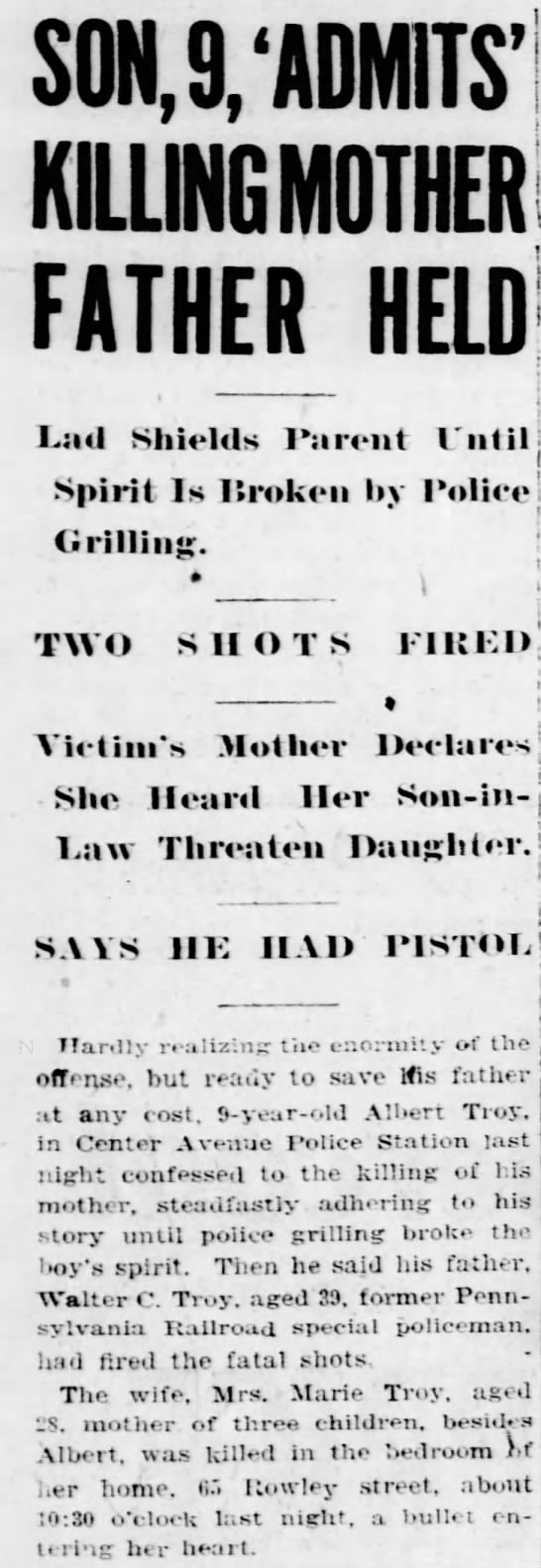
image001
Pittsburgh Gazette Times, January 18, 1921

At trial, the prosecution offered the testimony of Troy’s son and mother. In his defense, Troy claimed he was drunk at the time of the killing. He was convicted of first-degree murder on December 14, 1921, and sentenced to death on February 17, 1922.

image001.jpg
Walter Troy

While pursuing post-conviction relief, Troy and fellow capital defendants John Rush and Joseph Thomas were involved in an escape plot. The plot was foiled when a gun was found in Rush’s cell. Under questioning, Troy revealed the plans to jail authorities.

Troy’s conviction was affirmed on appeal (Commonwealth v. Troy, 274 Pa. 265, 1922) when his challenge to the competency of his young son’s testimony was rejected.

Despite his escape plans and the strength of his conviction, Troy was granted several respites to consider his clemency petition before that petition was rejected on November 22, 1922.

Walter C. Troy was taken to Rockview and executed on December 4, 1922. Long-time warden John McNeil, who worked in the jail for 39 years, later said Troy took his execution harder than any other inmate he had known.

image001                                                      Rowley Street today

Emma Condon died in Pittsburgh in 1932. Albert Troy died after a fall in his Butler home in 1963.
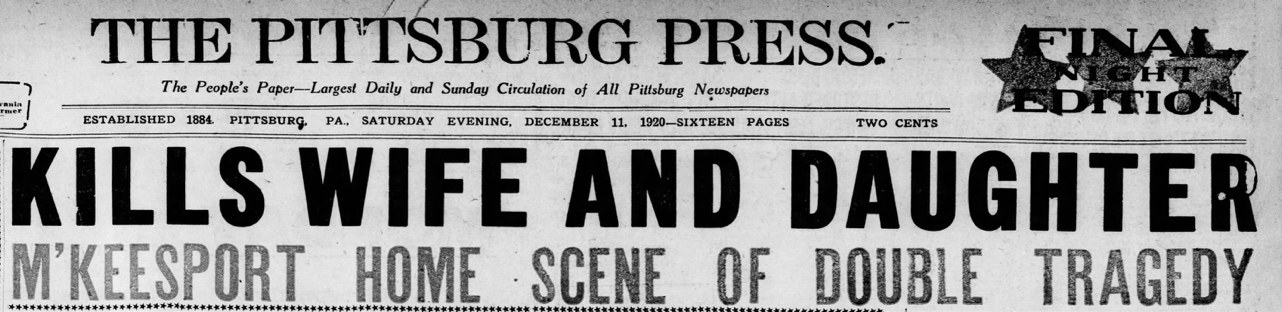
Bernard S. McAneny

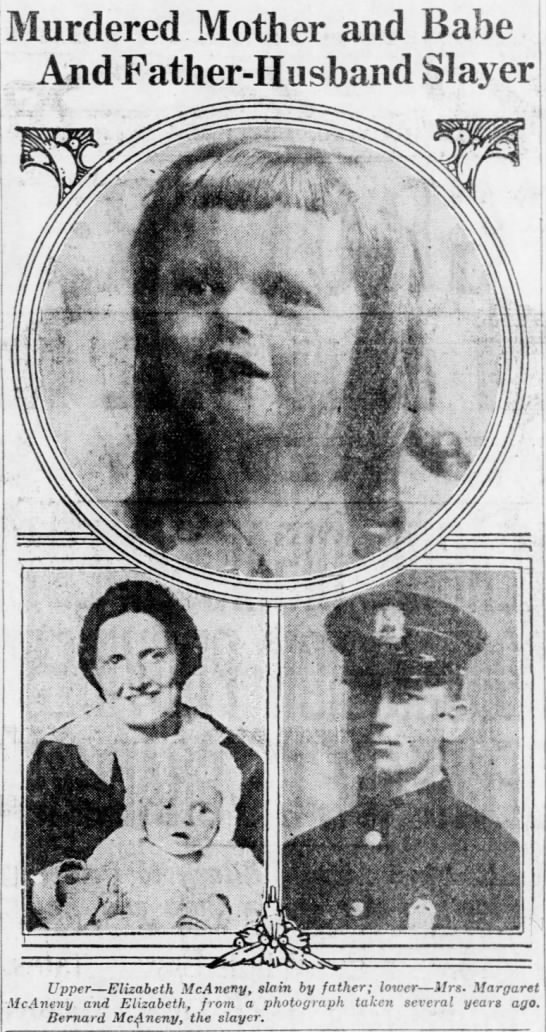
Bernard S. McAneny and his wife, Margaret (Igims), adopted an abandoned child in 1917. That generous act apparently introduced tremendous tension into their marriage. Believing that his wife was showing undue attention to their child, Mary Elizabeth, Bernard quarreled frequently with Margaret.

On December 5, 1920, the argument became so heated that Margaret called the police to their McKeesport home. That incident led the couple to separate. Three times over the subsequent week, McAneny came to his wife’s new Spring St. home to reconcile and each time he issued threats and pulled his gun when his wife refused to return home.

image003

image003
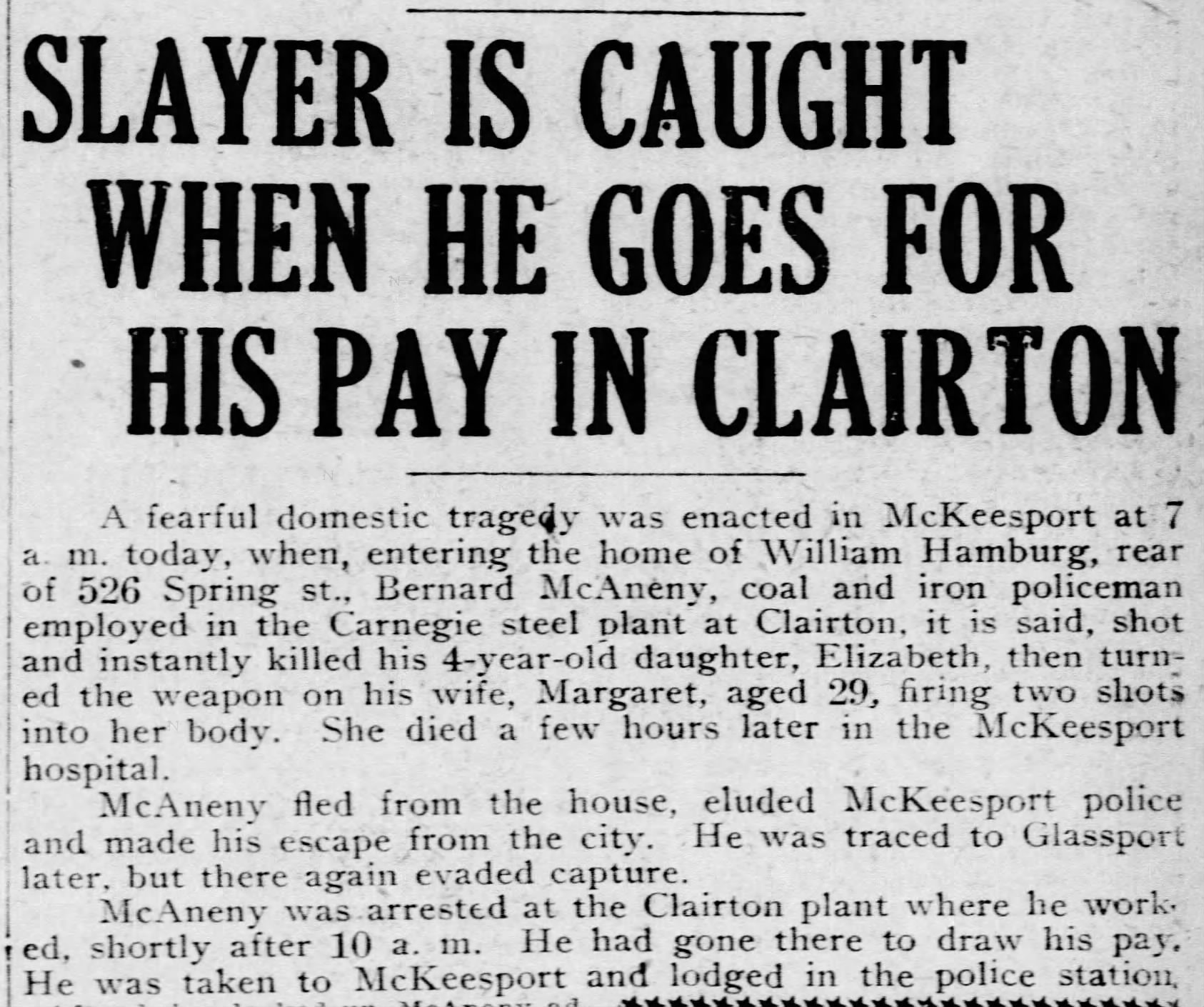
Pittsburgh Press, December 11, 1920

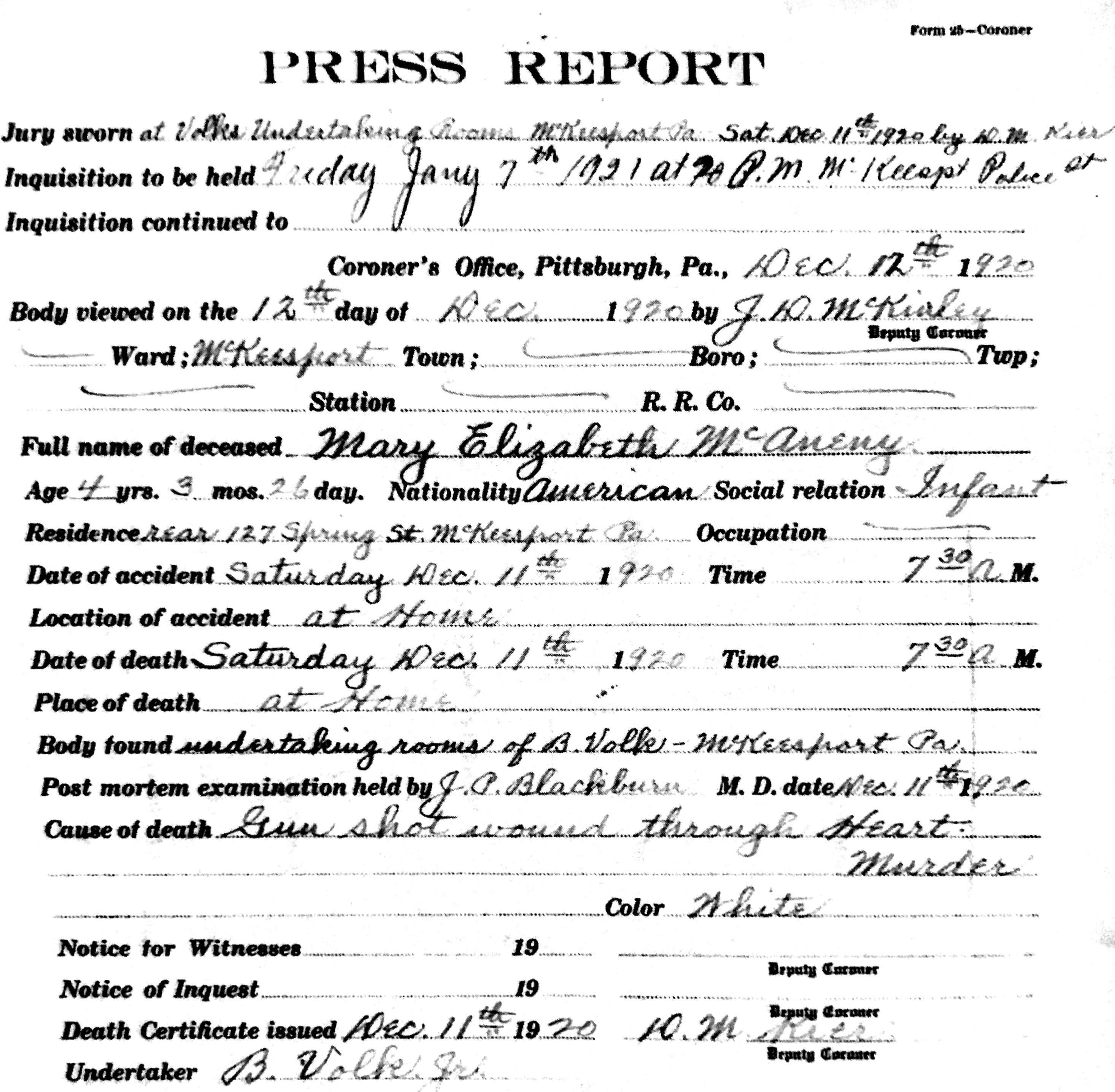
Then, on December 11, 1920, McAneny, 36, a member of the infamous Coal and Iron Police who worked at the massive Clairton steel plant, went to the nearby home in which Margaret, 30, and Mary Elizabeth were living and shot and killed them both.

image001
Pittsburgh Sunday Post, December 12, 1920

McAneny was arrested later that day in Clairton and confessed to the murders.

image001

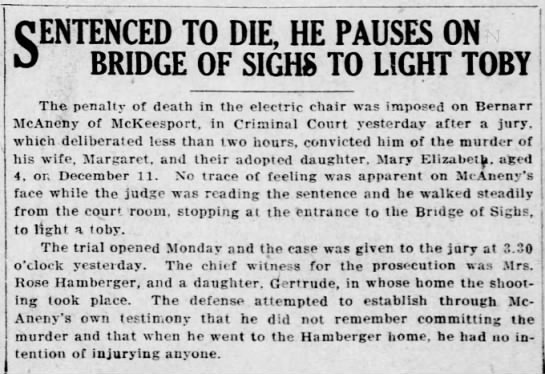
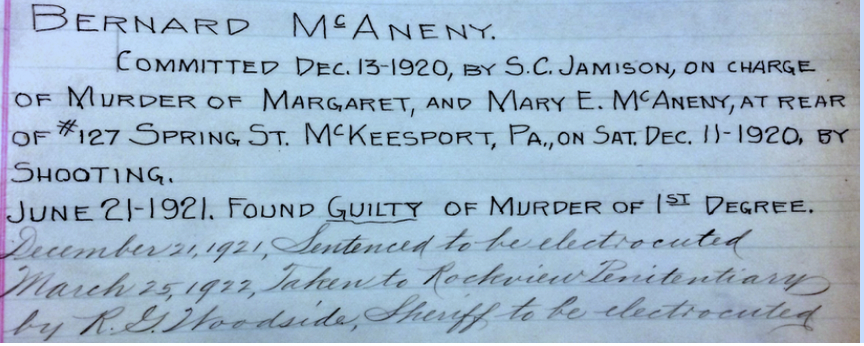
With McAneny’s confession and the eyewitness testimony of Rose Hamburger, in whose home the victims were living when they were killed, McAneny was found guilty of first-degree murder on June 21, 1921. His trial had lasted only several hours. He was sentenced to death the same day.

image001Pittsburgh Post-Gazette, June 22, 1921
Bernard McAneny’s clemency request was rejected on March 22, 1922, and he was executed on March 27, 1922.

Screenshot 2019-02-01 08.58.20From the Allegheny County Jail Murder Book, courtesy of Ed Urban

Margaret Igims McAneny was born in Spokane, Washington in 1889 (according to her death certificate; newspaper accounts of her death list her as 29 years old, suggesting a birth year on 1890 or 1891; her marriage license – a less authoritative source, particularly given her youth – indicates she was born in 1884). In 1904, at age 14, she served time in the Allegheny County Workhouse for prostitution. She married McAneny the following year.

image001
Spring St., McKeesport

John Mason

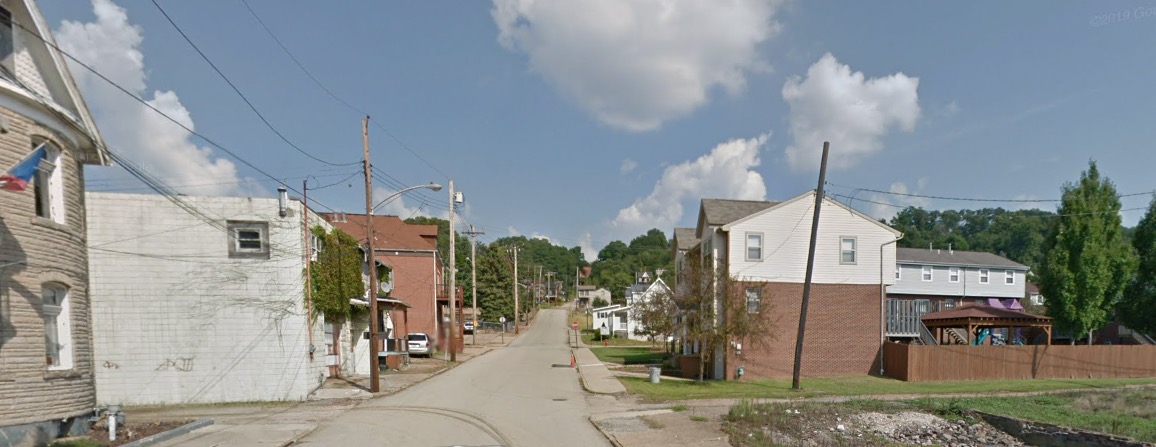
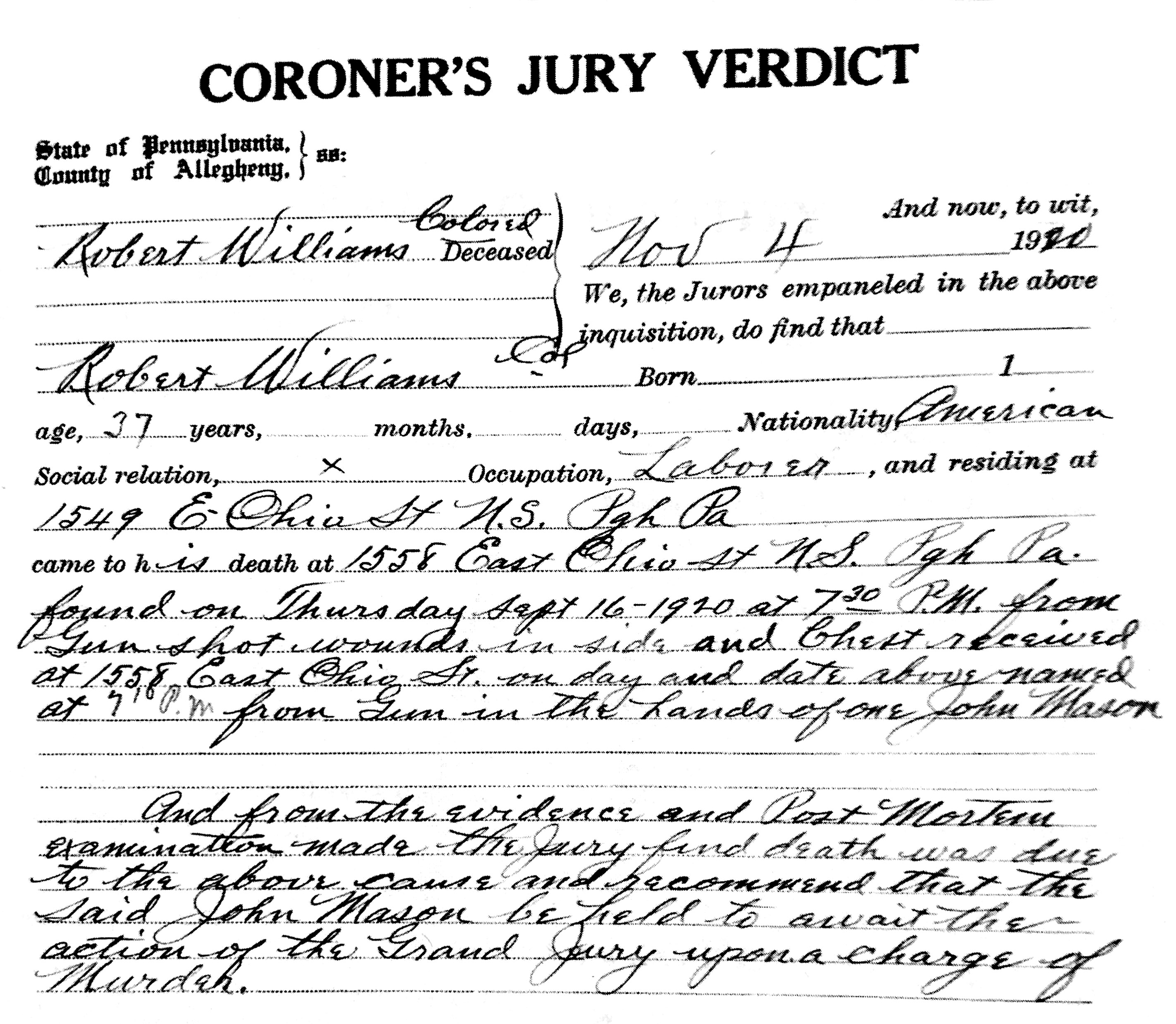
John Mason shot and killed Robert Williams following a disagreement during a craps game on the evening of September 16, 1920. The shooting occurred in an alley off of East Ohio St. on the North Side.

image001
East Ohio St., 1920 https://historicpittsburgh.org/islandora/object/pitt%3A715.201309.CP

After being shot, Williams ran in to a nearby home, where he died. Mason fled the scene.

image001.png

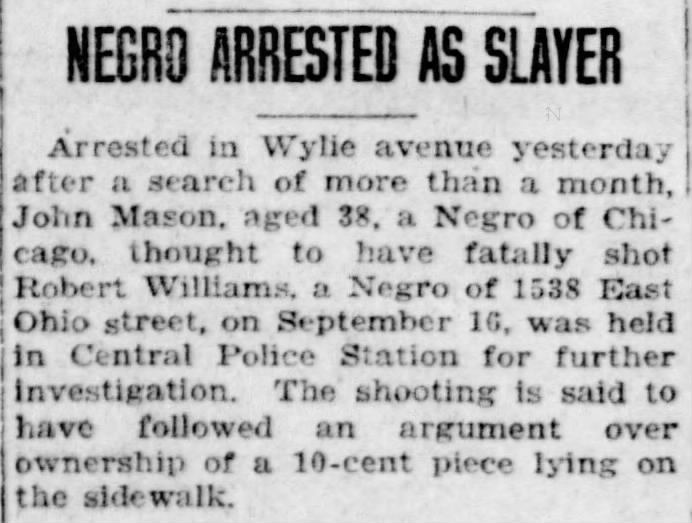
Mason was arrested on Wylie Avenue in the Hill District on October 12.

image003
Pittsburgh Gazette-Times, October 13, 1920

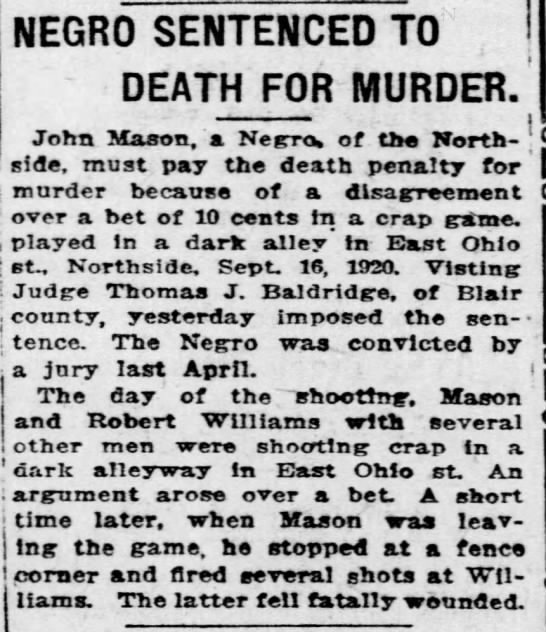
At trial, Mason was convicted of first-degree murder on April 12, 1921, and sentenced to death on October 22, 1921.

No appeal was undertaken. Mason’s clemency petition was rejected and, despite what would appear to be a weak first-degree murder case, he was executed on January 23, 1922. He was buried in the prison cemetery.

As the brevity of the above summary suggests, this case received very little public attention. Much like the Davis case the previous years, a murder among two poor, single Black men who were not from Pittsburgh (Mason was born in Louisiana; Williams lived by himself in a boarding house on East Ohio St., near where he was killed; his death certificate is mostly blank) lacked any of the elements necessary to draw public attention and any of the resources necessary to command the court’s attention.

image001Pittsburgh Press, October 23, 1921
This simple discussion represents the longest article written about this case and the only article of more than a single paragraph

The struggles of men like Mason and Williams and thousands of other Black migrants were documented by Abraham Epstein, a University of Pittsburgh graduate student in Economics who interviewed hundreds of such men in 1917. His research found high levels of discrimination, wretched living conditions, poor sanitation, and isolation.

James Davis

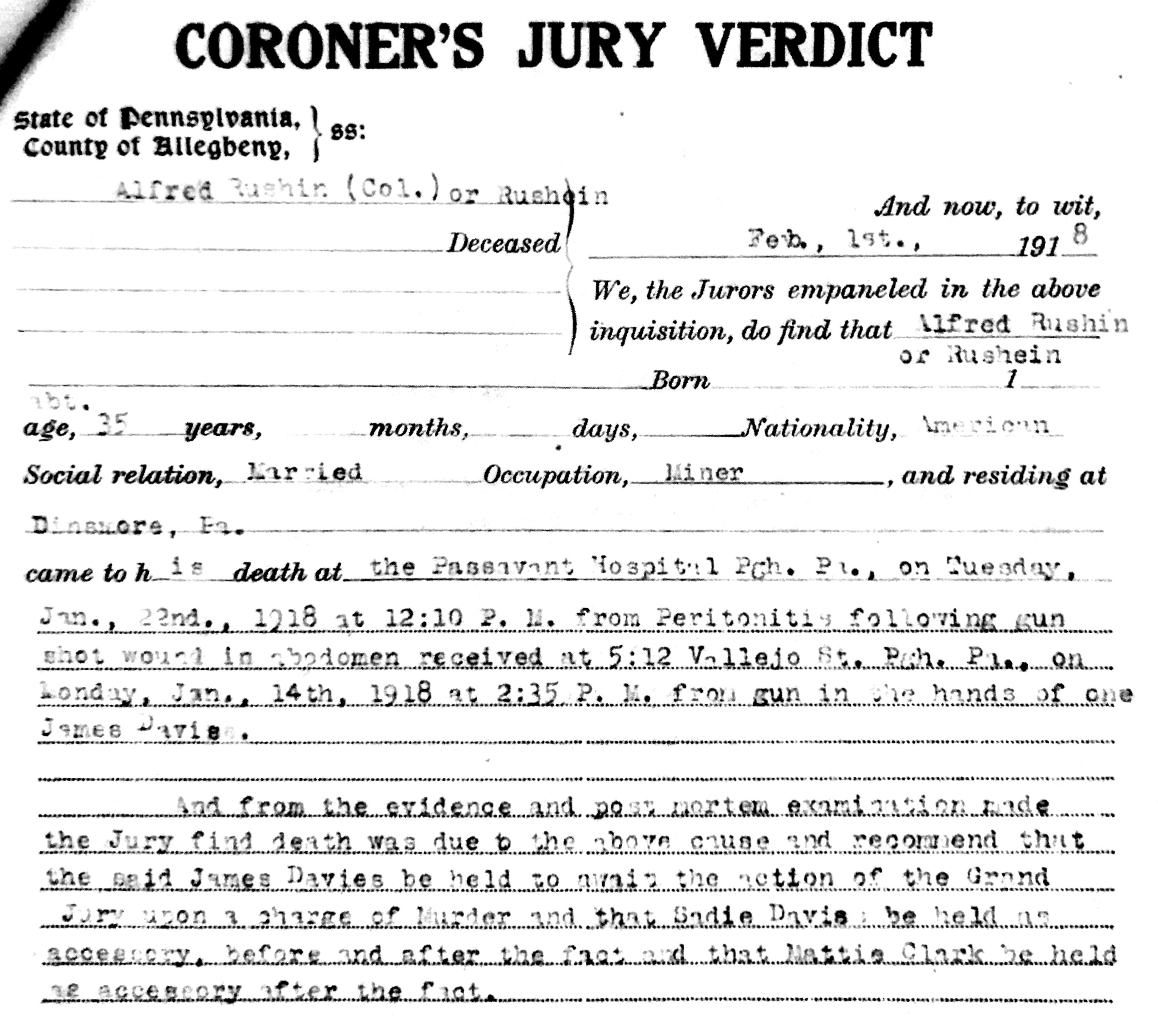
James Davis worked in a steel mill and, with his wife, Sadie, operated a brothel in their Vallejo St., Hill District home. Charles Clark, a Pittsburgh-born teamster, and Alfred Rushin, a Georgia-born coalminer, were patrons there on the afternoon of Monday, January 14, 1918.

image001
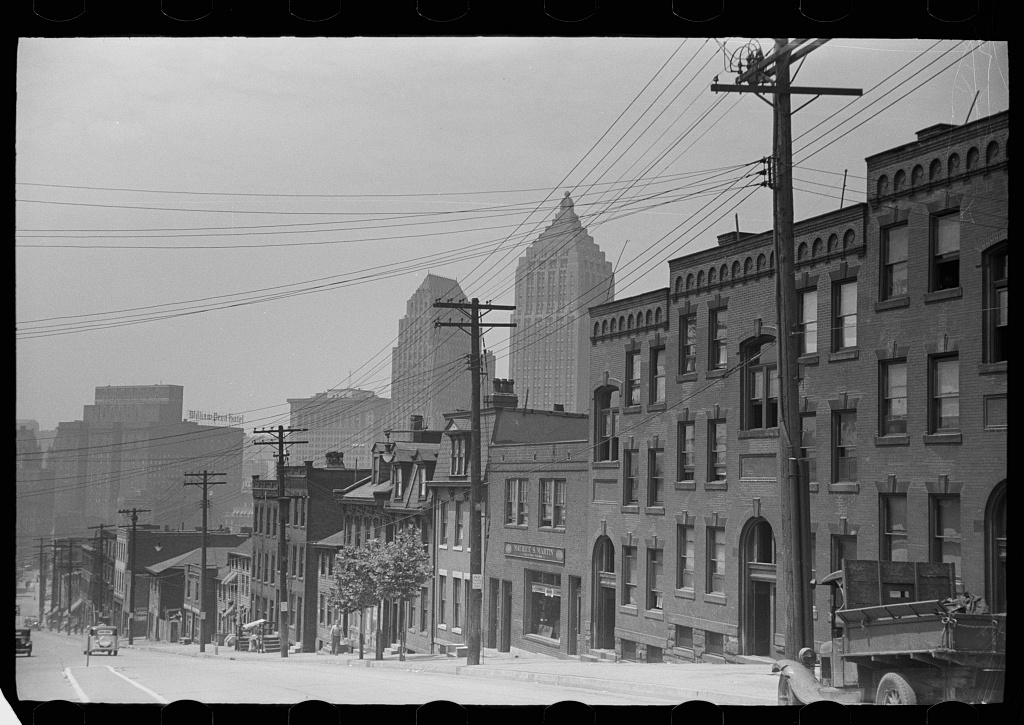
Hill District, circa 1920s

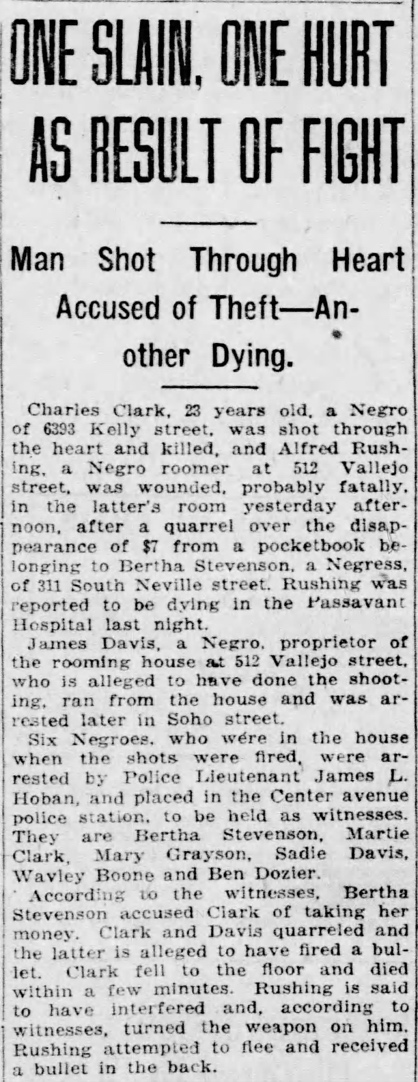
A quarrel broke out when Bertha Stevenson, who worked in the home, accused Clark of stealing $7 from her purse.

The quarrel drew the attention of Davis, who told his wife to go to a nearby pawnshop to buy a gun. When she returned, Davis shot Clark. When Rushin intervened, he also was shot. Clark died immediately; Rushin died four days later.

image001.jpg

When police arrived and searched the home, they found a gun that Mrs. Davis admitted purchasing that had been used in the killings. They arrested James Davis.

image003
Pittsburgh Post, January 15, 1918

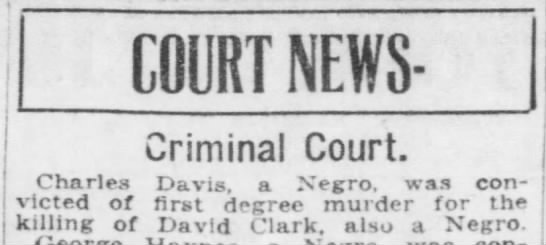
At trial, it was alleged that Davis intervened in the matter due to his concern that the money stolen from Stevenson was due to be paid to him as rent. Davis was convicted of two counts of first-degree murder on November 20, 1918.

image001
Pittsburgh Post, November 21, 1918

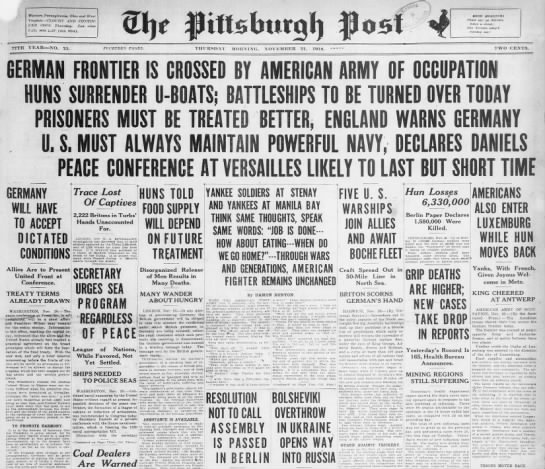
That trial, involving a Black, Maryland-born defendant and two Black victims in a time dominated by news of the end of the Great War, a global pandemic, and the rise of Bolshevism, was scarcely noted.

image001
November 21, 1918

Davis was sentenced to death on March 20, 1919.

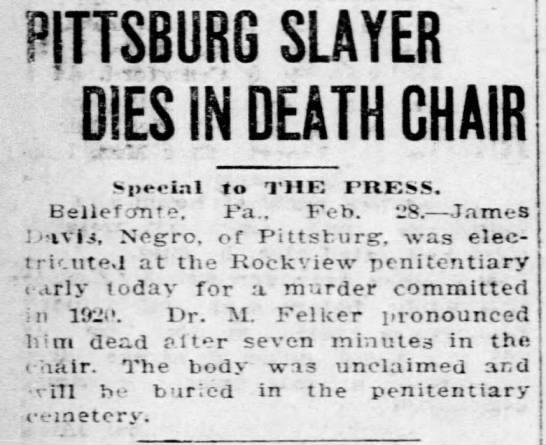
After his perfunctory appeal (Commonwealth v. Davis, 266 Pa. 245, 1920) was unsuccessful and his clemency request was rejected, James Davis was executed on February 28, 1921. Though the next day’s news would include front page coverage of the pursuit of alleged interracial killer Joseph Thomas, Davis’s execution was noted in a single paragraph on the bottom of page two.

image001
Pittsburgh Press, February 28, 1921
Paul Orlakowski

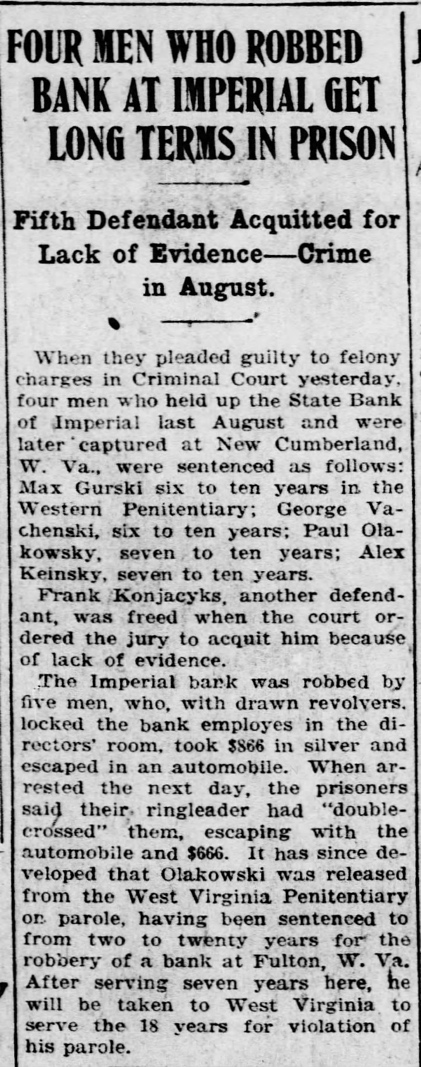
In terms of ruthlessness and sheer determination to avoid punishment for his many crimes, perhaps no Allegheny County offender surpasses Paul Orlakowski.

image004
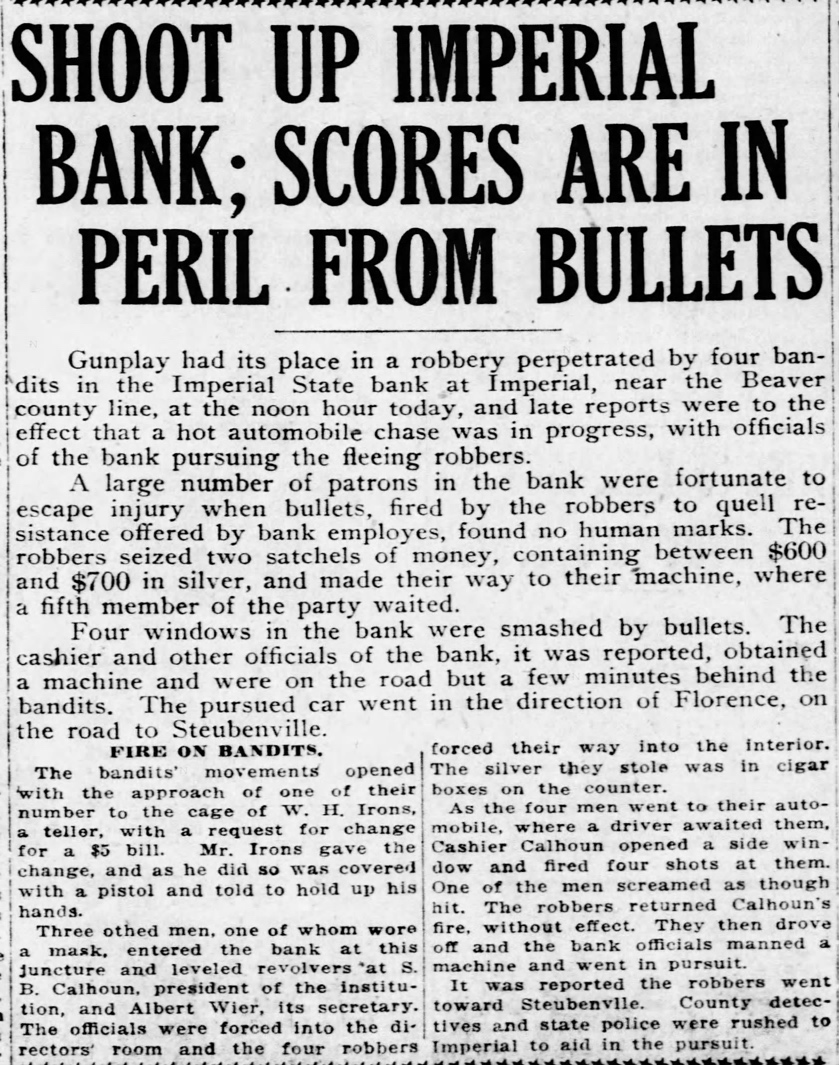
Pittsburgh Press, July 25, 1921
Orlakowski was serving seven to ten years in Western Penitentiary for a July 25, 1921, bank robbery in Imperial, itself committed while on parole for a West Virginia bank robbery, when he organized a spectacular plot to escape from prison.

image004
Pittsburgh Gazette Times, November 16, 1921
As a leader of the “Four Horseman,” Orlakowski, and fellow inmates Salvatore Battaglia, Michael David Norton, and James Yandis, took advantage of weak and corrupt prison security to stockpile dynamite and dozens of weapons.

image001
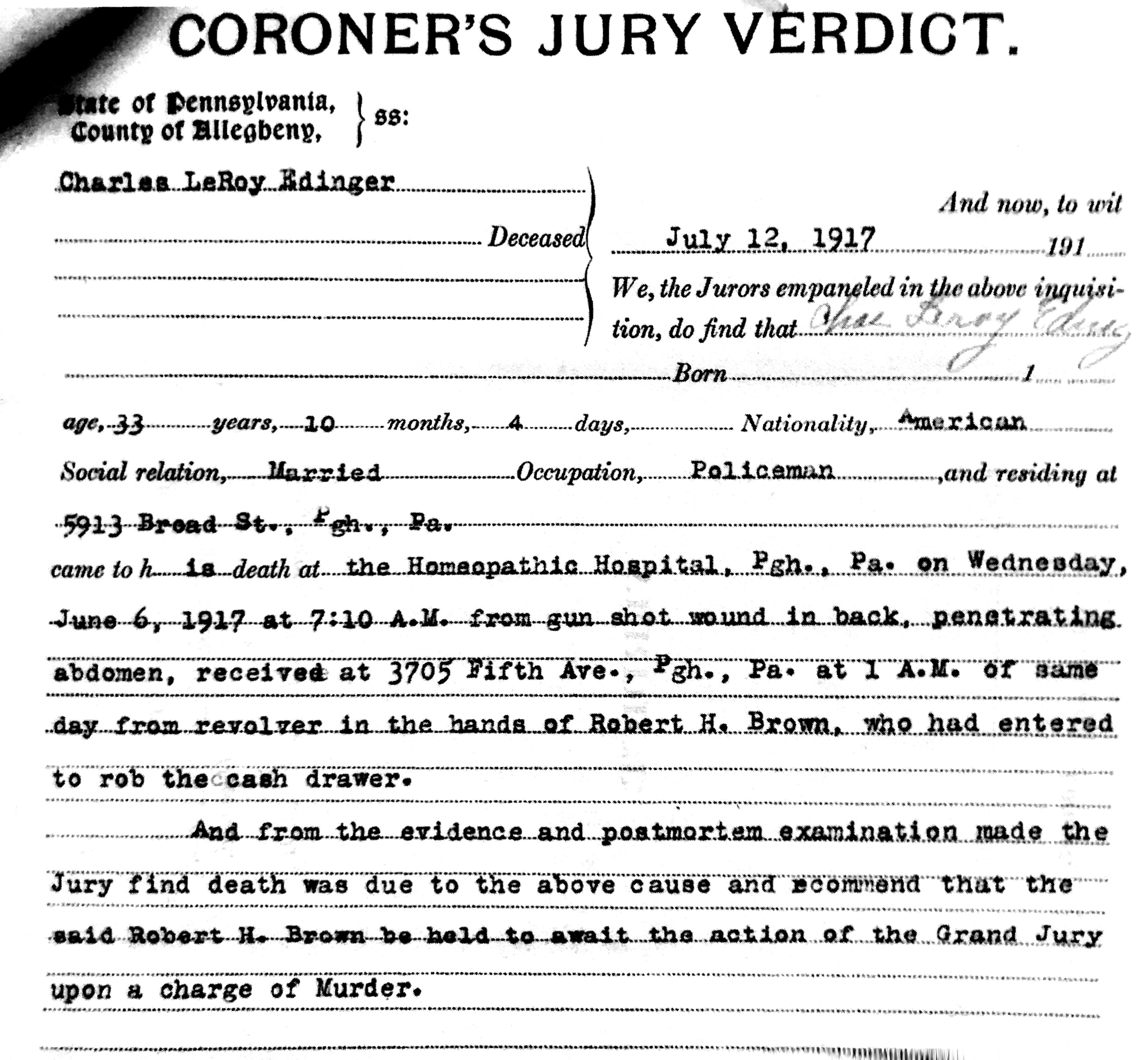
image001

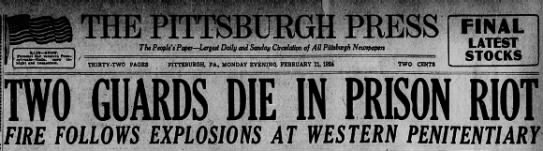
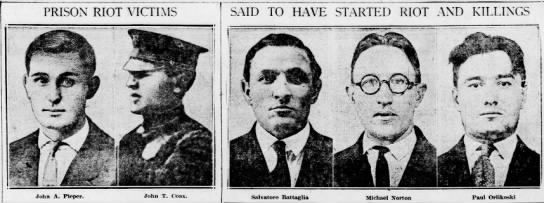
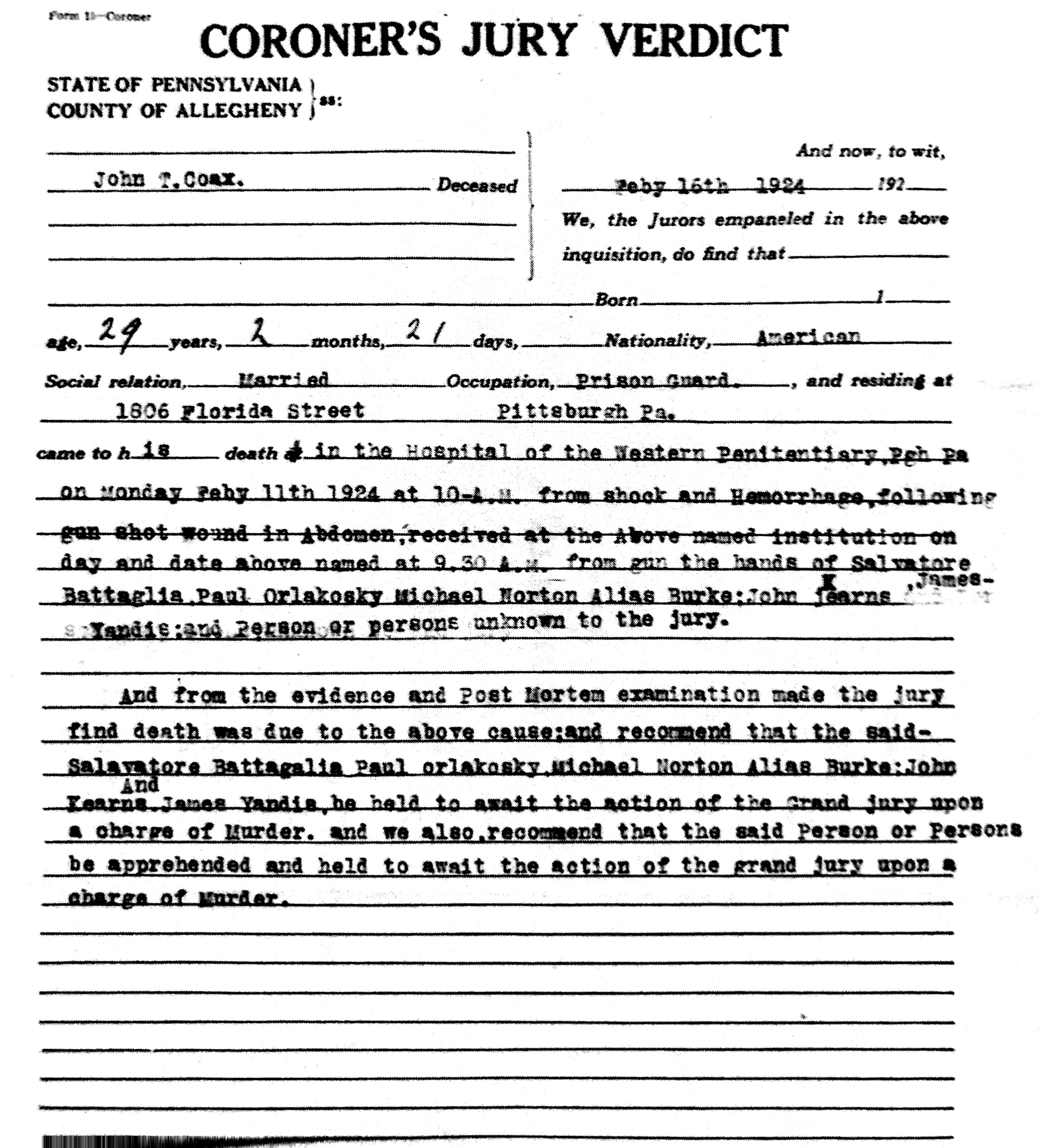
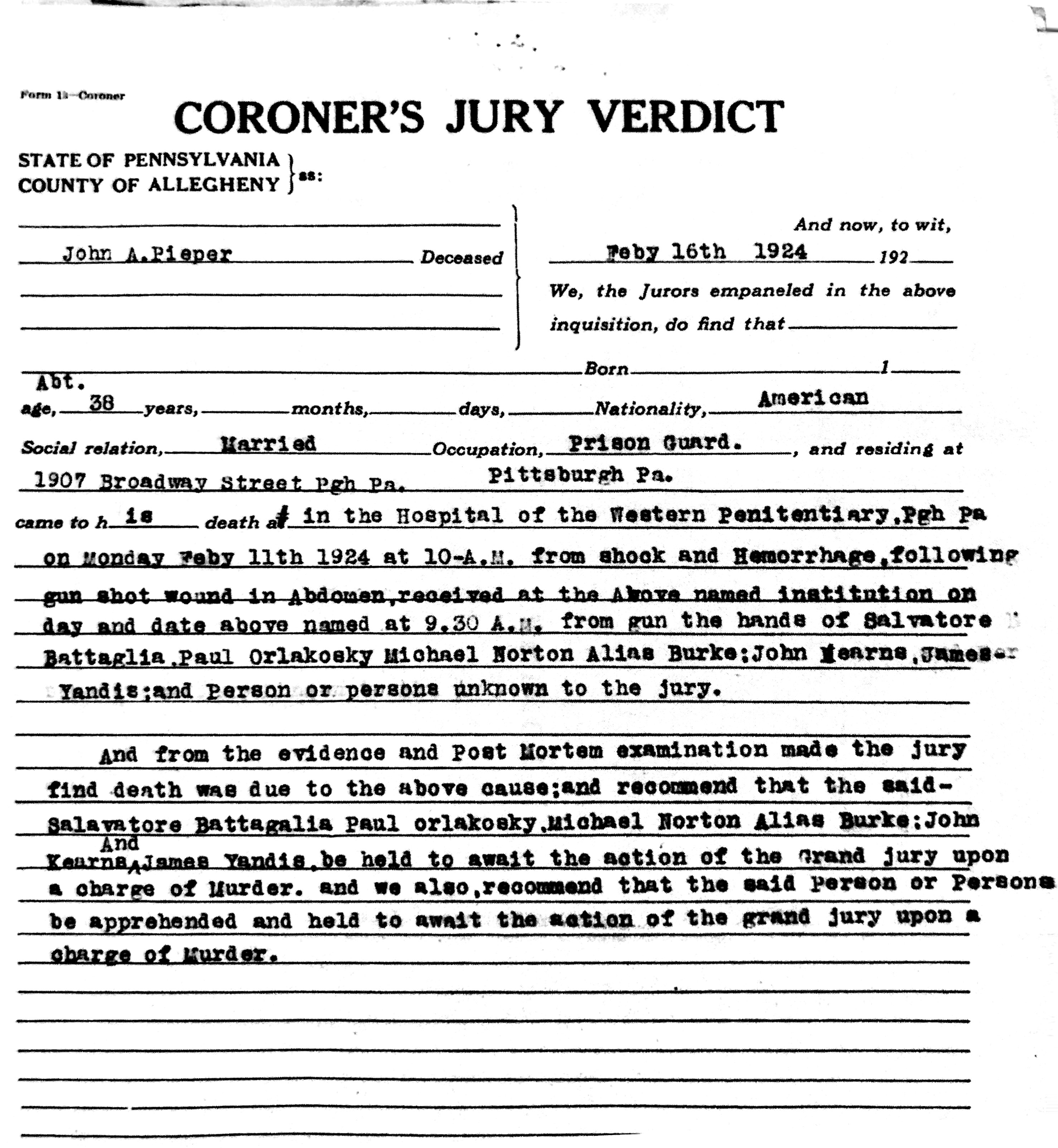
On February 11, 1924, they carried out their plot. When the dynamite failed to open the prison wall, the four men were left to fight it out with prison guards. The first two guards to respond, Assistant Deputy Warden John A. Pieper and Sergeant John T. Coax, were shot and killed. The riot that followed lasted two hours before guards, reinforced by city police, were able to restore order. A recent story in the Pittsburgh Post-Gazette marked the 100th anniversary of the escape attempt and the effort to remember its victims.

image003image001

Confronted by inculpatory testimony from guards and fellow inmates, as well as by police testimony that Orlakowski had confessed, he was convicted of first-degree murder on May 16, 1924, and sentenced to death on July 30, 1926.

The long delay between his conviction and his death sentence resulted from Orlakowski’s effort to argue that his conviction was invalid because he was tried by the same jury on two separate indictments. Whether such proceedings were unconstitutional was settled in favor of the state by the United States Supreme Court in the Allegheny County case of Joseph Valotta on March 15, 1926.

Battaglia and Norton were both convicted of second-degree murder in separate trials. Yandis was acquitted. James Kearns, who was alleged to have aided in the planning but did not participate in the attempted escape and riot, was also acquitted.

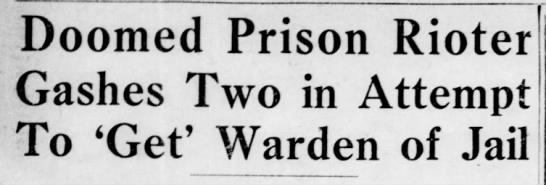
On March 8, 1926, Orlakowski, later dubbed “Pittsburgh’s toughest prisoner” (Pittsburgh Press, July 31, 1930), charged after Warden John McNeil with a homemade knife. When stopped, he stabbed two guards, Clarence Welsh and John Bell; both survived.

image001
Pittsburgh Post-Gazette, March 9, 1926

His appeal and commutation request were rejected. After having spared no effort, legal or otherwise, to prevent his execution, Paul Orlakowski went to the electric chair on December 27, 1926.

An investigation into how so much dynamite and so many weapons were smuggled in to the jail concluded that the contraband, as well as drugs and alcohol, were hidden just outside the prison and smuggled in by trustees allowed to work on the grounds surrounding the prison.

Norton and Battaglia were transferred to Eastern Penitentiary, viewed as the more secure of the state’s prisons, in 1927. Their repeated efforts to secure early release were refused until Norton was released in the early 1940s. He died in Chicago in June 1966. Battaglia’s sentence was commuted in 1948 and he was allowed to return to Italy.

Edward Brown

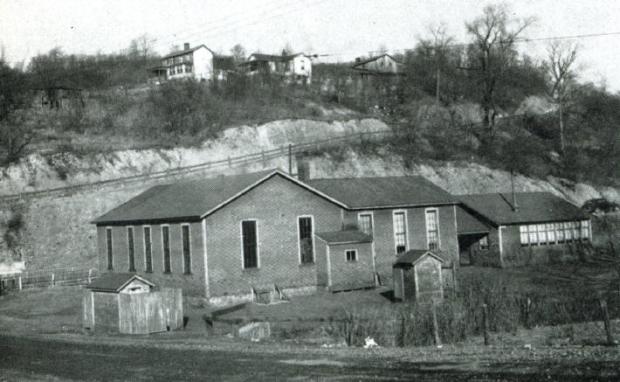
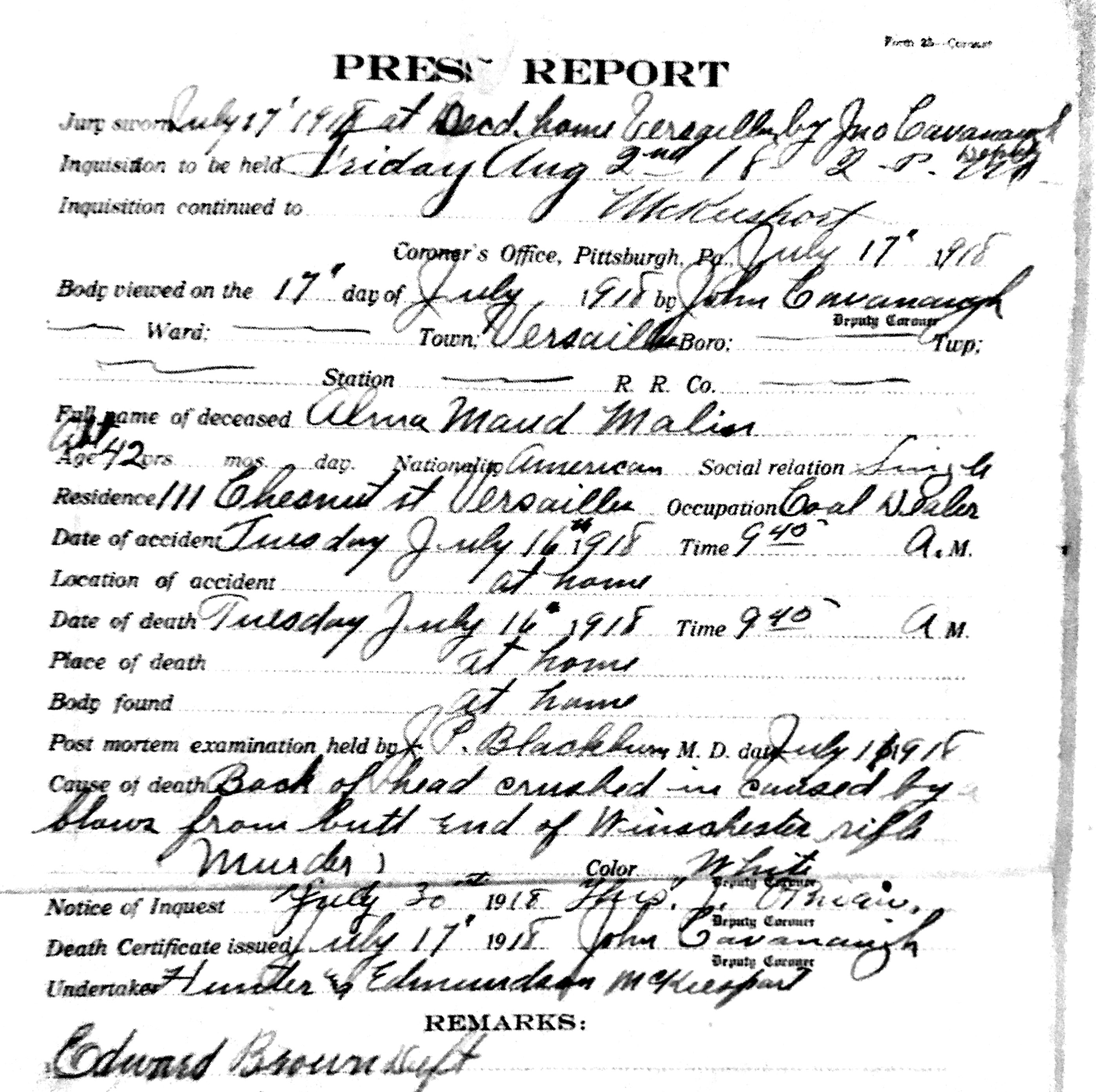
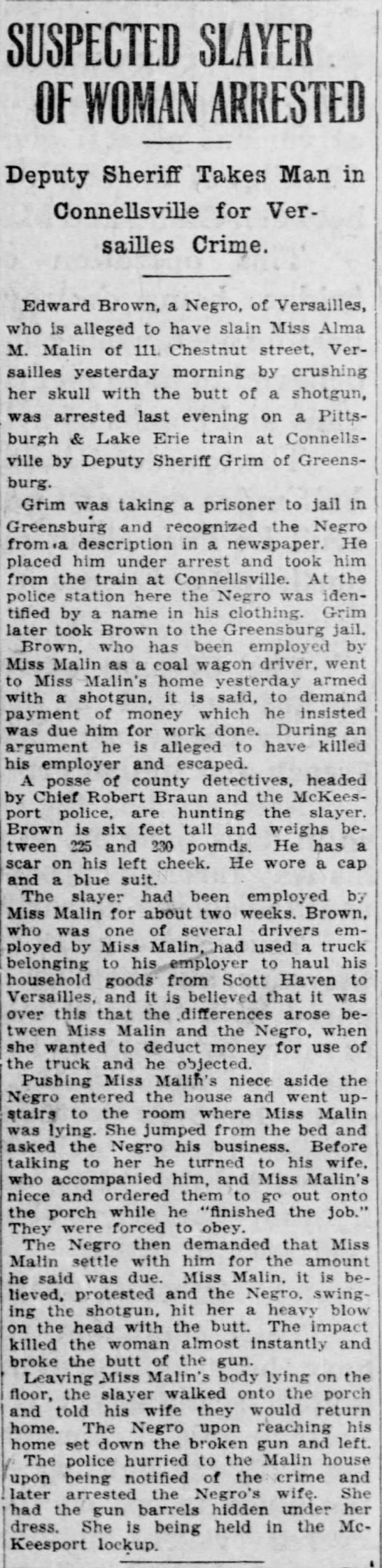
Edward Brown delivered coal for Alma Maude Malin, a retail coal dealer in Versailles, an industrial town on a bend in the Youghiogheny River just upstream from McKeesport. When the newly-employed Brown used the company coal wagon to haul some personal belongings, Malin deducted the cost of that trip from his wages.

image001
Versailles, 1930s

On the morning of July 16, 1918, as the decisive Second Battle of the Marne began in Europe, Brown went to Malin’s Chestnut St. home to dispute the matter.

image001
Pittsburgh Post, July 17, 1918

An argument ensued, and Brown killed Malin with blows from the butt end of a rifle. Brown fled after the killing and was apprehended that evening on a Lake Erie train at Jacobs Creek, near Connellsville.

image001.jpg

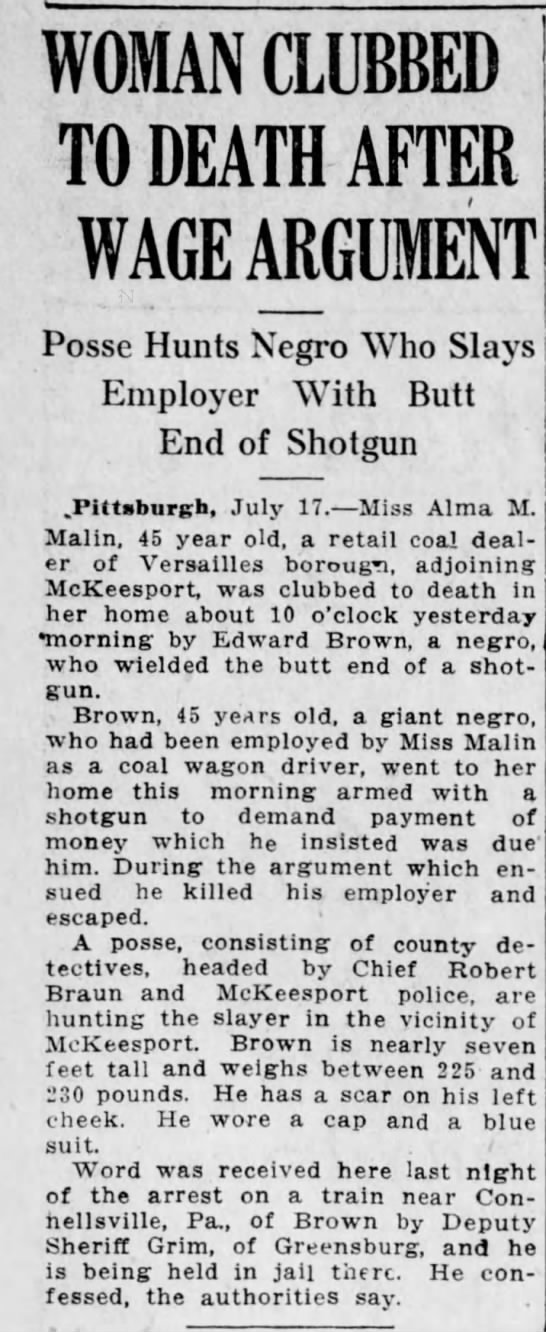
Likely influenced by the incendiary racial and gender dynamics of the crime, the murder of a white woman by a Black man, while Brown was still on the loose the Harrisburg Telegraph described him as a “a giant negro….nearly seven feet tall and …between 225 and 230 pounds.”

image001
Harrisburg Telegraph, July 17, 1918

Once arrested, Brown shrunk back to human size. The Pittsburgh Press described him as six feet tall and 225 to 230 pounds.*

image001
Pittsburgh Post, July 17, 1918**

In custody, Brown “was put through a preliminary ‘third degree’” and confessed to police.

At trial, the Virginia-born Brown denied any involvement in the killing, claiming he was on a hunting trip that day. He was convicted of first-degree murder on May 28, 1919. After his motion for a new trial was rejected, he was sentenced to death on June 30, 1919.

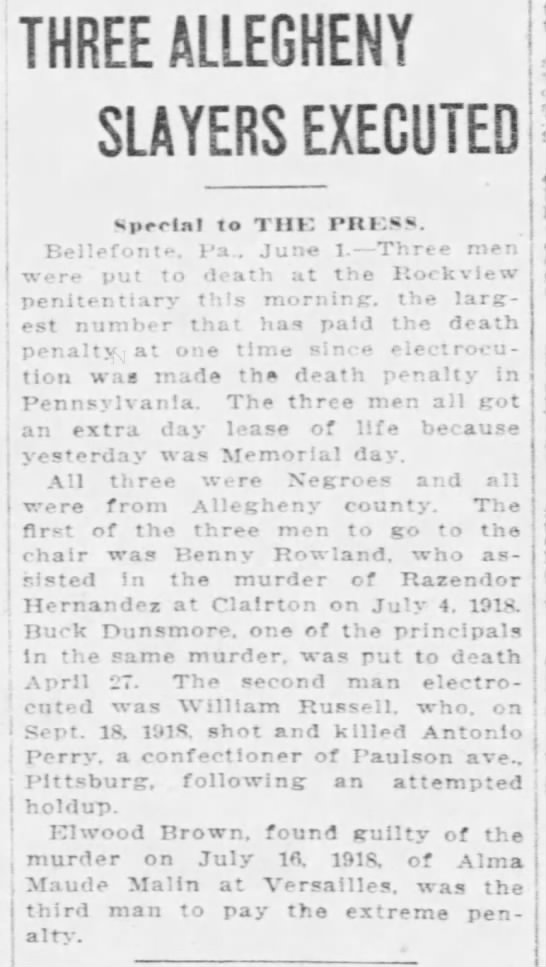
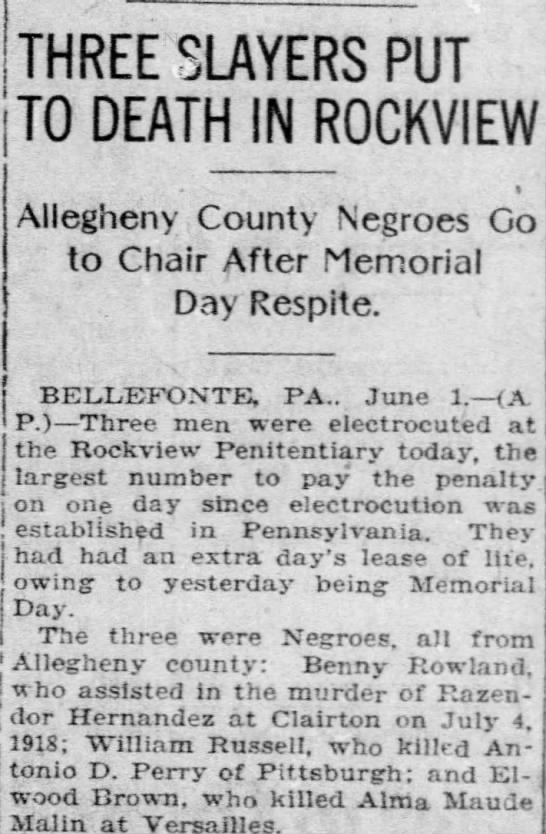
His pardon request denied, Brown was executed on June 1, 1920. In addition to Benny Rowland and William Russell, Brown was one of three Black defendants from Allegheny County executed that day.

image001
Pittsburgh Press, June 1, 1920

These were the last of seven executions in 1920, tying the record set in 1904. Six of the seven men who were executed were Black.

* The records of the Allegheny County workhouse, where Brown served a one-year felony assault and battery sentence in 1910, list Brown as 5’11” and 185lbs.

** In keeping with the intense racism of the era, note that Brown is referred to more often as “the Negro” than by his own name.

William Russell

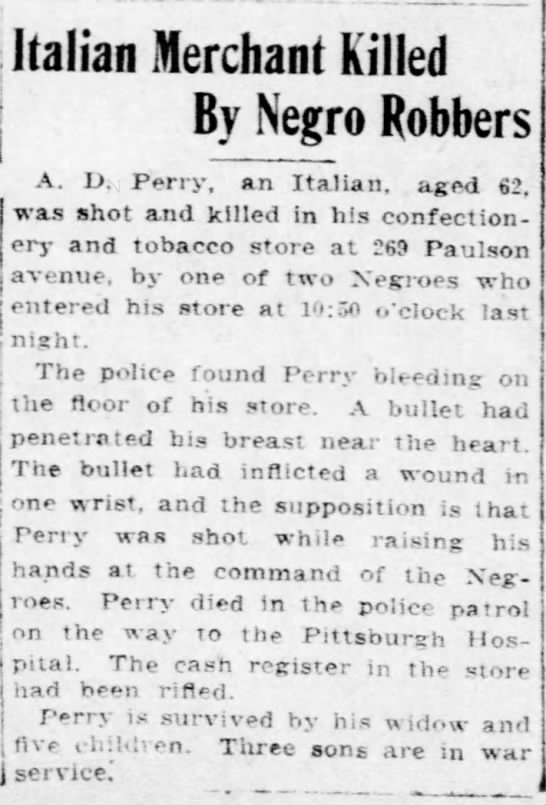
Antonio Perry operated a candy store at 269 Paulson Avenue in Larimer. On the evening of September 18, 1918, William Russell and Moses Carter, residents of the Hill District, robbed the store and shot and killed Perry.

image001.jpg

The Italian-immigrant Perry was the father of five, including three sons in service in World War I.

image001
Pittsburgh Post-Gazette, September 19, 1918

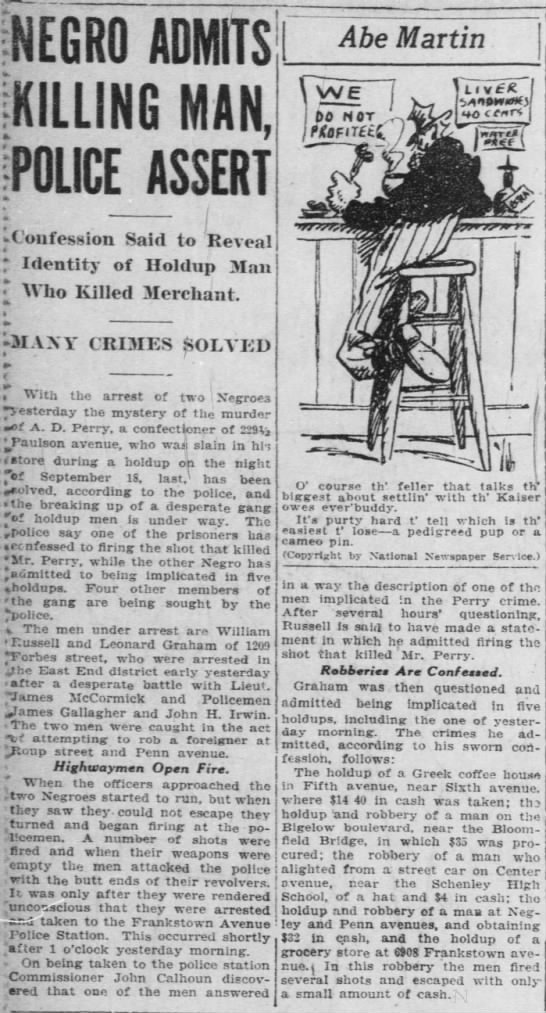
Russell and Leonard Graham were arrested after a shootout with police on November 13, 1918, in connection with a series of armed robberies of pedestrians on Penn Avenue. World War I had ended two days earlier.

After intensive questioning by police, Graham confessed to multiple robberies and implicated Russell in those robberies, as well as two murders, including Perry’s. The second murder is said to have occurred in Cleveland.

image001
Pittsburgh Gazette Times, November 14, 1918

Russell, who had migrated from Mississippi, also confessed under intensive questioning.

Based on information provided by Russell and Graham, Moses Carter was arrested on November 16.

Police determined that Russell was the principal of a group of men described as “the most desperate crooks to operate in the city since the days of the Biddle gang.” They had committed numerous robberies throughout the eastern neighborhoods of Pittsburgh.

Texas-born, nineteen year old Moses Carter was found guilty of voluntary manslaughter on May 13, 1919, and sentenced to Western Penitentiary.

Russell, who had fired the shot that killed Perry, was found guilty of first-degree murder on June 24, 1919, and sentenced to death on June 30. Despite a “strong plea” for clemency based on allegations that he was beaten into confessing, the Pardon Board refused to hear Russell’s case.

image001
Paulson St., Summer 2019

William Russell was executed on June 1, 1920, the same day as Benny Rowland and Edward Brown, two other Black Pittsburghers convicted of interracial homicides. Theirs was the first triple electrocution in Pennsylvania.

With these executions, Pittsburgh entered the most racially biased period in its death penalty history. Over the next five years, thirteen Black men and four white men would be executed. Between 1918 and 1926, seventeen men had their death sentences commuted; all of them were white.

Graham later served as a prosecution witness in the trial of Paul Orlakowski, who was sentenced to death for the murder of two Allegheny County Jail guards in 1924.

Edward Moses Carter died in California on September 1, 1991, at age 92.

Buck Dunmore and Benny Rowland

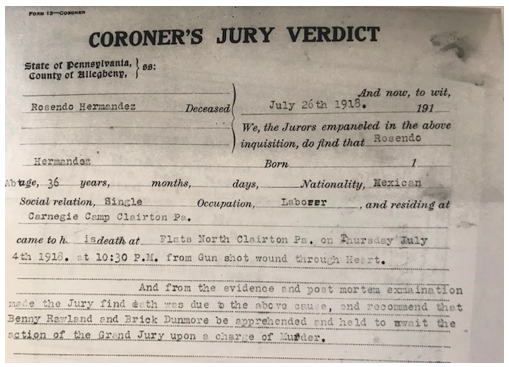
Buck Dunmore and Bennie Rowland were among the thousands of rural southern Black migrants, mainly single men, who arrived in Pittsburgh during World War I. They found work at the massive Clairton Steelworks, on the Monongahela River well south of Pittsburgh, and lived in the Carnegie Camp, company housing for steelworkers. Also living there was Rosendo Hernandez, a Mexican immigrant steelworker.

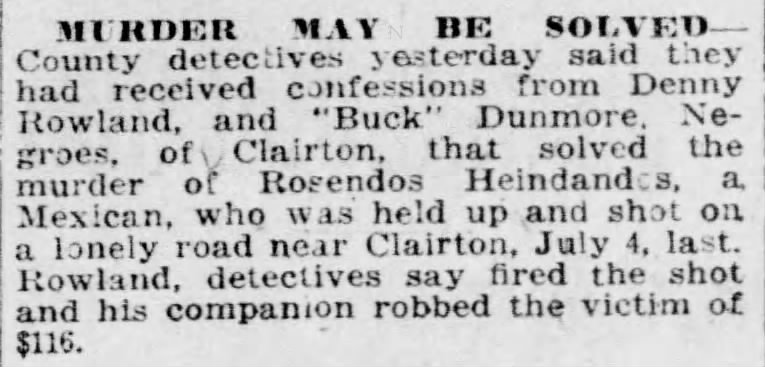
“On a lonely road near Clairton” on the night of July 4, 1918, 19-year old Dunmore and 18-year old Rowland robbed Hernandez of $160 and shot him twice. He died at the scene.

image002.png

Dunmore and Rowland fled. They were apprehended in Lumberton, South Carolina, on July 23, and were reported to have confessed to police.

image004
Pittsburgh Post, August 2, 1918

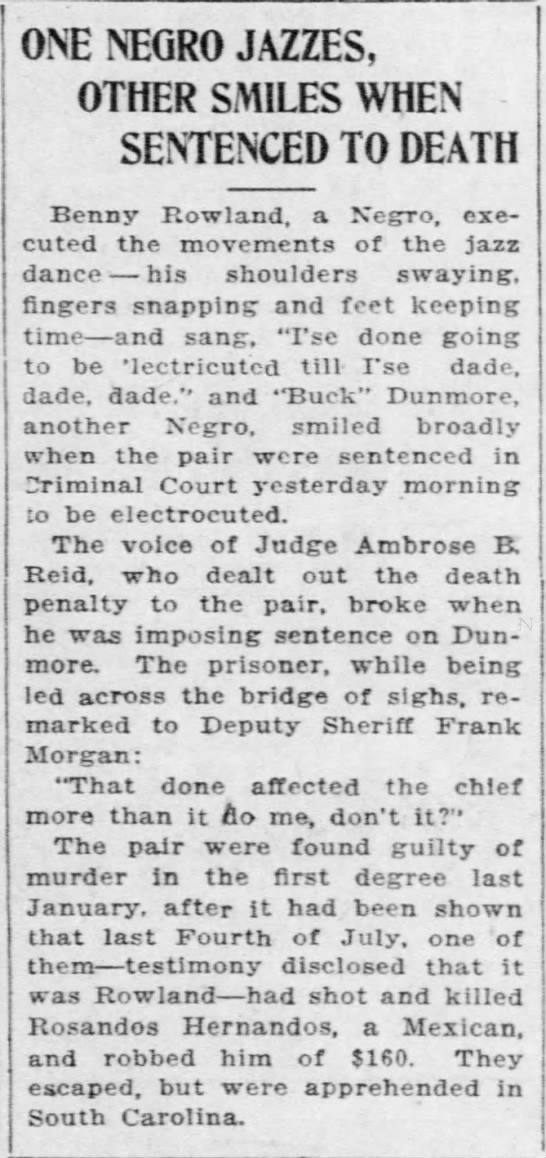
In separate and brief trials, Rowland was convicted of first-degree murder on January 28, 1919, and Dunmore on January 30. Their death sentences were imposed on June 5, 1919; the height of the “Red Summer“of racist violence that sought to restore the racial order that had been disrupted by the brave service of Black soldiers in World War I.

image001
Pittsburgh Gazette Times, June 6, 1919

Describing the sentencing, the Pittsburgh Gazette Times drew on racist caricatures to claim that Rowland “executed the movements of the jazz dance – his shoulders swaying, fingers snapping, and feet keeping time – and sang, ‘I’se done going to be ‘electrocuted till I’se dade, dade, dade.”

No appeals were undertaken. Though evidence indicated that Rowland killed Hernandez, clemency was rejected for both men.

Buck Dunmore was taken to Rockview and executed on April 27, 1920.

Benny Rowland was executed on June 1, 1920, the same day as William Russell and Edward Brown, two other Allegheny County Black capital defendants. It was the first triple electrocution in Pennsylvania history.

image001
Pittsburgh Post-Gazette, June 2, 1920

As was typical of the time, cases involving non-white defendants and victims received only perfunctory newspaper attention, a sharp contrast to the media storm that often surrounded cases involving Black defendants and white victims. No details of Hernandez’s murder or the parties to the case were provided.

Frank Green

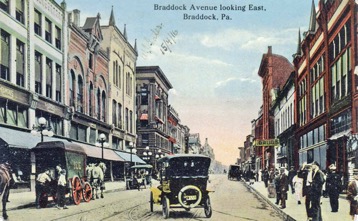
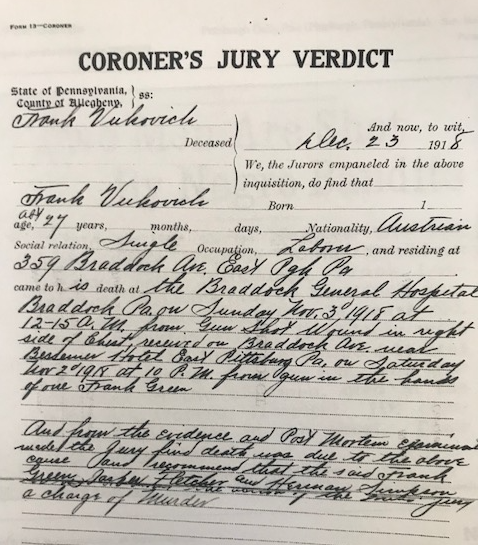
In the waning days of World War I and the waning weeks of the busiest year of capital murders in Pittsburgh’s history, Alabama-born coal miner Frank Green killed Frank Vukovich during a robbery in East Pittsburgh. The killing occurred late on Saturday night, November 2, 1918, when Green and his friends, Jasper Fletcher and Herman Simpson, en route to Homestead, encountered Vukovich and two of his friends on Braddock Avenue.

image001

Under circumstances that are a matter of dispute, Green and his companions shot Vukovich, who died the next morning.

image001

At trial, Green claimed he acted in self-defense after Vukovich and his friends, all recent immigrant steelworkers, attacked him and his friends, also steelworkers, in a racist incident. Eyewitness testimony indicated that Green fired the fatal shots.

image001
Pittsburgh Post-Gazette, June 10, 1919

The state claimed the killing occurred as part of an armed robbery. In the midst of the “Red Summer” of racist violence that sought to restore the racial social order following the return of Black servicemen from World War I,  Green was convicted on June 11, 1919, and sentenced to death on November 1.

image001
Pittsburgh Post-Gazette, June 12, 1919

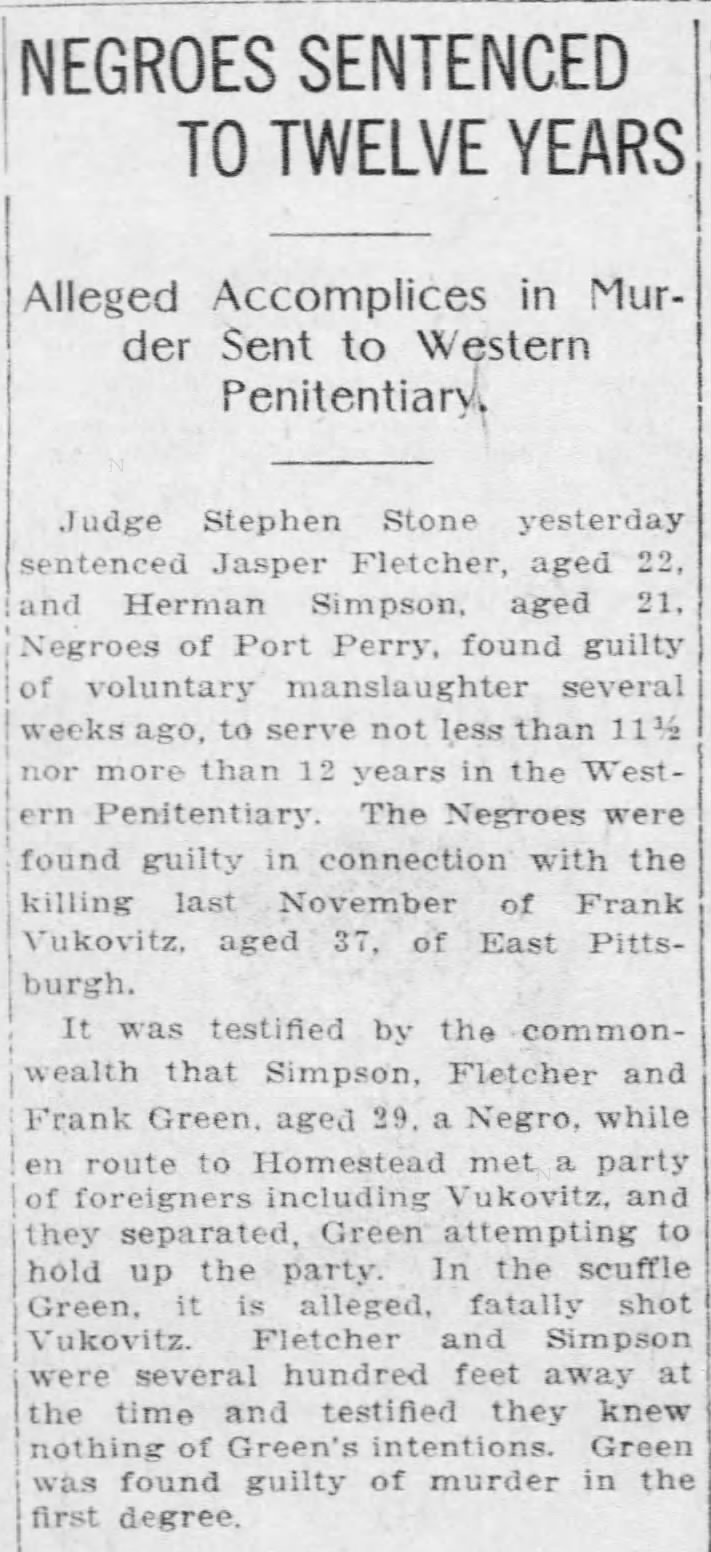
Fletcher, who was born in Florida, and Simpson, born in Alabama, maintained they were unaware of Green’s intent to rob and kill and were not in the immediate vicinity of the killing. Both were convicted of voluntary manslaughter on June 18, 1919, and sentenced to 12 years in Western Penitentiary.

image004
Pittsburgh Gazette Times, June 29, 1919

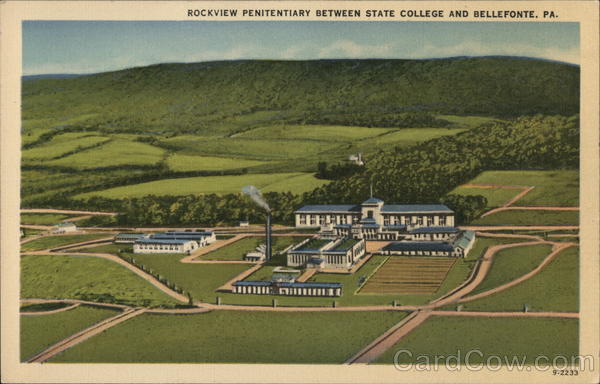
Taken to Rockview, Frank Green was executed in the electric chair on March 29, 1920. He is buried in the prison cemetery.

Rockview Penitentiary Bellefonte, PA

The defendants lived in Port Perry, a no longer extant town on the Monongahela River near Braddock that was overtaken by the expansion of the steel industry.

Robert Henry Brown

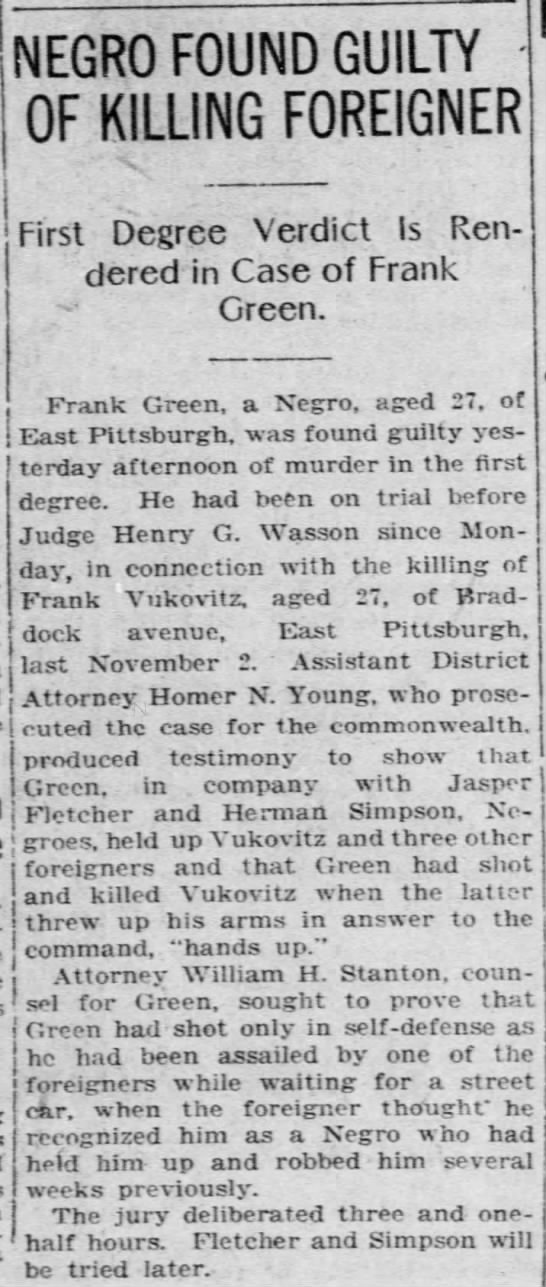
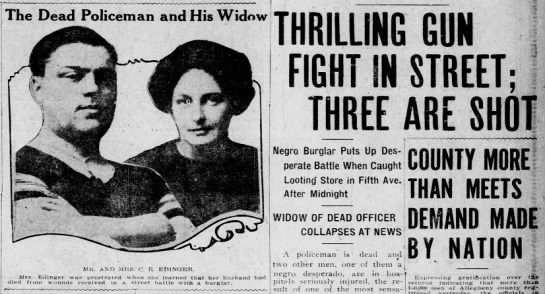
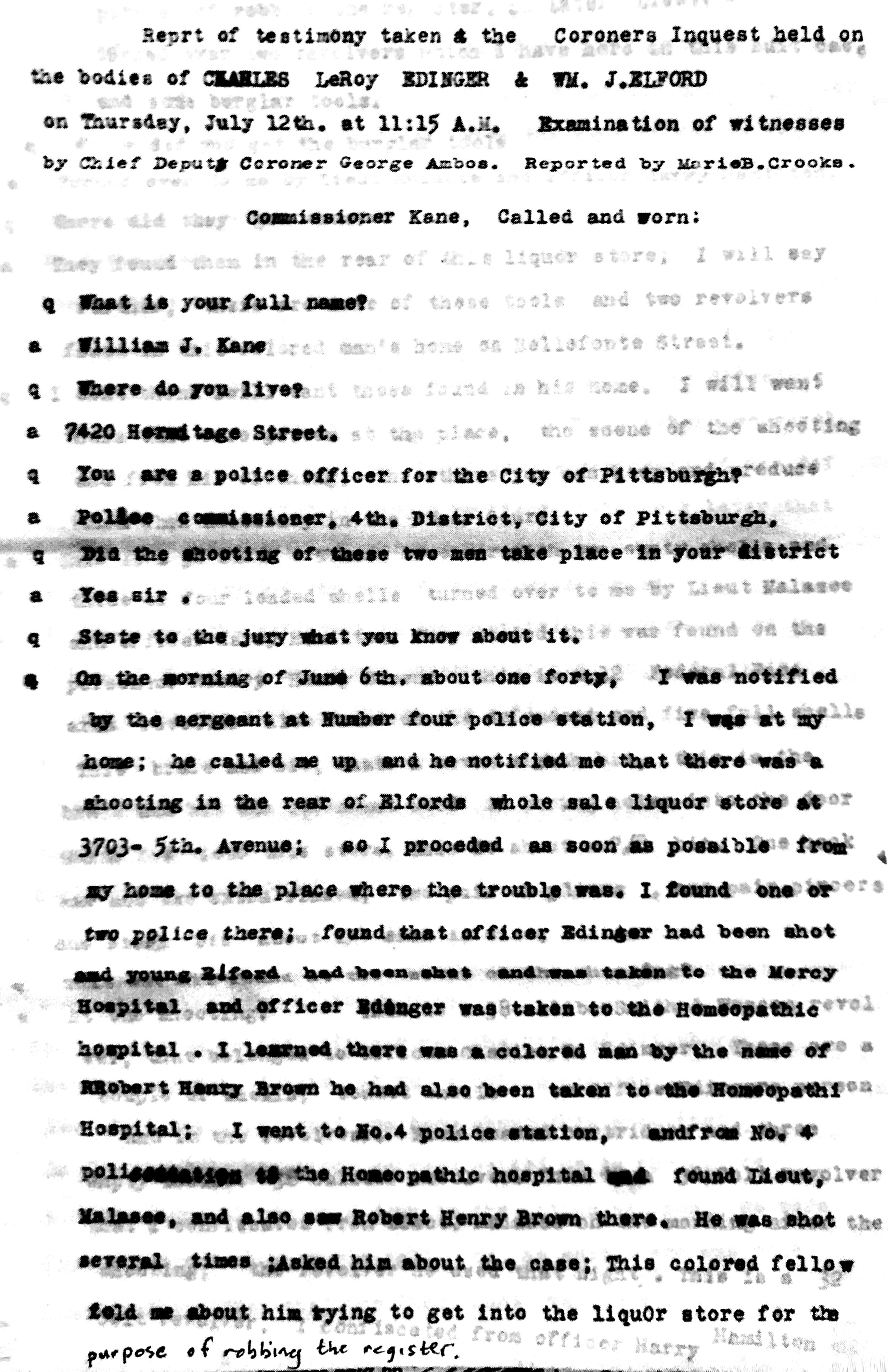
During the early morning hours of June 6, 1917, Robert Henry Brown broke into Elford’s Wholesale Liquor, at 3703 Fifth Avenue in Oakland. When William J. Elford, the son of the owner, notified police of a burglary in progress, Pittsburgh Police officer Charles Edinger responded.

image001
3700 block of Forbes Avenue, 1910. 3703 is the fourth door on the left.

Entering the store, Edinger encountered Brown. Shots were fired by both sides, with Brown shooting Edinger and Elford before being shot and injured by Edinger’s partner, Harry Hamilton.

image001
Pittsburgh Press, June 6, 1917

image001

Edinger died later that morning in the hospital. Elford died on June 23, 1917. The injured Brown was arrested at the scene.

image001.jpg

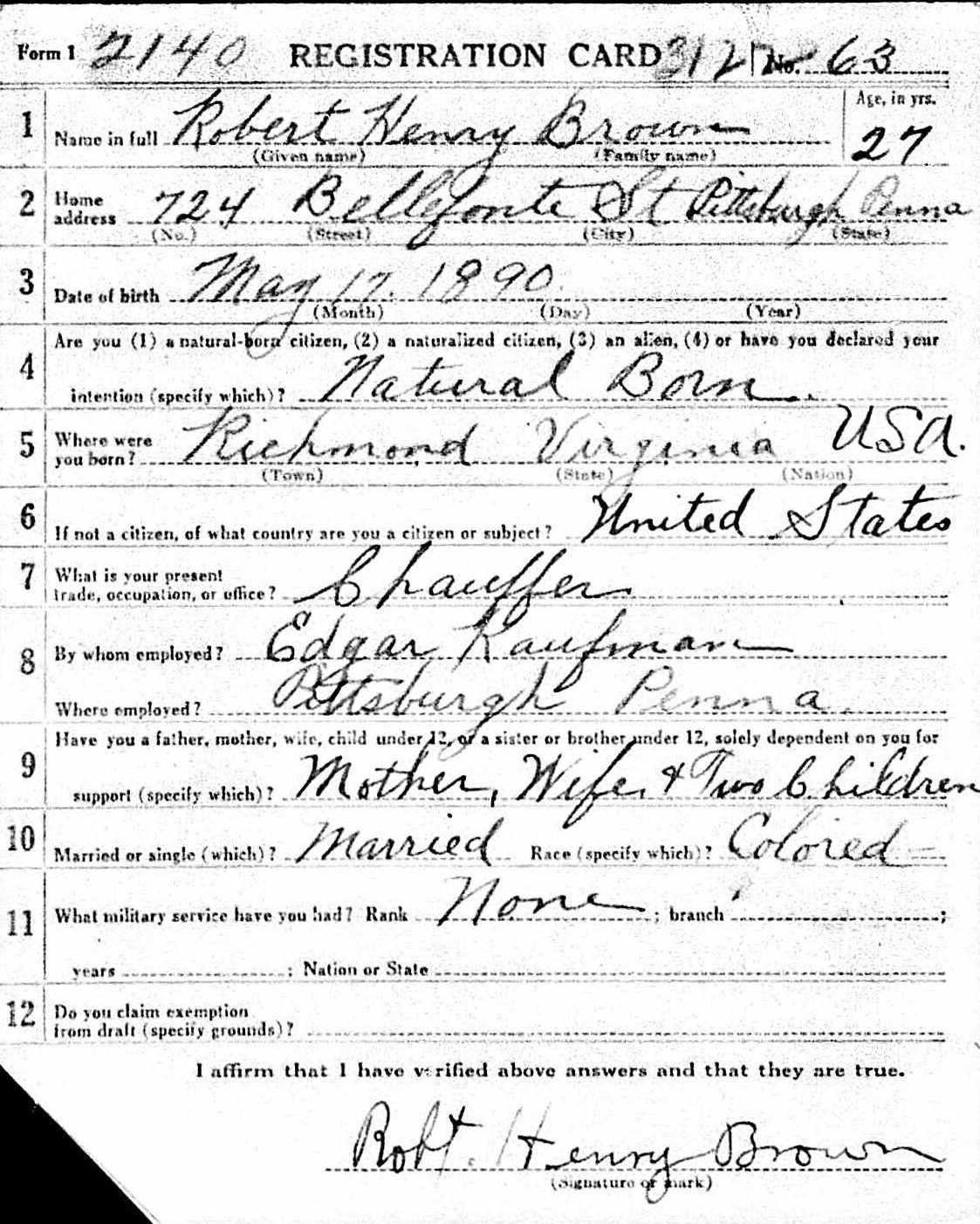
Brown, who was born in Virginia and worked as a chauffeur for department store-magnate Edgar Kaufmann, was convicted of first-degree murder in Elford’s death and second-degree murder in Edinger’s death on February 25, 1918. Police witnesses testified that Brown had confessed to the crime. The lesser conviction in Edinger’s death was due to some question as to whether Brown or Hamilton fired the fatal shot.

image001

On appeal, Brown focused primarily on the prejudicial effect of testimony that he was an Army deserter. The Pennsylvania Supreme Court (Commonwealth v. Brown, 264 Pa. 85, 1919) rejected that argument and Brown’s appeal. After several respites to consider pleas to spare Brown, the Pardon Board also ultimately rejected his case.

image001
Pittsburgh Daily Post, January 6, 1920

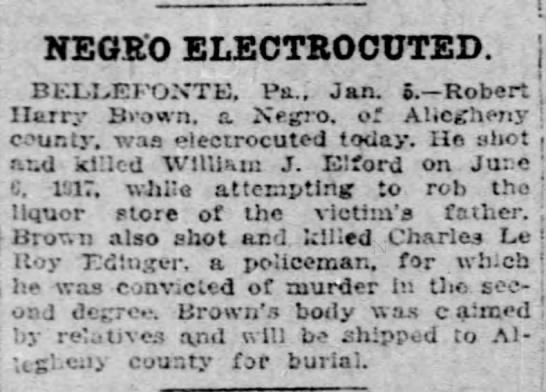
Robert Henry Brown was executed on January 5, 1920. He is buried in the prison cemetery in Bellefonte.

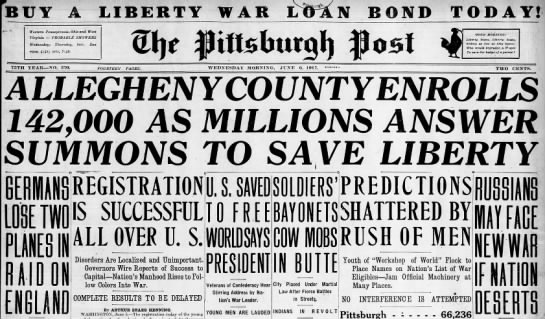
Against the backdrop of the US entrance into World War I, the killing of a police officer by a Black man received remarkably little attention.

image001
Front page on the day of the shooting